
2026 Top Types of Wrapping Machines for Global Buyers

Choosing a wrapping machine in 2026 is less about buying the fastest model and more about matching equipment to the product, packaging material, and production rhythm. A small bakery wrapping fresh loaves has different needs from a beverage plant handling thousands of units per hour. Film width, seal quality, changeover time, available floor space, and operator training all affect the real cost of a line. The details matter.

W. Edwards Deming, a leading quality-management expert, warned, “It is not necessary to change. Survival is not mandatory.” His words are not about wrapping equipment specifically, but they offer a useful reminder: assess the process before choosing a machine. Buyers should compare flow wrappers, shrink wrappers, stretch wrappers, and other common types against measurable production needs. Ask for product trials. Check seal consistency and film waste. A polished brochure is not enough.

This guide reviews the main Wraping Machine types available to global buyers in 2026, including their typical uses, strengths, and trade-offs. It also considers automation levels and practical selection factors, from fragile items to irregular loads. No single machine fits every factory. And a neat specification sheet can still mislead. Actual product tests and clear operating data make a better starting point, though even a careful comparison may miss a constraint that only appears during a busy shift.
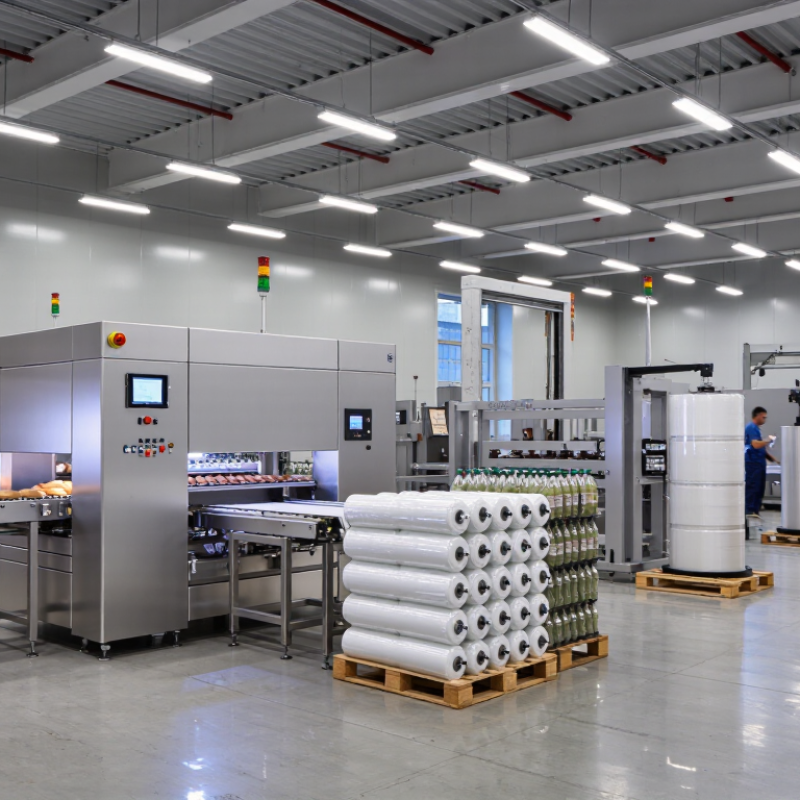
2026 Top Types of Wrapping Machines for Global Buyers

Define Wrapping Machines by Load Format, Film Type, and Packaging Stage

2026 Top Types of Wrapping Machines for Global Buyers

Define Wrapping Machines by Load Format, Film Type, and Packaging Stage

Wrapping machines are easier to compare through three choices: load format, film type, and packaging stage. For pallet loads, turntable and rotary-arm wrappers apply stretch film around stacked cartons. A rotary arm keeps unstable or heavy loads still, while a turntable suits stable loads. Smaller bundles may need horizontal wrappers; individual products may use flow wrapping. Match the machine to load size, weight, and line speed, not just its advertised output.

Film affects protection and operating costs. Stretch film secures palletized goods through tension. Shrink film tightens around products after heating, while flow-wrap film forms sealed packs around individual items. Check film width, thickness, sealing behavior, and product sensitivity to heat or pressure. A crisp seal matters. So does avoiding excessive stretch. Trial runs can reveal how corners and surface friction affect results. The neatest specification sheet may still hide a poor fit.

Tips: Record load dimensions, weight, target output, and film use during a normal shift. Test real products, including awkward cartons and partly filled pallets. For end-of-line equipment, check conveyor height and floor space before automating. Manual, semi-automatic, and automatic machines suit different packaging stages; a fast wrapper cannot fix upstream jams. Leave room for roll changes and cleaning, too. Maintenance access is easy to overlook.

Compare Turntable, Rotary-Arm, and Ring Stretch Wrappers by Pallet Profile

The European pallet association’s 2023 activity report recorded more than 111 million pallets produced or repaired. That figure points to the variety of pallet flows buyers may handle, not one universal load profile. A turntable wrapper suits stable, regularly sized pallets when operators can safely rotate the load. It is often a practical choice for moderate throughput. But tall cartons with loose top layers may sway as the table turns.

A rotary-arm wrapper keeps the pallet stationary, making it useful for heavy, unstable, or unusually shaped loads. The arm moves around the load, so floor layout and guarding need careful review. A ring wrapper carries film around a stationary load and suits consistent profiles on faster lines. Its speed is less helpful when pallet heights and widths vary widely. Match the machine to real load samples, not just the neatest pallet on a specification sheet.

Tips: Record pallet dimensions, weight, overhang, and load stability across several shifts. Test film containment at the corners and near the base. I would still run a trial with the least stable load; a tidy sample can hide trouble.

Evaluate Shrink, Flow, and Orbital Wrappers by Product Shape and Line Speed

Shrink wrappers fit products that can be grouped or sealed inside a heat-shrunk film. They work well for cartons, beverage multipacks, and mixed bundles. Allow space for a safe heat tunnel and cooling section. Flow wrappers form a film tube around individual, fairly regular items, such as bars, trays, or small hardware kits. They often suit fast, continuous lines, but irregular shapes can cause poor seals or film waste. Shape comes first. Orbital wrappers rotate film around long or bulky loads, including pipes, panels, and bundled profiles. They can avoid forcing awkward products through a tight tunnel. Check load stability and film overlap, not just machine speed.

Line speed should mean sustained good packs per minute, not the nameplate figure. Include product changes, film roll swaps, jams, and operator access in the trial. A line that runs quickly for one product may lose time on frequent changeovers. Mordor Intelligence’s 2024 Packaging Machinery Market report estimates the broad global market at USD 50.96 billion in 2024, forecasting USD 66.69 billion by 2029. This is not a wrapper-only forecast, but it signals continued investment in packaging equipment. Ask suppliers to run your smallest, largest, and least stable products at target speed. The awkward sample matters. A spreadsheet can make the choice look cleaner than production really is.

2026 Top Types of Wrapping Machines for Global Buyers

Indicative throughput ranges vary with product dimensions, film, pack pattern, and equipment configuration.

Flow wrappers are commonly used for individual, regularly shaped products and can reach high pack rates. Shrink systems suit grouped products and varied pack formats, with speeds dependent on the sealing and shrink-tunnel setup. Orbital wrappers are designed for palletized or long loads; their throughput is measured in loads per hour, not individual packs per minute. These figures are broad indicative ranges, not directly comparable across different units.

Specify Film Using ASTM D882 Tensile-Test Data and Thickness in Microns

2026 Top Types of Wrapping Machines for Global Buyers
Specify Film Using ASTM D882 Tensile-Test Data and Thickness in Microns

Choosing a wrapping machine starts with the film, not just the product. Stretch wrappers, flow wrappers, and shrink systems place different demands on film. A specification should state thickness in microns and tensile properties measured under ASTM D882, the standard test method for tensile properties of thin plastic sheeting. Ask for machine-direction and transverse-direction results, including tensile strength and elongation at break. Small differences matter.

Thickness alone cannot predict how a roll will behave. A 20-micron film may stretch or tear differently from another 20-micron film because resin blend, orientation, and processing vary. ASTM D882 results help compare samples, but they are not a guarantee of performance on a specific machine. Test the actual film on the intended line, recording web tension, breaks, and package stability. Do not guess.

Industry context matters, too. PlasticsEurope’s Plastics—The Fast Facts 2023 reports that packaging accounted for 39.1% of European plastics demand in 2022. That scale makes clear film specifications valuable for procurement and quality control. Yet one detail is easy to overlook: sample conditioning and test setup can affect results. Keep these consistent between suppliers, and review certificates against the roll actually delivered. Perfect paperwork cannot replace a line trial.

Check Safeguarding Against ANSI/PMMI B155.1-2023 and ISO 12100:2010

For global buyers, a wrapping machine’s safety review should start with its real tasks: loading film, clearing jams, adjusting settings, and cleaning. Turntables, rollers, cutters, and moving film carriages can create pinch, cut, or entanglement hazards. A guard that works during production may become awkward during changeovers. Watch the machine through these moments, not only during a showroom demonstration.

ANSI/PMMI B155.1-2023 and ISO 12100:2010 provide useful frameworks for assessing machinery risks and selecting risk-reduction measures. Ask the supplier for the machine-specific risk assessment, safeguarding details, and operating instructions. Check how access points are controlled, whether emergency stops are reachable, and how stored energy is managed during maintenance. Confirm that the assessment reflects the supplied configuration and intended use. Standards references alone do not prove that every hazard has been addressed.

Tips: Request a live demonstration of jam clearing and film replacement. Compare the safeguards with your operators’ actual reach and workflow. Keep the assessment and training records. A tidy document can still miss a rushed task; revisit the review after installation and whenever the machine or process changes.

2026 Top Types of Wrapping Machines for Global Buyers — Check Safeguarding Against ANSI/PMMI B155.1-2023 and ISO 12100:2010

Wrapping Machine Type Typical Load or Product Common Wrapping Material Typical Operating Setup Key Hazard Areas to Assess Safeguarding Review Points
Turntable stretch wrapper Palletized cartons, bags, and other unit loads Stretch film The load rotates on a powered turntable while film is dispensed around it. Rotating turntable, film carriage travel, pinch points, and access to the load during cycling Assess access around the turntable and carriage; check safety-related stopping, operating controls, and safe methods for loading, unloading, and clearing film faults.
Rotary-arm stretch wrapper Palletized loads that are unstable, tall, or difficult to rotate Stretch film A powered arm carrying the film dispenser rotates around a stationary load. Sweeping arm path, crush or impact zones, film carriage, and the surrounding operating area Evaluate the full arm travel and foreseeable access to its path; review guarding or protective devices, safety functions, and restart controls.
Orbital (ring) wrapper Long, narrow products such as profiles, pipes, or bundled sections Stretch film or other specified wrapping film A rotating ring or wrapping head applies film as the product passes through or along the machine. Rotating ring, feed and discharge conveyors, nip points, and film-feed components Review access to the ring and conveyor interfaces; assess guarding, interlocking where used, emergency stopping, and safe threading and maintenance procedures.
Horizontal stretch wrapper Long products, bundles, and continuous or semi-continuous loads Stretch film The product travels horizontally through a rotating wrapping ring or head. Rotating head, conveyor nip points, infeed and outfeed transitions, and product ejection or movement Assess hazards at the wrapping head and conveyor transitions; verify protective measures for normal operation, jam clearing, and access to the line.
Shrink-wrapping machine Individual products, multipacks, trays, or grouped cartons Heat-shrink film Film is formed around the product and heated in a shrink tunnel or heat-sealing section. Hot surfaces, heated air, sealing jaws, conveyors, and potential contact with moving components Assess thermal and mechanical risks; review guarding, temperature-related precautions, safe access for cleaning, and isolation before maintenance.
Flow-wrapping machine Individual items or regularly spaced products, including food and consumer goods Flexible rollstock film Film forms a continuous tube around products, with longitudinal and end seals made by the machine. Forming area, pull rollers, sealing jaws, cutters, and infeed conveyor Review access to nip and cutting points; assess guards and safety-related controls, including safe procedures for film threading and jam removal.
Automatic stretch hooding machine Palletized loads requiring a fitted film hood Stretch hood film A prepared film hood is opened, positioned, and drawn over the load by automated equipment. Film-opening and stretching mechanisms, lifting or moving assemblies, conveyors, and load-handling areas Assess crushing, entanglement, and load-movement risks; review guarded zones, access controls, safe operating modes, and maintenance isolation.
Manual or semi-automatic pallet wrapper Low-volume pallet loads wrapped with operator involvement Stretch film An operator starts or supervises a powered wrapping cycle and may attach or cut film manually. Rotating load or turntable, operator reach into the wrapping zone, and manual film handling Assess the operator’s position and access during every cycle; review controls, safe operating instructions, and protection against unintended movement.

Safety note: This is a general buyer screening guide, not a compliance determination. ANSI/PMMI B155.1-2023 addresses safety requirements for packaging and processing machinery; ISO 12100:2010 sets out general principles for machinery risk assessment and risk reduction. The required measures depend on the machine design, installation, use, and applicable local regulations. Request the supplier’s machine-specific risk assessment and verify safeguards before operation.

SERVO-ROBOT Inc
Privacy Overview

This website uses cookies so that we can provide you with the best user experience possible. Cookie information is stored in your browser and performs functions such as recognising you when you return to our website and helping our team to understand which sections of the website you find most interesting and useful.