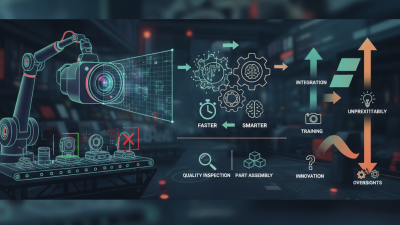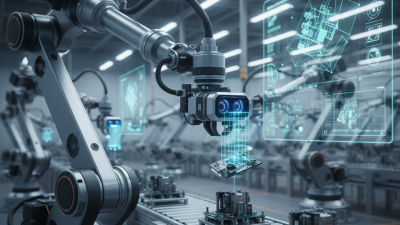
3D vision systems are revolutionizing the way we interact with technology. By mimicking human sight, these systems offer depth perception and spatial awareness. They are transforming various industries, from manufacturing to healthcare.
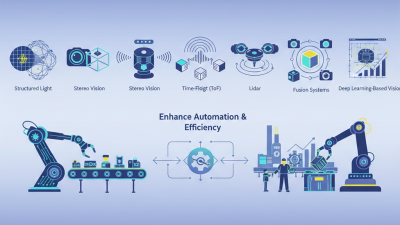
In manufacturing, 3D vision systems enhance automation. Robots equipped with these systems can identify and sort objects with precision. This leads to reduced errors and higher efficiency. In healthcare, 3D vision is used in surgeries. Surgeons rely on real-time imaging to make better decisions. However, the technology is not flawless. Issues like data processing delays can pose risks.
As 3D vision systems evolve, the potential applications grow. Retailers use them for inventory management and customer insights. Yet, challenges persist, including the need for extensive training. The future is promising, yet requires careful consideration.

3D vision systems are revolutionizing technology across various sectors. They provide depth perception and spatial understanding. These systems utilize multiple camera angles and sensors to capture objects in three dimensions. This technology is essential for robotics, autonomous vehicles, and even healthcare.
For those exploring 3D vision, consider how it can enhance your projects. A tip: ensure your sensors are optimized for the environment. Poor lighting can trick the system. Also, combining 3D data with AI algorithms can boost performance. Experimentation is key; not all setups yield perfect results. Mistakes often lead to breakthroughs.
Remember, 3D vision isn't infallible. Calibration issues can distort measurements. Regular adjustments are crucial for accuracy. It's also important to reflect on user interface designs. Clarity is vital; if users struggle, the technology fails. Challenges may arise, but they often pave the way for improvement.
3D vision systems are revolutionizing various fields, including robotics, healthcare, and manufacturing. Central to this transformation are key components like depth sensors, cameras, and advanced algorithms. According to a recent industry report, the global 3D imaging market is projected to reach $25 billion by 2024, highlighting its increasing demand.
Depth sensors are crucial. They provide accurate measurements of distances, allowing machines to understand their environment. Cameras capture high-resolution images, essential for real-time processing. Advanced algorithms analyze these images to extract meaningful data. However, challenges remain. Integrating these technologies can be complex, and achieving high accuracy in various conditions is often problematic.
Moreover, the implementation of 3D vision systems can require significant investment. Businesses must evaluate whether the benefits outweigh the costs. Reports indicate that many organizations struggle to justify these expenses initially. Nevertheless, as more applications emerge, the potential of 3D vision systems continues to expand, promising a future filled with innovation and efficiency.
| Component/Technology | Description | Applications | Impact on Technology |
|---|---|---|---|
| Cameras | Capture 3D images using stereo vision or structured light. | Robotics, Automated Inspection, AR/VR. | Improves accuracy in automation and enhances user experience in AR/VR. |
| Depth Sensors | Measure distance to objects in 3D space. | Gaming, Gesture Control, Robotics. | Enables natural user interfaces and improves interaction with virtual worlds. |
| Software Algorithms | Process 3D spatial data for analysis and visualization. | Medical Imaging, CAD applications, Industrial Automation. | Enhances precision in design and diagnostics, leading to cost savings. |
| LiDAR | Uses laser light to measure distances and create 3D maps. | Autonomous Vehicles, Environmental Monitoring, Surveying. | Improves navigation and safety in autonomous systems. |
| 3D Displays | Visualize 3D content for enhanced experiences. | Entertainment, Simulation, Education. | Transforms engagement in learning and training environments. |
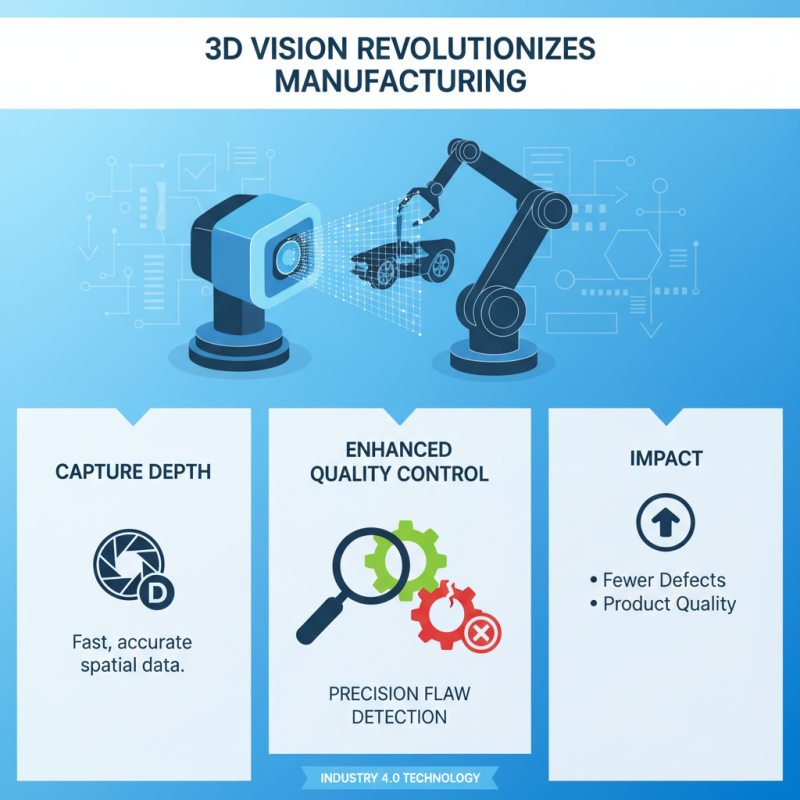
3D vision systems are revolutionizing multiple industries. Their unique ability to capture depth and spatial information enhances many applications. In manufacturing, these systems streamline quality control. Machines can detect flaws with astonishing precision. This leads to fewer defects and better overall quality.
In the medical field, 3D vision aids in surgeries and diagnostics. Surgeons rely on 3D imaging for complex procedures. It provides a comprehensive view of anatomy, ensuring safer operations. However, these systems require extensive training for medical staff. Misinterpretation can lead to serious consequences.
Retail is another area experiencing change. 3D vision systems improve inventory management. They help track stock levels accurately and efficiently. Yet, implementation can be costly and complex. Smaller businesses may struggle with this transition. Despite the challenges, the potential benefits are significant. 3D vision systems hold promise across various sectors.
3D vision systems are reshaping automation and robotics. These systems enable machines to perceive and interpret their surroundings in three dimensions. This is crucial for tasks requiring precision and accuracy. Robots equipped with 3D vision can navigate complex environments. They can avoid obstacles and identify objects with ease. This capability enhances their usefulness across various industries.
However, challenges remain. Not all environments are suited for 3D vision. For instance, poor lighting affects performance. Additionally, some systems struggle with reflective surfaces. These limitations can lead to errors in object detection. Consequently, continuous improvement in algorithms is necessary. Despite these flaws, the potential of 3D vision systems is vast. As technology advances, they will likely become more reliable. This will further integrate robots into daily operations, increasing efficiency.
Moreover, human-machine collaboration is on the rise. With 3D vision, robots can better understand human actions. This fosters teamwork between humans and machines. It opens up new possibilities in various fields, such as healthcare and manufacturing. The journey to fully realized 3D vision in robotics is ongoing. Each step presents lessons and areas for growth.
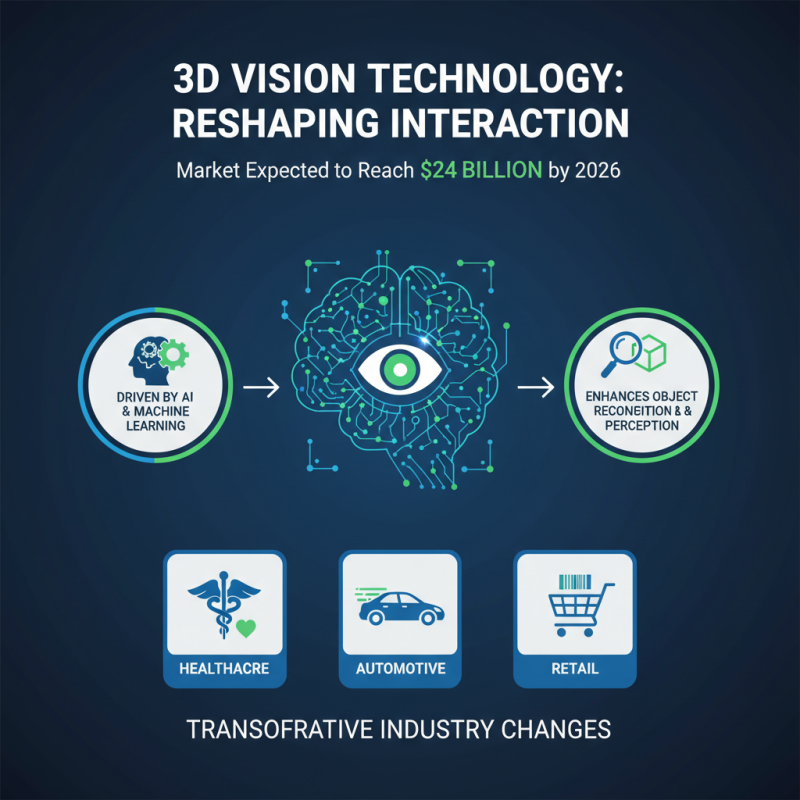
3D vision technology is reshaping how we interact with our environment. Recent reports show that the 3D vision market is expected to reach $24 billion by 2026. This evolution is driven by advancements in artificial intelligence and machine learning. These technologies enhance object recognition and spatial perception. Industries such as healthcare, automotive, and retail are experiencing transformative changes.
In healthcare, 3D vision systems improve diagnostic imaging. Surgeons can visualize complex structures before operating. This leads to higher success rates. Reports indicate that 3D imaging can reduce surgery time by 30%. However, challenges remain. The accuracy of depth perception in various lighting conditions can vary, which raises concerns about reliability.
In retail, 3D vision technology enhances customer experiences. Virtual try-ons and interactive displays engage consumers like never before. Studies suggest that customers are 40% more likely to make a purchase with 3D visualization tools. Yet, not all businesses embrace these innovations. High implementation costs and skills gaps can limit adoption. As technology evolves, addressing these challenges will be vital for widespread acceptance.