What Are the Best Types of Fishing Nets for Buyers?
Choosing the best Fishing Net starts with the job it must do, not its price or appearance. A compact landing net can help lift a fish beside a boat, while a cast net suits targeted throws in suitable shallow water. Seine nets cover a broader area and often need more than one person to handle. Each design solves a different problem. There is no universal winner.
Buyers should compare mesh size, net material, strength, and ease of handling. Fine mesh may hold smaller fish, but it can collect weeds and debris more readily. Knotless mesh may reduce abrasion, while heavier twine can better withstand repeated use. These details matter when a net is pulled over gravel, brushed against a dock, or stored damp after a long day. Fit matters most.
Consider the target species, fishing location, and method before choosing a net. Check the handle length, frame shape, float placement, and how easily the net folds or drains. For larger nets, weight and storage space deserve attention too. A product description can help, but real durability is harder to judge from a photograph. That distinction is easy to miss. Ask suppliers about mesh specifications, repair options, and intended use, then compare answers rather than relying on vague claims. Local rules may restrict certain net types, mesh sizes, or fishing methods, so verify current requirements before buying. A careful choice is usually more useful than the largest net on the shelf.
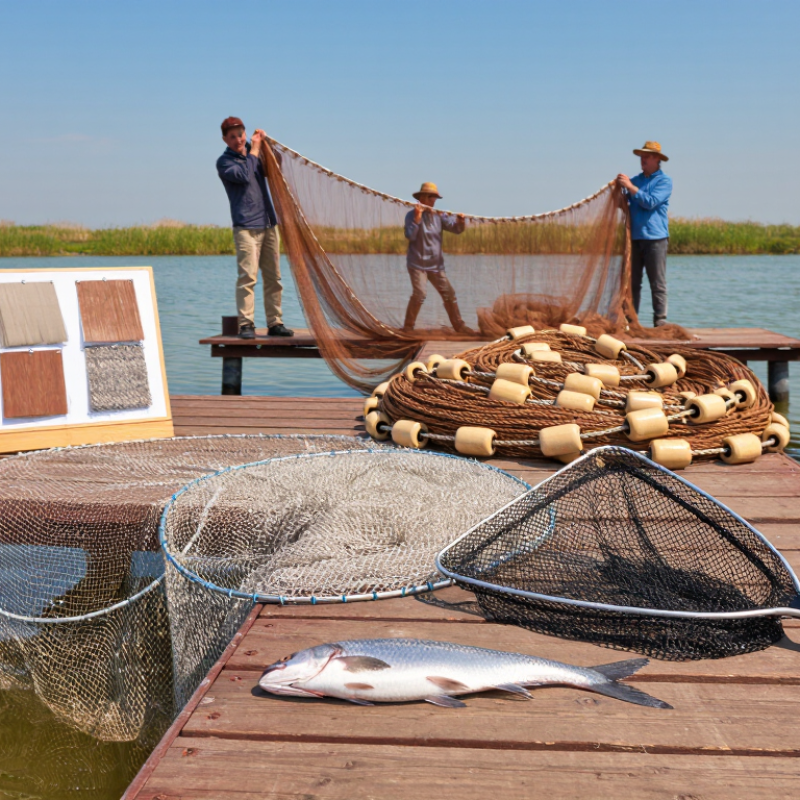
Key Factors Buyers Should Compare When Choosing a Fishing Net
Choosing a fishing net starts with the catch and the water, not the price tag. Compare mesh size with the target fish: openings that are too large may let smaller catches escape, while very fine mesh can collect debris. Fit matters most. Check the net’s depth, width, and working area against your boat or shore setup. A net that looks generous in a shop may be awkward to handle in a current.
Material affects weight, stretch, drying time, and resistance to wear. Nylon is flexible, while polyethylene often handles rougher conditions well; actual performance depends on construction and care. Examine the twine and knots closely. Uneven mesh or loose joins can become weak points after repeated hauling. Knotless netting may reduce visible abrasion, but it is not automatically the best choice for every fishery. Ask how easily the net can be repaired.
Consider floats, sinkers, and attachment lines as part of the whole system. Their balance should suit the intended depth and water movement, rather than simply making the net heavier. Rinse and dry equipment after use, especially when salt or mud remains in the mesh. Maintenance gets overlooked. Compare replacement and repair costs, too. A low purchase price can be a false economy, though not always; expected use and storage conditions matter. If possible, inspect a sample and handle it before ordering.
Gillnets, Cast Nets, and Seine Nets: How Each Type Works
Gillnets catch fish when they swim into a panel of mesh. The mesh size and hanging depth affect which fish are likely to be retained. Buyers should check twine strength, panel height, and float placement against the intended water and catch. A net that looks sturdy on a dry floor may handle differently once wet. Gillnets are efficient in suitable conditions, but they need careful placement and regular inspection.
Cast nets spread outward from the hand, then sink around fish as the weighted edge closes beneath them. Their circular shape and handline make them useful for small, targeted catches in accessible water. Mesh size, net diameter, and lead-line weight all influence how quickly the net opens and sinks. Practice matters. Even a well-made cast net can land in a heap if its throw is awkward.
Seine nets work by enclosing an area: two people, or a crew, draw the net through water or along a shoreline. Floats keep the upper edge near the surface, while weights hold the lower edge down. Buyers should consider net length, depth, mesh, and how many people will handle it. Seine nets can gather fish efficiently, but hauling a heavy, wet panel takes effort. The best choice depends on the fishing site, target catch, and available hands; that judgment is not always obvious from a product description.
Trawl Nets and Landing Nets: Best Uses for Different Fishing Methods
Trawl nets and landing nets serve different stages of fishing. A trawl net is towed behind a vessel, either through open water or close to the seabed. Its size, mesh, and shape affect how it moves and what it can catch. Buyers should match these features to the target species, fishing depth, and vessel capacity. A net that is too large can be difficult to handle and may strain equipment. Scale matters. Mesh size also affects water flow and catch retention, so it should suit the intended use rather than simply look durable.
A landing net is used to lift an individual fish from the water, often after it has been hooked. It suits angling from a shore, dock, or boat, where a trawl net would be impractical. Choose a hoop wide enough for the expected catch, a handle that reaches safely, and mesh that is easy to rinse. Knotless or soft mesh may reduce rubbing during handling, though no net replaces careful technique. Not always. Buyers often focus on hoop size and overlook handle length; that small mismatch can make a landing awkward. Consider storage space, too. A folding frame may help on a crowded boat, but hinges add parts that need inspection.
How to Match a Fishing Net to Your Target Species and Conditions
What Are the Best Types of Fishing Nets for Buyers?
How to Match a Fishing Net to Your Target Species and Conditions
Choose a net around the fish, not just the price. A landing net suits fish you have already hooked, while a cast net can gather baitfish in suitable, open water. Seine nets work for coordinated shoreline sampling, but need room and careful handling. Fit matters more. For larger fish, look for a deep bag, a sturdy frame, and mesh that supports the catch without adding needless weight. For smaller fish, finer mesh can help prevent escape, though it may collect weeds and take longer to clean. Check local rules before choosing a net type or mesh size.
Conditions matter as much as species. In rocky streams, a compact landing net with a short handle is easier to maneuver than a broad, deep model. From a high bank or boat, extra reach can help, but a longer handle may feel awkward in tight spaces. In salt water, corrosion-resistant fittings and durable netting are useful; rinse and dry the net after use. Keep it simple. Knotless mesh can reduce abrasion on delicate fish, while rubberized mesh may be heavier or bulkier. There is no perfect option. I would compare mesh, frame strength, storage, and cleaning needs against the places you actually fish. Small details matter.
Typical Fishing-Net Mesh Opening Ranges
Compare approximate mesh openings to help match a net to target species and fishing conditions.
Ranges are practical examples, not universal specifications. Mesh size, measurement method, target species, and local regulations vary; check applicable rules before fishing.