China Best 3D Vision Systems for Robots Suppliers
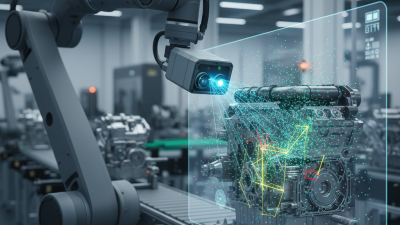
China has become a major source of 3d vision systems for robots, supporting factories, warehouses, laboratories, and smart logistics. These systems combine cameras, depth sensors, artificial intelligence, and robot control software. They help machines recognize parts, measure surfaces, locate objects, and respond to changing workspaces.
The details matter. A reliable supplier should explain camera resolution, depth accuracy, field of view, lighting requirements, latency, and software compatibility. It should also provide testing records, integration support, and clear warranty terms. In a real workshop, a metal component may reflect overhead light, while dust can weaken depth readings. Strong systems must handle such imperfections.
Robotics expert Raffaello D’Andrea has said, “The future of robotics is about making robots that can work with people.” That principle fits modern 3d vision systems for robots. The best solutions do more than produce attractive demonstrations. They support safer decisions, stable picking, accurate inspection, and repeatable production.
This guide examines leading China-based suppliers and their practical strengths. It considers hardware quality, algorithm performance, customization, technical service, and industry experience. Some suppliers may look impressive on paper but offer limited field evidence. That deserves caution. No single system fits every factory. Careful testing remains essential.
A better choice begins with real production needs, not marketing language. Look closely. Test honestly.

China’s Robot Density Reached 470 Units per 10,000 Workers in 2023
China Best 3D Vision Systems for Robots Suppliers
China’s robot density reached 470 units per 10,000 workers in 2023. This figure shows how quickly automation is moving from pilot projects into daily factory operations. More robots also create stronger demand for reliable 3D vision systems. These systems help robots locate parts, measure surfaces, and handle mixed items without fixed positioning.
In practical deployments, a depth camera must cope with metal glare, dust, changing light, and tightly packed bins. A supplier should provide clear data on detection accuracy, cycle time, calibration stability, and failure recovery. Factory teams should test these points on real parts, not only sample objects. A useful trial may include black components, reflective housings, and parts placed at awkward angles. Small details matter.
The 470-unit density figure also reveals a pressure point. Many factories want faster deployment, but integration quality can vary. Some systems perform well in demonstrations and struggle after installation. That gap hurts. Buyers should review maintenance records, software update procedures, training support, and spare-part availability. Independent acceptance tests can expose missed detections before production begins. I have found that simple fixtures often improve results, although they may reduce flexibility. This trade-off deserves honest discussion. A lower initial price may become expensive when operators repeatedly correct robot errors. Reliable suppliers should explain these limits clearly and document performance under working conditions.
China’s Robot Density Reached 470 Units per 10,000 Workers in 2023
China’s industrial robot density increased from 140 units per 10,000 manufacturing workers in 2018 to 470 in 2023. This sustained growth reflects the rapid expansion of industrial automation and the increasing demand for machine vision and 3D vision systems in robotic applications. Data is based on figures reported by the International Federation of Robotics.
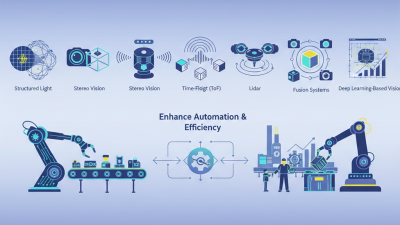
3D Vision Technologies: ToF, Stereo, and Structured-Light Performance
China Best 3D Vision Systems for Robots Suppliers
ToF, stereo, and structured light solve different robotic sensing problems. Choosing among them requires more than checking resolution or frame rate. In practical robot-cell tests, ToF systems deliver useful depth over moving targets. They remain effective when parts vary in color or surface texture. However, reflective metal can create unstable readings and edge noise.
Stereo vision uses two cameras to estimate depth from matching image features. It performs well in bright environments and supports flexible working distances. Blank or repetitive surfaces can still confuse the matching process. Good calibration matters. Small lens shifts may cause gripping errors near part edges.
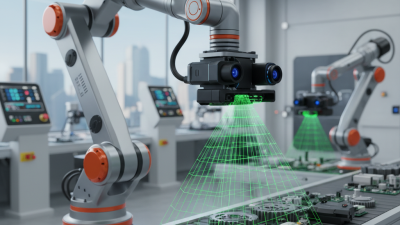
Structured-light systems project coded patterns onto the object. They often produce dense, precise data for inspection and bin picking. Ambient light can weaken the projected pattern, especially near factory windows. A supplier should provide working-distance tests, calibration guidance, and clear accuracy data. Ask for results on your actual materials, not only laboratory targets. Integration also depends on software tools, robot communication, cycle time, and service response.
No method wins every test. I have seen a high-resolution camera fail because dust covered its projector. That detail is easy to overlook. A reliable evaluation should include vibration, changing light, dark parts, shiny parts, and repeated picking cycles. Supplier claims deserve verification through documented trials and measurable error rates.
Supplier Benchmarks: 0.1–1 mm Accuracy, 30–100 FPS, and IP65 Protection
For buyers comparing 3D vision systems for robots, three figures deserve practical scrutiny: 0.1–1 mm accuracy, 30–100 FPS, and IP65 protection. These numbers matter because industrial robots are handling smaller parts at higher speeds. The International Federation of Robotics reported 541,302 new industrial robots installed worldwide in 2023. That growth increases demand for dependable inspection and bin-picking vision.
A 0.1 mm claim usually applies under controlled conditions. Distance, vibration, surface color, calibration, and lighting can change results. In a real cell, 0.3–1 mm may be more realistic across a larger working area. Test repeatability, not only advertised resolution. A 30–100 FPS camera can reduce motion blur, but frame rate alone does not guarantee faster production. Processing latency, exposure time, robot communication, and point-cloud density also affect cycle time. Sometimes, slower data is more useful.
IP65 protection means dust-tight construction and resistance to water jets. It does not mean immersion protection. The IEC 60529 framework should be checked alongside enclosure design and connector sealing. Industry machine-vision surveys consistently identify integration complexity as a major adoption barrier, while the IFR data highlights continuing automation expansion. Buyers should request sample parts, failure images, calibration records, and measured latency. Specifications can mislead. Field validation remains essential.
China Best 3D Vision Systems for Robots Suppliers - Supplier Benchmarks: 0.1–1 mm Accuracy, 30–100 FPS, and IP65 Protection
| Benchmark Profile |
3D Technology |
Typical Accuracy |
Capture Rate |
Working Distance |
Field of View |
Ingress Protection |
Recommended Robot Tasks |
Common Interfaces |
| Precision Inspection |
Structured light |
0.1–0.3 mm |
30–45 FPS |
300–800 mm |
150–450 mm |
IP65 housing available |
Dimensional inspection, connector checking, surface verification |
Gigabit Ethernet, USB 3.0, digital I/O |
| High-Speed Bin Picking |
Active stereo |
0.5–1.0 mm |
60–100 FPS |
500–1,500 mm |
400–1,000 mm |
IP65 or higher for industrial installations |
Random bin picking, depalletizing, part localization |
Gigabit Ethernet, Ethernet/IP, PROFINET |
| Mobile Robot Navigation |
Time-of-flight or LiDAR |
5–20 mm |
30–60 FPS |
0.2–10 m |
70°–120° horizontal coverage |
IP65 standard for outdoor-capable models |
Obstacle detection, mapping, pallet transport, safety zones |
Ethernet, CAN, RS-232/RS-485, ROS support |
| Bin and Pallet Depalletizing |
Structured light or active stereo |
0.8–1.0 mm |
30–50 FPS |
700–2,000 mm |
600–1,500 mm |
IP65 available with sealed connectors |
Layer detection, carton localization, pallet loading and unloading |
Gigabit Ethernet, TCP/IP, digital I/O |
| Large-Part Guidance |
Industrial 3D laser scanning |
0.5–1.0 mm |
30–60 FPS |
1–5 m |
500–2,500 mm |
IP65 for factory-floor environments |
Welding alignment, assembly guidance, surface and profile measurement |
Gigabit Ethernet, PROFINET, Ethernet/IP, trigger I/O |
| Cost-Optimized General Automation |
Stereo vision |
0.8–1.0 mm |
30–60 FPS |
400–1,200 mm |
300–900 mm |
IP54–IP65, depending on enclosure design |
Pick-and-place, part presence detection, orientation and pose estimation |
USB 3.0, Gigabit Ethernet, TCP/IP, digital I/O |
|
Benchmark note:
Accuracy, frame rate, working distance, field of view, and IP rating vary with object reflectivity, ambient light, calibration method, exposure settings, mounting stability, and enclosure configuration. Confirm performance using application-specific samples and acceptance tests before procurement.
|
Leading Chinese Suppliers of Robot Cameras, Software, and Turnkey Systems
China’s robot vision suppliers now offer cameras, software, and turnkey integration under one contract. This matters as factories demand shorter installation cycles and stable production data. IFR’s World Robotics 2024 report recorded 276,288 industrial robot installations in China during 2023. That represented about 51% of global installations.
The strongest suppliers combine structured-light, laser-triangulation, and time-of-flight cameras. Their software supports point-cloud processing, object recognition, bin picking, and robot calibration. Turnkey teams also design lighting, grippers, safety interfaces, and production-line testing. MarketsandMarkets valued the global machine vision market at approximately 13.7 billion dollars in 2024. It projects growth to 20.5 billion dollars by 2029.
Performance depends on details.
A capable supplier should provide repeatability data, cycle-time tests, sample images, and documented acceptance criteria. Factory trials reveal more than polished demonstrations. Engineers should inspect reflective metal, dark plastic, dust, vibration, and changing daylight. Some suppliers still present impressive detection rates from carefully selected samples. That remains a weakness. Buyers should request independent validation, local technical support, spare-camera planning, and software update policies before signing a turnkey agreement. Reliable delivery is not only about hardware quality. It also depends on integration discipline, operator training, and clear responsibility after commissioning.
Applications: Bin Picking, Inspection, Palletizing, and Metrology Accuracy
China has become a significant sourcing market for 3D vision systems used in industrial robotics.
The International Federation of Robotics reported 541,302 industrial robots installed worldwide in 2023. This installed base increases demand for reliable perception, not just faster robot arms. Suppliers should therefore be assessed through depth accuracy, calibration stability, software integration, and field support.
Bin picking is a practical test.
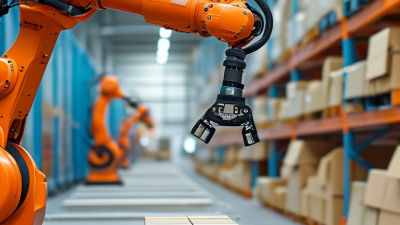
A camera must identify randomly stacked parts, estimate their poses, and avoid collisions near tight bin walls. Inspection systems can detect scratches, missing holes, and assembly gaps under changing factory light. Palletizing requires consistent recognition of cartons, labels, and damaged edges. Small errors accumulate quickly. A 2-millimeter shift may create unstable layers after several cycles.
Metrology needs stricter evidence.
Repeatability, traceable calibration, and uncertainty reporting matter more than impressive demonstration videos. MarketsandMarkets has projected strong growth for the 3D machine vision market, driven by automation and quality control. Yet real production remains imperfect. Transparent plastic, black rubber, dust, and reflective metal can confuse depth sensors. They still do. Buyers should request sample testing with their own parts, cycle-time records, and failure statistics. A supplier with documented calibration procedures and measurable recovery performance is usually more dependable than one offering only a high-resolution camera. According to the IFR, robot adoption continues across manufacturing, but successful deployment depends on the complete vision-and-robot workflow, not isolated sensor specifications.