
China Top DTH Boring Machine Manufacturers for Global Buyers

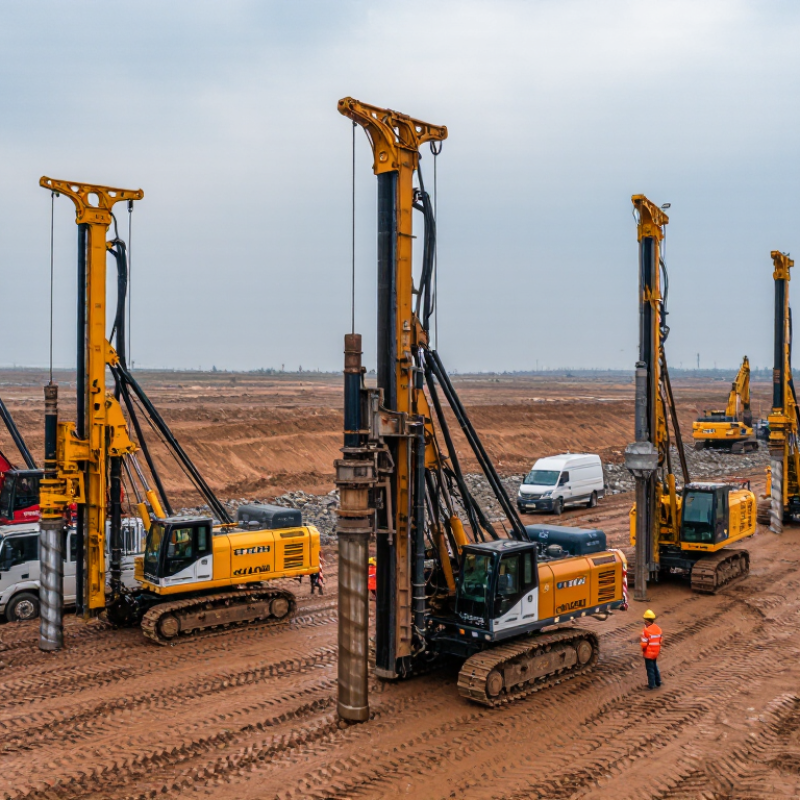
China has become a major sourcing base for drilling equipment, supported by mature steel, hydraulic, and diesel-engine supply chains. For global buyers, a Dth Boring Machine is not simply a low-cost rig. It must deliver stable penetration, controlled vibration, reliable air consumption, and practical service support in demanding ground conditions.

Industry reports support this expanding opportunity. Grand View Research identifies infrastructure development, mining activity, and quarrying as important drivers of global drilling equipment demand. MarketsandMarkets also forecasts continued growth in mining equipment, especially where mechanized drilling improves productivity and reduces manual exposure. These findings matter on a muddy jobsite, where a poorly matched compressor can slow drilling, overheat, and increase operating costs. The machine’s working diameter, drilling depth, rock hardness, and available air pressure deserve careful comparison.

Chinese manufacturers now offer crawler-mounted, truck-mounted, and compact hydraulic models for water wells, foundations, quarrying, and geotechnical work. However, catalog claims are not enough. Buyers should examine factory testing records, component brands, fuel consumption, rod compatibility, dust-control options, and after-sales response times. ISO 9001 certification can support process confidence, but it does not replace an independent technical inspection. That point is easy to overlook.

This guide reviews China’s leading suppliers through product capability, export experience, customization, documentation, and service reliability. It also considers a practical weakness: published performance figures may reflect ideal geology rather than real projects. Comparing test data with verified customer cases can reveal the difference. For global buyers, the best choice is rarely the cheapest machine. It is the supplier that can keep drilling when the rock becomes harder, the weather turns worse, and spare parts are needed urgently.
China Top DTH Boring Machine Manufacturers for Global Buyers

DTH Boring Machine Fundamentals: 90–300 mm Holes and 1.0–2.5 MPa Air

DTH boring machines are built around a simple principle: compressed air drives the down-the-hole hammer and removes broken rock. For global buyers, a 90–300 mm hole range covers water wells, anchoring, quarry work, and smaller foundation projects. The correct diameter depends on casing size, ground stability, and required production, not only the hammer’s rated capacity.

Operating pressure usually falls between 1.0 and 2.5 MPa. At 1.0 MPa, softer formations may drill smoothly with moderate air demand. Hard, fractured rock often needs closer to 2.0–2.5 MPa for stable impact energy and effective cuttings removal. A 2023 technical review from the International Association of Drilling Contractors links drilling performance closely to air delivery, bit design, and formation conditions. Pressure alone does not guarantee speed.

Air volume matters just as much. The U.S. Geological Survey reported more than 2.5 billion metric tons of global iron ore production in 2023, showing the scale of rock-intensive industries and their demand for dependable drilling equipment. In field use, operators should check compressor flow, hose diameter, moisture control, and pressure loss at the drill head. Small errors become expensive. My own practical caution is simple: selecting a 300 mm system for every project can waste fuel and reduce maneuverability. A smaller 90–165 mm setup may perform better in narrow benches, although actual results still require a site test.

China Top DTH Boring Machine Manufacturers for Global Buyers - DTH Boring Machine Fundamentals: 90–300 mm Holes and 1.0–2.5 MPa Air

Hole Diameter Cross-Sectional Area Approx. Drilled Volume per Metre Typical DTH Application Recommended Air Pressure Range Operating Considerations
90 mm 0.00636 m² 6.36 L/m Small-diameter exploration holes, anchoring, and light geotechnical work 1.0–1.5 MPa
10–15 bar
Requires accurate alignment and effective cuttings removal in narrow holes
150 mm 0.01767 m² 17.67 L/m Water-well pilot holes, utility drilling, and medium geotechnical projects 1.2–1.8 MPa
12–18 bar
Balance compressor capacity, drill penetration, and flushing performance
200 mm 0.03142 m² 31.42 L/m Production water wells, foundation drilling, and construction boreholes 1.5–2.0 MPa
15–20 bar
Higher air volume is needed to maintain annular velocity and hole cleaning
250 mm 0.04909 m² 49.09 L/m Large water wells, quarry pre-splitting, and heavy construction drilling 1.8–2.3 MPa
18–23 bar
Check compressor free-air delivery, pipe losses, and drill-string strength
300 mm 0.07069 m² 70.69 L/m Large-diameter wells, infrastructure drilling, and specialized rock excavation 2.0–2.5 MPa
20–25 bar
Use high-capacity air supply and verify that all components are pressure-rated
Technical note: Cross-sectional area is calculated as π × diameter² ÷ 4. Drilled volume per metre is the theoretical cylindrical hole volume and does not include oversize drilling, wall collapse, or cuttings. Actual air pressure selection depends on rock hardness, hole depth, drill-pipe diameter, flushing conditions, and the rated limits of the DTH hammer and compressor.

China’s DTH Manufacturer Landscape: CE, ISO 9001, and OEM Capabilities

China’s DTH boring machine sector includes factories serving mining, water-well, quarry, and foundation projects. Buyers should examine more than machine photos. A reliable supplier can explain hammer compatibility, drilling diameter, air consumption, and rock conditions in practical terms. Field experience matters. Ask for test records from similar formations.

CE marking supports access to relevant European markets, but it does not guarantee drilling performance. Verify the declaration, technical file, safety controls, and inspection process. ISO 9001 shows that a factory follows a quality management system. It does not automatically prove every component is durable. Request material certificates, dimensional reports, and final inspection records. Documents can be incomplete. That deserves careful questioning.

OEM capability is another important measure. A capable manufacturer can adjust frame dimensions, crawler width, hydraulic layout, control systems, and color requirements without weakening safety functions. Discuss drawings before placing an order. Confirm sample approval, spare-part coding, packaging protection, and operator manuals in clear English. A factory visit or live video inspection may reveal assembly habits that brochures hide. Independent testing is useful when the project involves difficult ground, long shifts, or strict local requirements. Mistakes still happen, especially when specifications remain vague. Clear communication reduces expensive revisions.

Comparing Rigs by 20–300 m Depth, 4×4 Mobility, and Drilling Automation

China Top DTH Boring Machine Manufacturers for Global Buyers

Comparing Rigs by 20–300 m Depth, 4×4 Mobility, and Drilling Automation

Global buyers often compare DTH boring machines by rated depth first. That can be misleading. A 20–60 m rig suits shallow water wells, geotechnical checks, and compact construction sites. Machines rated for 100–200 m need stronger feed systems and larger compressors. For 300 m work, buyers should verify rock conditions, rod diameter, air pressure, and continuous cooling capacity. A catalog depth is not a field guarantee.

Four-wheel-drive mobility matters on uneven ground. A 4×4 chassis can cross gravel, clay, and mild slopes with less site preparation. However, tire clearance and turning radius deserve careful inspection. Automation may include hydraulic feed control, rotation adjustment, compressor monitoring, and drilling-depth records. These functions reduce operator fatigue and improve repeatability. They do not replace an experienced driller. Ground conditions change quickly.

Tips: Ask for test data from similar formations. Check actual drilling speed, fuel use, maintenance access, and spare-part support. Request videos showing setup on rough terrain. Confirm whether the control system supports clear fault alerts and manual override. I would also compare noise and dust-control options, because these details affect daily productivity. Some specifications remain optimistic. Verify them before purchase.

Global Buyer Checks: Factory Audits, Rock Tests, Warranties, and Spare Parts

Global Buyer Checks: Factory Audits, Rock Tests, Warranties, and Spare Parts

A factory audit should examine more than production photos. Request welding records, material certificates, calibration logs, and final inspection reports. Check whether the workshop can trace each pressure vessel and rotating assembly. A clean showroom proves little. Production discipline matters more.

The USGS Mineral Commodity Summaries 2024 reports about 2.5 billion metric tons of global iron ore mine production in 2023. That scale increases pressure on drilling uptime and maintenance planning. Ask suppliers to test the DTH boring machine against your rock samples. Record uniaxial compressive strength, abrasivity, fracture spacing, penetration rate, air consumption, and bit wear. Granite and fractured limestone can produce very different results. Laboratory results may not match the bench.

Read warranty exclusions carefully. Define coverage for the motor, hammer, compressor interface, controls, and structural welds. Confirm response times for technical faults, not only replacement promises. Spare parts should include hammers, shanks, seals, filters, valves, and critical fasteners. Request a two-year consumption forecast and local inventory evidence. The Global Mining Guidelines Group promotes structured equipment reliability practices, but supplier claims still require verification. A remote video audit is useful, yet incomplete. Independent inspection costs money. It can prevent a far larger delay.

Selecting Suppliers by Cost per Meter, Lead Time, Service Coverage, and ROI

China Top DTH Boring Machine Manufacturers for Global Buyers

For global buyers, the lowest quotation rarely means the lowest cost per meter. Calculate purchase price, freight, fuel, drilling tools, labor, maintenance, and expected output. A machine costing 120,000 dollars may outperform a cheaper unit if it drills 30% faster. Request test logs showing penetration rate, air consumption, bit life, and downtime. Deloitte’s 2024 Tracking the Trends report identifies productivity and cost control as major mining priorities. These measures make supplier claims more practical.

Lead time needs evidence, not promises. Ask for production milestones, inspection dates, export documents, and spare-parts availability. The World Bank’s 2023 Logistics Performance Index gave China a 3.7 score out of 5, showing strong logistics capacity, but country data cannot prove one factory’s reliability. Service coverage matters after arrival. Confirm remote diagnosis, technician response times, training, warranty exclusions, and local parts stock. One missed seal can stop a dusty site for days. Small detail. Large cost.

Tips: Compare suppliers with a three-year ROI model. Divide total ownership cost by forecast meters, not machine hours. Use conservative assumptions for rock hardness, weather, and operator skill. IEA’s Global Critical Minerals Outlook 2024 highlights continuing pressure to expand mineral supply, yet demand forecasts can encourage rushed purchases. I would challenge optimistic production figures. Ask for customer references in similar geology and request a paid field trial when possible. A spreadsheet can still lie.

DTH Boring Machine Supplier Selection Benchmark

The benchmark compares commonly used procurement criteria for global DTH boring projects. Lower cost per meter and shorter lead time receive higher scores, while broader service coverage and faster ROI improve supplier attractiveness. Scores are normalized to a 100-point scale for easier comparison.

SERVO-ROBOT Inc
Privacy Overview

This website uses cookies so that we can provide you with the best user experience possible. Cookie information is stored in your browser and performs functions such as recognising you when you return to our website and helping our team to understand which sections of the website you find most interesting and useful.