
How to Choose a Permanent Magnet Air Compressor in 2026?

Choosing a Permanent Magnet Air Compressor in 2026 requires more than comparing motor efficiency percentages. A reliable decision starts with the air system itself. Measure average demand, peak demand, operating pressure, and daily running hours. A compressor sized only for peak demand may waste energy during quieter production periods. An undersized model may run continuously and struggle to maintain stable pressure.

Permanent magnet technology can reduce transmission losses and improve efficiency during variable-speed operation. However, results depend on the inverter, cooling design, control software, and installation conditions. Review performance data tested under recognized standards, such as ISO 1217, when available. Check the specific power rating, pressure range, noise level, motor protection, and service intervals. A clean factory floor is not guaranteed. Dust, heat, humidity, and poor ventilation can quickly affect performance.

Look beyond the nameplate. Ask for measured data at your operating pressure, not only promotional figures. Check whether local technicians can service the drive and controller. Inspect monitoring functions, alarm records, leak detection compatibility, and remote support options. During evaluation, listen for abnormal startup noise and watch pressure fluctuations across a normal production shift. Small details matter.

A spreadsheet helps, but it cannot predict every installation problem. Energy savings may be overstated when demand patterns are misunderstood. That is an uncomfortable possibility. This guide examines practical selection factors for 2026, including lifecycle cost, reliability, controls, maintenance, and supplier credibility. The goal is not to choose the most advanced machine. It is to choose a compressor that performs consistently in the real workplace.
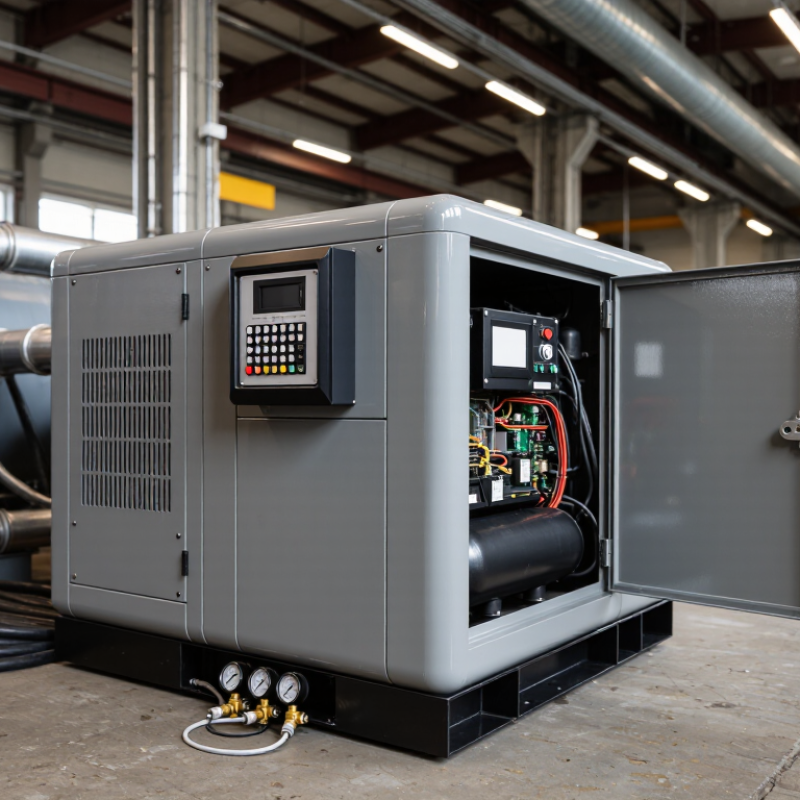
How to Choose a Permanent Magnet Air Compressor in 2026?

What Is a Permanent Magnet Air Compressor?

How to Choose a Permanent Magnet Air Compressor in 2026?

What Is a Permanent Magnet Air Compressor?

A permanent magnet air compressor uses a motor with magnets embedded in its rotor. Unlike an induction motor, the rotor needs no electrical current to create its magnetic field. This design reduces rotor losses and supports efficient speed control through an inverter. The compressor can slow down when air demand falls, instead of running at full speed continuously.

The U.S. Department of Energy reports that compressed air may represent about 10% of industrial electricity use. Its compressed air assessments also identify potential energy savings of 20% to 50% in poorly managed systems. These figures explain the interest in permanent magnet technology, especially in factories with changing production loads. The International Energy Agency has also reported that electric motor systems consume roughly half of global electricity. Small motor improvements can matter at plant scale.

Look beyond the efficiency label. Check measured power consumption at your actual pressure, flow, and duty cycle. A unit rated at 75 kW may behave differently at 40% load. Ask for test conditions, sound levels, cooling requirements, and inverter protection details. The caveat is important: permanent magnets do not solve leaks, oversized piping, or poor controls. I would not trust a brochure number without logged plant data. In practice, a pressure sensor, an ultrasonic leak survey, and one week of energy monitoring often reveal more than a polished specification sheet.

How Permanent Magnet Air Compressors Work

How to Choose a Permanent Magnet Air Compressor in 2026?

A permanent magnet air compressor uses a motor with embedded magnets to create rotation. The motor receives controlled electrical pulses from an inverter. This inverter adjusts speed according to the factory’s air demand. When production needs less air, the motor slows instead of running fully loaded. That reduces wasted energy during unloading periods.

A screw element compresses air through two rotating screw rotors. Oil-injected models also use oil for sealing, cooling, and lubrication. The oil then passes through separation and filtration stages. In field inspections, I have seen efficiency claims change when leaks, dirty filters, or high discharge pressure were present. The technology is advanced, but it is not automatically the best choice. A poorly sized compressor can still consume unnecessary power.

Tips: Compare measured input power at several pressure levels. Check whether the inverter and motor have suitable cooling in your plant. Review service access around filters, separators, and oil lines. Ask for performance data under your real duty cycle, not only laboratory conditions. A smaller unit may work well, but frequent peak demand can cause unstable pressure. I would also measure leaks before final selection. That step is often overlooked.

Which Technical Specifications Matter Most?

How to Choose a Permanent Magnet Air Compressor in 2026?

The most important specification is actual free air delivery, not motor size. Check FAD at your required pressure, such as 7 or 8 bar. A larger kW rating does not always provide more usable air. Ask for test conditions and measurement standards. Small differences become expensive during long production shifts.

Specific power shows efficiency more clearly. Compare the compressor’s kW per cubic metre per minute at the same pressure. A permanent magnet motor can reduce losses, especially during variable demand. However, savings depend on the inverter, cooling system, and operating profile. Review the speed range and minimum stable output. Poor control at low demand may cause cycling and wasted energy. It happens more often than sales sheets suggest.

Check the motor’s insulation class, protection rating, ambient temperature limit, and cooling method. A dusty workshop needs reliable filtration and easy access to service parts. Confirm noise levels, voltage tolerance, restart behaviour, and controller alarms. If air quality matters, examine the dryer’s pressure dew point and filtration arrangement. I also measure inlet temperature and pressure drop on site, because brochures cannot describe every installation. Leave capacity for leakage and future demand, but avoid oversized equipment. Oversizing can keep the machine below its efficient range. That trade-off deserves a real load profile, not a guess.

How to Compare Energy Efficiency and Operating Costs

Permanent Magnet Air Compressor in 2026: Comparing Energy Efficiency and Operating Costs

Choosing a permanent magnet air compressor in 2026 requires more than reading the motor efficiency label. Measure your real demand first. A workshop using 6 bar air for eight hours needs a different solution from a plant running near 10 bar continuously. Check leakage, pressure drops, duty cycle, and unloading time. These details often change the payback calculation.

Compare specific power, expressed as kilowatts per cubic metre per minute, at your normal pressure. A lower number usually means less electricity for the same air output. Ask for test data under conditions close to yours, not only the best laboratory figure.

Record running hours and local electricity rates. Then estimate annual energy cost by multiplying power consumption, operating hours, and the tariff. Include filters, separator service, cooling parts, and planned maintenance. Energy is only part of ownership.

Permanent magnet systems can reduce losses during variable demand because speed control follows air consumption. However, savings are not automatic. Oversizing may cause inefficient low-load operation, while poor ventilation can increase thermal stress.

I have seen estimates fail because weekend use was ignored. That mistake is easy to repeat.

Leave room for uncertainty. Compare at least three load scenarios, and request measured noise, temperature, and service data. A higher purchase price may be reasonable when verified energy savings cover the difference within an acceptable period.

How to Select the Right Compressor for Your Application

Choosing a permanent magnet air compressor in 2026 starts with the application, not the motor label. Measure peak flow, average demand, working pressure, and daily operating hours. The U.S. Department of Energy reports that compressed air can consume about 10% of industrial electricity. Small sizing errors can therefore become expensive.

Check the load profile carefully. A factory using air intermittently may need a variable-speed compressor, while a constant production line may favor stable base-load equipment. Permanent magnet motors can reduce losses, especially during partial-load operation, but actual savings depend on controls, cooling, and maintenance. The European Commission’s energy-efficiency guidance emphasizes system-level performance rather than component ratings alone. That distinction matters.

Air quality is equally important. Food processing, electronics, and painting applications may require specific filtration, drying, and pressure dew-point performance. ISO 8573-1 provides a framework for compressed-air purity classes. Review the standard before selecting treatment equipment. Receiver capacity also deserves attention. It can reduce rapid cycling and stabilize pressure near long pipe runs.

Do not size the compressor only for the largest machine. That mistake is common. Audit leaks first; the DOE notes that poorly maintained systems may lose a significant share of generated air through leakage. I would choose a slightly conservative flow margin, but not an oversized unit. Oversizing increases idle running and weakens efficiency. A practical decision should compare measured demand, lifecycle energy, service access, ambient temperature, and noise limits—not brochure efficiency alone.

SERVO-ROBOT Inc
Privacy Overview

This website uses cookies so that we can provide you with the best user experience possible. Cookie information is stored in your browser and performs functions such as recognising you when you return to our website and helping our team to understand which sections of the website you find most interesting and useful.