
How to Choose Aluminum Tube Extrusions for Your Project?

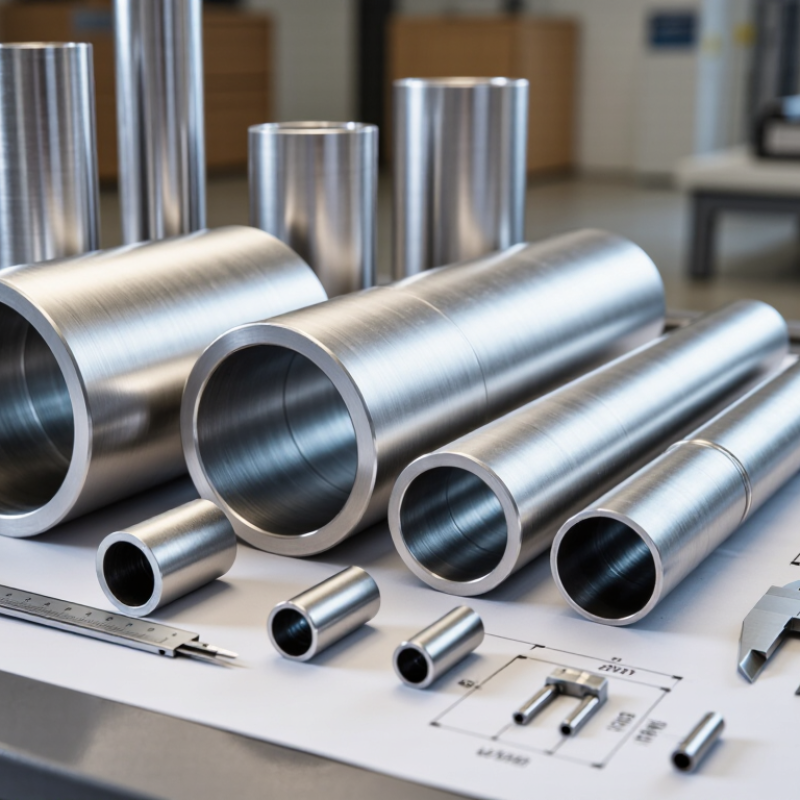
Choosing Aluminum Tube Extrusions is a design decision, not merely a purchasing task. The right tube must carry loads, manage heat, resist corrosion, and fit the production process. Wall thickness, alloy, temper, diameter, and tolerance all matter. A tube that looks efficient on paper may twist during cutting or deform during assembly.

Industry data shows why this choice deserves care. The Aluminum Association’s 2024 Aluminum Statistical Review describes aluminum as a major material across transportation, construction, packaging, and electrical applications. Grand View Research also projects continued growth in the global aluminum extrusion market, driven by lightweight vehicle structures, renewable-energy equipment, and efficient building systems. These reports indicate strong demand, but they do not remove project-specific risks. Market growth is not a substitute for engineering validation.

Jeff Henderson, former president of the Aluminum Extruders Council, has emphasized, “Good extrusion design begins with understanding the application.” That principle is easy to overlook. A 6063 tube may provide an attractive finish and smooth extrusion performance, while 6061 may offer higher strength but require different fabrication choices. Consider a 40-millimeter tube supporting a vibrating frame. Its alloy alone cannot predict performance; joint design, unsupported length, surface treatment, and fatigue exposure also matter.

Small details decide outcomes.

This guide explains how to compare Aluminum Tube Extrusions by performance, manufacturability, cost, and application demands. It also questions common assumptions, because the cheapest profile can become expensive after machining, rework, or premature replacement. Validate the selection with supplier data, drawings, and practical testing.
How to Choose Aluminum Tube Extrusions for Your Project?

Define Project Requirements and Tube Performance Goals

Before choosing an aluminum tube extrusion, translate the project into measurable requirements. Record the outer dimensions, wall thickness, tube length, connection method, and expected load. A tube supporting a 40-kilogram instrument needs a different design from one protecting lightweight wiring. Include bending, torsion, vibration, temperature, and impact conditions. These details often expose weak assumptions early.

Material selection follows performance goals. Common 6000-series alloys offer a practical balance of strength, corrosion resistance, and extrudability. Temper also matters. A heat-treated T6 tube may improve strength, but it can complicate forming and increase cost.

Refer to ASTM B221 for extrusion requirements, while checking dimensional tolerances with the supplier. Small variations can affect sliding fits and sealing surfaces. Measure twice.

Environmental targets deserve equal attention. The International Aluminium Institute reports that recycling aluminum uses about 5% of the energy required for primary production, representing up to 95% energy savings.

Specify recycled content when it supports the project’s life-cycle goals, but verify certification and actual material availability. Surface finish, anodizing, or powder coating should match exposure conditions, not appearance alone. In coastal air, neglected protection may fail sooner than expected. That possibility needs testing.

Prototype the tube under realistic loads. Check deflection, joint movement, and heat buildup after assembly. Finite-element analysis can guide decisions, but it cannot replace physical testing.

A thinner wall may reduce weight and material use, yet it can create local buckling around drilled holes. That trade-off is easy to underestimate.

Review the design with an extrusion specialist before locking the die and production quantities.

Compare Aluminum Alloys, Temper Conditions, and Strength Levels

How to Choose Aluminum Tube Extrusions for Your Project?

Alloy selection should follow the load, finish, and forming process. The Aluminum Association’s Aluminum Standards and Data 2021 lists 6061-T6 extrusions at about 42 ksi tensile strength and 35 ksi yield strength. This alloy suits structural tubes, brackets, and frames facing repeated loads. It is strong, but it usually needs more effort during bending.

6063 is different. The same data reports approximately 27 ksi tensile strength and 21 ksi yield strength for 6063-T5. Its smoother surface and easier extrusion make it useful for architectural tubes, rails, and visible enclosures. For higher strength, 6063-T6 can reach approximately 30 ksi tensile strength and 25 ksi yield strength. The improvement is real, though not dramatic.

Temper changes performance. T5 gains strength through artificial aging after extrusion, while T6 receives solution heat treatment and aging. ASTM B221 also warns that mechanical properties depend on wall thickness, profile shape, and testing direction. Do not treat a catalog number as a guarantee.

I have seen thin-wall tubes pass a desk test but fail after drilling near a corner. Check the actual mill certificate, minimum wall thickness, joint design, and corrosion environment. A stronger alloy may still be the wrong choice.

The practical answer is often less perfect.

Select the Right Tube Shape, Dimensions, and Wall Thickness

How to Choose Aluminum Tube Extrusions for Your Project?

Choosing an aluminum tube starts with the required shape, not just its appearance. Round tubes distribute loads evenly and suit handrails, frames, and rotating parts. Square and rectangular tubes offer flat faces for panels, brackets, and easier alignment. Think beyond appearance. Review the expected load, connection method, available space, and bending direction before selecting a profile.

Dimensions must fit the real assembly. Measure clearances around bolts, panels, cables, and moving parts. A tube that looks suitable may block a fastener or leave too little room for welding. Wall thickness affects strength, weight, machining, and cost. Thin walls reduce weight but can dent during handling. Thicker walls improve stiffness, yet they may add unnecessary material. I once chose a heavy section for a light frame, then discovered its weight complicated installation. Good design requires restraint.

Tips: Sketch the complete assembly before ordering. Ask an engineer to verify loads and deflection when safety matters. Check dimensional tolerances, straightness, and surface requirements on the drawing. Request material and mechanical property documents from the supplier. Keep a short offcut for testing drilling, cutting, and joining methods. One detail matters: confirm the inside dimensions, not only the outside dimensions.

How to Choose Aluminum Tube Extrusions for Your Project?

Select the tube shape, dimensions, and wall thickness that provide the required strength while controlling material use and weight.

Chart basis: Approximate mass per metre is calculated using an aluminum density of 2.70 g/cm³ and ideal hollow-section geometry. All examples use a 25 mm outside diameter or equivalent outside dimensions.

Round tubes generally provide efficient weight distribution for loads from multiple directions. Square tubes offer convenient flat mounting faces, while rectangular tubes can provide greater directional stiffness. Increasing wall thickness improves durability and load capacity but also increases mass and material usage.

Evaluate Extrusion Tolerances, Surface Finishes, and Fabrication Needs

How to Choose Aluminum Tube Extrusions for Your Project?

Extrusion tolerances should match the function, not simply the tightest number available. Check wall thickness, outside diameter, straightness, and corner radii on the supplier’s tolerance table. A sliding tube may need tighter control than a protective sleeve. Ask how measurements are taken and how often equipment is calibrated. This small detail affects confidence in every batch.

Surface finish also deserves practical attention. Mill finish can suit hidden frames, while anodizing improves appearance and surface durability. Powder coating offers broader color choices, but it can add thickness around holes and joints. Request a sample with the same alloy, finish, and tube geometry. Screens often hide slight shade differences. I have seen attractive samples fail to match after fabrication, so finish approval should not happen too early.

Tips: Mark critical dimensions on the drawing. Separate cosmetic surfaces from functional surfaces. Allow room for coating buildup. Confirm cutting, drilling, bending, tapping, and deburring requirements before production. Fabrication changes the real tolerance. A tube that looks correct may twist during bending. Prototype one piece when the assembly has several joining points. Review fit, edge quality, and fastener alignment before approving a larger run. My own mistake was treating a general tolerance as suitable everywhere. It was not.

Verify Supplier Capabilities, Quality Standards, and Total Cost

Choosing an aluminum tube extrusion starts with the supplier, not the profile drawing. Ask whether the plant can produce your alloy, temper, diameter, wall thickness, and required tolerance. Review extrusion press capacity, die design experience, inspection equipment, and traceability procedures. ISO 9001 certification is useful, but it does not replace batch-level evidence. Request material certificates, dimensional inspection reports, surface-finish samples, and test records for tensile strength. ASTM B221 may apply to many extruded aluminum products, but your application may require additional specifications. Confirm them before tooling begins.

Industry data supports careful material planning. The International Aluminium Institute reported global primary aluminum production above 70 million tonnes in 2023. This scale does not guarantee consistent quality. The Aluminum Association reports that recycling aluminum can save about 95% of the energy used for primary production. Ask suppliers about recycled content, remelting controls, and scrap handling. These details can affect both environmental reporting and purchase cost.

Tips: Compare total cost, not only the price per kilogram. Include die charges, minimum order quantities, scrap rates, machining, anodizing, packaging, freight, and inspection. A cheaper quote may become expensive after rework. I have seen projects overlook packaging and receive scratched tubes. That mistake is avoidable. Build a small pilot order into the schedule, then measure ovality, straightness, wall thickness, and finish under real production conditions. Keep a contingency budget. Even a strong supplier can miss an assumption.

How to Choose Aluminum Tube Extrusions for Your Project? - Verify Supplier Capabilities, Quality Standards, and Total Cost

Evaluation Dimension What to Confirm Practical Evidence or Benchmark Why It Matters Recommended Decision Rule
Required alloy and temper Confirm the alloy, temper, mechanical requirements, corrosion exposure, and intended use. Common extrusion alloys include 6063 for architectural profiles and 6061 for higher strength applications. The supplier should provide a material certificate identifying alloy and temper. A visually similar tube can have significantly different strength, machinability, and surface performance. Reject quotations that do not clearly state alloy, temper, and applicable material standard.
Extrusion press capability Check press capacity, billet size, maximum profile envelope, wall-thickness capability, and die-design experience. For hollow profiles, ask for a cross-section review, minimum wall-thickness assessment, die-flow analysis, and samples from comparable geometries. Complex hollow shapes and thin walls increase the risk of distortion, tearing, weld lines, and dimensional variation. Select a supplier that demonstrates proven capability with a similar profile, not only a suitable press tonnage.
Dimensional tolerances Define outside dimensions, wall thickness, straightness, twist, corner radius, cut length, and feature tolerances. Use a recognized extrusion tolerance standard, such as EN 755-9 or ASTM B221, and specify tighter tolerances only where function requires them. Unnecessary tight tolerances raise die, inspection, scrap, and machining costs. Use standard tolerances for non-critical features and tighter limits only for mating or sealing surfaces.
Quality management system Verify process control, nonconformance handling, corrective action, calibration, and document retention. A current ISO 9001 certificate issued by an accredited certification body is useful evidence, but it should be supported by process and inspection records. Certification indicates a controlled management system but does not replace product-specific inspection. Prefer suppliers that can show recent corrective-action examples and calibrated inspection equipment.
Material traceability Confirm lot identification from billet through extrusion, heat treatment, finishing, packing, and shipment. Request a heat or batch number, chemical composition, tensile properties, temper condition, and a certificate such as EN 10204 Type 3.1 when required. Traceability supports compliance investigations, field issue analysis, and controlled replacement of affected material. Do not approve production without an agreed certificate format and lot-marking method.
Surface finish Specify mill finish, anodizing, powder coating, brushing, polishing, or another treatment. For anodizing, define alloy suitability, color range, appearance limits, and coating thickness. Architectural anodizing commonly uses approximately 10–25 micrometres, depending on the specified class and application. Surface treatment affects corrosion resistance, appearance, dimensional fit, and final cost. Approve a production sample or boundary sample before mass finishing.
Inspection and testing Confirm inspection frequency, sampling plan, gauges, testing methods, and final inspection records. Typical controls include dimensional inspection, visual inspection, hardness or tensile testing when specified, coating checks, and random cut-length verification. A clear inspection plan reduces disputes and identifies process drift before shipment. Require inspection results linked to the shipment lot and drawing revision.
Tooling and die cost Clarify die ownership, die-life expectations, modification charges, storage, maintenance, and replacement terms. The quotation should separate one-time tooling charges from recurring material, extrusion, finishing, packaging, and logistics costs. A low piece price can be misleading when tooling, setup, or redesign charges are excluded. Compare the complete landed cost over the expected program volume, not only the first-order price.
Material utilization and yield Ask how billet length, extrusion yield, front and back discard, cutting loss, and minimum order quantity are calculated. Compare quoted weight per metre with the theoretical cross-sectional weight and request the expected scrap or yield assumption. Yield losses can materially change the effective cost of aluminum profiles. Use effective cost per accepted finished metre or piece for supplier comparison.
Lead time and capacity Separate tooling lead time, sample approval, production, finishing, packaging, and transportation. Request a written schedule with production capacity, planned shipment dates, holiday constraints, and recovery actions for delays. Late profiles can delay machining, assembly, installation, and customer delivery. Choose a supplier with realistic capacity evidence and a documented contingency plan.
Total cost of ownership Include aluminum price, conversion cost, tooling, finishing, machining, packaging, freight, duties, inspection, scrap, and warranty risk. Use a landed-cost model with a fixed quotation validity period and clearly stated assumptions for metal-price adjustments and currency exchange. The lowest quoted unit price may produce a higher final cost after rework, freight, delays, and rejected material. Select the supplier with the best verified value, quality risk, delivery reliability, and lifecycle cost balance.

Note: Benchmarks are general engineering references. Final requirements should be defined on the approved drawing, purchase specification, applicable extrusion standard, and project-specific inspection plan.

SERVO-ROBOT Inc
Privacy Overview

This website uses cookies so that we can provide you with the best user experience possible. Cookie information is stored in your browser and performs functions such as recognising you when you return to our website and helping our team to understand which sections of the website you find most interesting and useful.