How to Choose the Right Valve Seal in 2026?
Choosing the right Valve Seal in 2026 requires more than matching a diameter and ordering quickly. Industrial systems now face higher temperatures, aggressive fluids, tighter emissions expectations, and longer maintenance intervals. Grand View Research’s Industrial Valves Market report projects steady market growth through 2030, reflecting continued investment in process control and fluid-handling equipment. That growth also raises selection pressure.
Small decisions matter.
A seal may look suitable on a specification sheet, yet fail beside a hot pump, abrasive slurry, or frequent pressure cycling. The U.S. Department of Energy’s compressed-air best-practices report notes that leaks can waste 20–30% of system output. Poor sealing can therefore increase energy use, downtime, and maintenance costs. In practical inspections, technicians often find damage at edges, not across the entire sealing surface. That detail is easy to miss.
This guide considers material compatibility, temperature range, pressure behavior, shaft movement, installation conditions, and service history. It also compares common materials, including PTFE, graphite, elastomers, and engineered composites. MarketsandMarkets’ Industrial Valves Market analysis identifies process industries, energy, water treatment, and manufacturing as major demand areas. Each sector creates different sealing risks.
No selection method is perfect.
Supplier data can be incomplete. Field conditions can change. A seal rated for one chemical may perform poorly after contamination, vibration, or cleaning cycles. Therefore, reliable selection combines manufacturer documentation, recognized standards, operating records, and inspection evidence. The goal is not simply choosing a seal that fits. It is choosing one that remains dependable when real equipment becomes hot, dirty, and unpredictable.
Define Valve Seal Types and Their Operating Principles
How to Choose the Right Valve Seal in 2026?
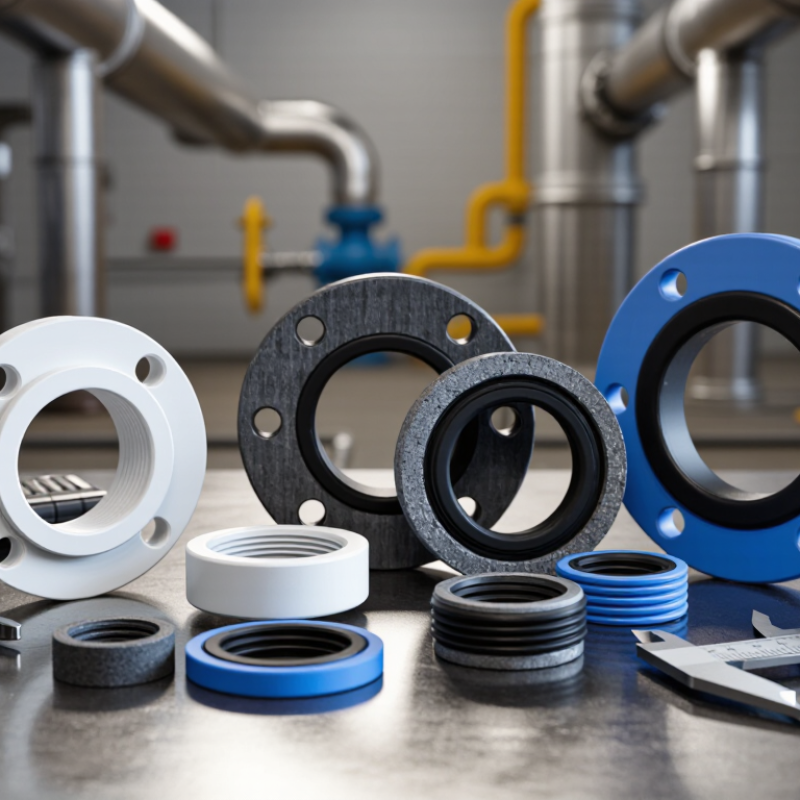
Valve seals control leakage at the stem, seat, or body joint. Their operating principles differ. Compression packing uses braided rings pressed around the moving stem. It suits many industrial valves, but friction and gradual wear remain unavoidable. Elastomeric O-rings create an elastic barrier inside a groove. They seal efficiently at moderate temperatures, although swelling can occur with incompatible fluids.
Bellows seals provide a metal barrier around the stem. They reduce fugitive emissions because the stem does not slide through packing. Diaphragm seals isolate the actuator from the process fluid. They are useful with corrosive, sterile, or abrasive media.
Metal C-rings and spiral-wound gaskets depend on controlled compression. They perform well under high temperature and pressure, but installation accuracy becomes critical.
The U.S. Energy Information Administration reported that natural gas systems released about 0.8 million metric tons of methane in 2022 from equipment leaks and other sources. A small seal can matter. ISO 15848-1 testing evaluates valve fugitive emissions under defined temperature and cycling conditions. Meanwhile, the U.S. Department of Energy notes that compressed-air leaks can waste 20% to 30% of compressor output.
Selection should match pressure, temperature, shaft movement, fluid chemistry, and maintenance access. Real plants are rarely perfect. I have seen technically suitable seals fail after poor surface preparation or uneven tightening. The datasheet is only the beginning.
Match Seal Materials to Temperature, Pressure, and Media
How to Choose the Right Valve Seal in 2026?
Match Seal Materials to Temperature, Pressure, and Media
Valve seal selection starts with the operating envelope, not the purchase price. Record temperature peaks, pressure cycles, shaft speed, and fluid chemistry. A seal rated for 200°C may fail during short thermal spikes. The U.S. Department of Energy’s industrial energy guidance links leakage control with measurable efficiency gains, yet many failures begin with incomplete operating data.
Material choice must reflect the media. PTFE suits many corrosive fluids and offers low friction, but pressure cycling can cause creep. Graphite tolerates high temperatures, although oxidation and handling damage require attention. Elastomers provide strong resilience, but compatibility changes sharply with solvents, steam, and hydrocarbons. ISO 23936-2 provides material guidance for oil and gas environments, while API 682 emphasizes seal selection, testing, and application-specific qualification. For fugitive emissions, ISO 15848-1 defines performance testing under controlled temperature and pressure conditions.
Do not ignore pressure direction. A seal designed for one-sided loading may leak during reverse pressure. Check extrusion gaps, surface finish, installation damage, and compression set. I have seen technically correct materials fail because the gland was misaligned. That detail matters. Ask for test evidence using your actual media, temperature range, and pressure cycles. Supplier charts help, but they are not field validation. Temperature margins should include startup, shutdown, cleaning, and foreseeable process upsets.
Evaluate Compatibility with Valve Design and Service Conditions
Choosing a valve seal in 2026 starts with the valve, not the catalog. A seal must match stem movement, bonnet geometry, pressure rating, and available compression space. Rotary valves need different sealing behavior from rising-stem valves. A design mismatch can create friction, leakage, or accelerated wear. During maintenance inspections, I check the old seal’s contact pattern before selecting a replacement. Uneven polishing often reveals misalignment. It is easy to miss.
Service conditions matter just as much. Record working temperature, pressure cycling, fluid chemistry, abrasive particles, and cleaning methods. Heat can harden some elastomers, while solvents may cause swelling. Steam, corrosive fluids, and dry gases each require different material resistance. For moving stems, low friction matters, but excessive softness may reduce extrusion resistance. Request test data that reflects actual conditions, not only a general material rating. Small differences matter.
Installation details can defeat a technically suitable seal. Confirm surface finish, stem tolerance, groove dimensions, and compression limits. Use controlled tightening, then check operating torque after assembly. I have seen careful material choices fail because a groove was contaminated or the seal was twisted. That result is frustrating, but useful. It shows selection and installation cannot be separated. Leave room for uncertainty because temperature spikes and pressure surges may exceed routine records. Recheck the choice after inspection data accumulates.
How to Choose the Right Valve Seal in 2026?
Evaluate compatibility with valve design and service conditions by comparing typical continuous temperature ranges of common seal materials.
PTFE provides the widest low-temperature range, while graphite is suitable for higher-temperature service. Final selection must also consider valve design, pressure, media compatibility, cycling, emissions requirements, and the specific material grade.
Compare Reliability, Maintenance Needs, and Total Cost
Choosing a valve seal in 2026 should begin with service conditions, not the purchase price. In field inspections, I examine pressure, temperature, fluid chemistry, cycling frequency, and shaft movement. A seal that performs well in clean water may fail quickly with abrasive slurry. Small leaks also matter. They can contaminate nearby surfaces, increase inspection work, and signal faster wear. Reliability means stable sealing across real operating cycles, not only a successful bench test. Request documented test methods, material limits, and expected service life. Vague promises deserve caution.
Maintenance needs often decide the practical winner. A cartridge-style seal may reduce installation errors and shorten planned shutdowns. A simpler seal can cost less and remain easier to inspect. The better option depends on technician skill and valve access. Check whether adjustment tools are standard and replacement parts remain available. During audits, I record leak rates, changeout time, and mating-surface condition. These details expose problems that product literature can miss. They also improve future selection.
Total cost includes purchase, labor, downtime, fluid loss, waste handling, and emergency repairs. A low-cost seal may become expensive after repeated failures. Conversely, an advanced material is not automatically economical. It may be unnecessary for mild service. Calculate cost across the planned operating period, then test the most uncertain assumption. I admit this step is often rushed. That is a mistake. Use a small trial on a representative valve and compare results across several maintenance cycles. Leave room for training and unexpected shutdowns. No choice is perfect. Record every failure, adjustment, and replacement hour.
Verify Standards, Sizing, and Installation Requirements
How to Choose the Right Valve Seal in 2026?
A reliable valve seal starts with verified standards, not a familiar part number. Check the valve service, pressure, temperature, fluid chemistry, stem diameter, and sealing-box dimensions. API 622 evaluates packing performance under repeated mechanical and thermal cycling. ISO 15848-1 classifies fugitive-emission performance by leakage, temperature, and endurance. These tests are not interchangeable. Do not guess.
The IEA’s Global Methane Tracker 2024 reports that about 75% of fossil-fuel methane emissions could be reduced with existing measures. Nearly 40% could be avoided at no net cost. That makes certified low-emission sealing important, especially around volatile fluids. Request current test reports, material certificates, temperature limits, and installation instructions. A supplier’s general statement is not enough. Ask which standard was used, and under what conditions.
Sizing errors often appear during installation. Measure the stem and stuffing-box depth with clean tools. Confirm packing cross-section, compression allowance, and gland travel. Remove old residue carefully. Inspect the stem for scoring or corrosion. Keep sealing faces clean and dry unless the procedure specifies a compatible lubricant. Tighten the gland evenly, using the stated torque sequence. Over-compression can increase friction and damage the stem. Under-compression can create leakage. I have seen both happen. A spreadsheet can still be wrong. Recheck measurements at the valve, not only on the drawing. Retighten only when the documented procedure permits it.