How to Choose the Right FRP Pipe for Your Project?
Choosing the right FRP Pipe is not simply a matter of selecting the lowest price. Your decision affects flow efficiency, maintenance costs, service life, and operational safety. A pipe buried under a road faces different demands from one carrying chemicals inside a treatment plant. Soil pressure, temperature changes, fluid composition, pressure cycles, and installation quality all matter.
As FRP pipe specialist Dr. A. P. Mouritz explains, “Composite performance depends on matching the material design to the real service conditions.” This principle deserves attention. A pipe may look strong in a product catalogue, yet perform poorly when exposed to unexpected heat, abrasive particles, or repeated pressure surges. Small details matter. Wall thickness, resin type, reinforcement angle, joint design, and liner selection can change the outcome.
A practical selection process begins with accurate project information. Record the fluid’s concentration, operating temperature, pressure range, and expected flow rate. Then examine soil conditions, burial depth, support requirements, and access for future repairs. Do not overlook transportation and handling. A dropped section can suffer hidden damage before installation begins.
Standards and manufacturer test data provide useful evidence, but they cannot replace engineering judgment. Sometimes, project teams specify more strength than necessary. Sometimes, they underestimate installation risks. Both mistakes increase costs. The best FRP Pipe choice balances structural capacity, chemical resistance, hydraulic performance, and long-term reliability. It may not be the cheapest option. It should be the most defensible one.
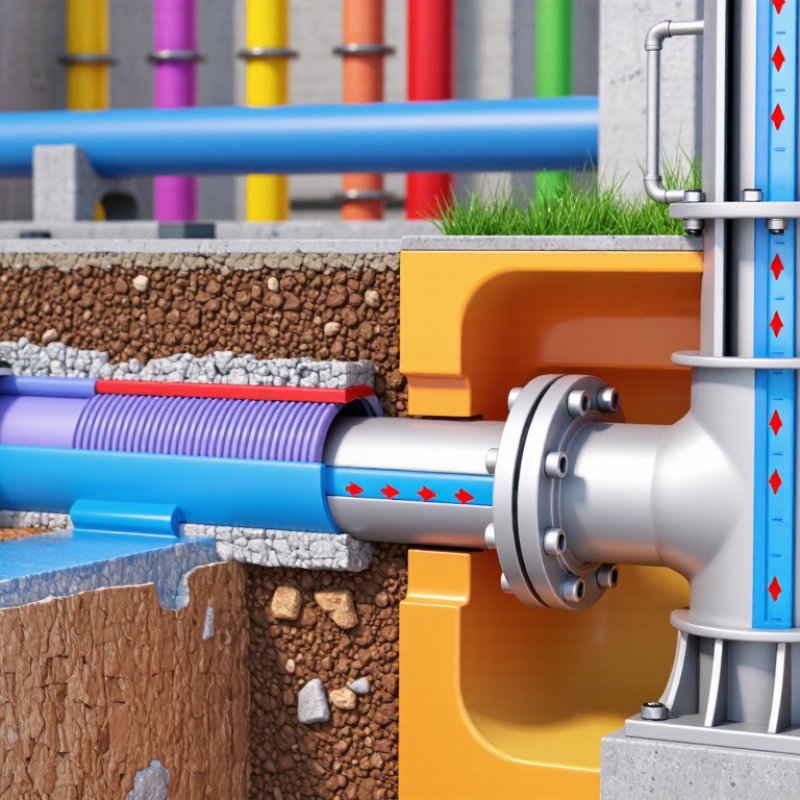
Define the Project Requirements and Operating Conditions
Choosing an FRP pipe starts with the service, not the catalog. Define the fluid, flow rate, pressure, temperature, and expected service life. Record whether the fluid contains acids, salts, solvents, or suspended solids. Small chemistry changes can alter resin performance. I have seen projects fail because a warm cleaning solution was treated like ordinary water. That shortcut was expensive. Identify pipe diameter, connection method, support spacing, and installation access. Include surge pressure, vacuum conditions, and occasional empty-pipe loading. These details affect wall thickness and structural design.
Operating conditions should be written as ranges, not single values. Note normal and maximum temperature, continuous pressure, and short pressure spikes. Check external loads from soil, traffic, wind, or nearby equipment. For buried lines, soil pressure and groundwater deserve careful review. For exposed lines, ultraviolet exposure and thermal expansion may matter. Ask for documented chemical-resistance data at the actual temperature. Generic compatibility charts can mislead. An engineer should verify calculations against applicable project codes and technical data. Keep records of assumptions; they often explain later design changes.
Tips: Build a simple duty table before requesting quotations. List fluid, concentration, temperature, pressure, flow, diameter, supports, and design life. Leave room for uncertainty. If data is missing, state it clearly and use a conservative design case. I sometimes overfocus on peak pressure and undercheck vacuum during draining. That mistake is easy to repeat. Confirm gasket materials, joint tolerances, lifting limits, and field repair procedures with qualified personnel. Request test certificates and installation guidance. Then compare proposals against the same requirements, not only price.
Compare FRP Pipe Materials, Liners, and Reinforcement Options
How to Choose the Right FRP Pipe for Your Project?
FRP pipe selection starts with the process fluid, operating temperature, pressure, and installation environment. Resin materials affect chemical resistance, while the liner protects the pipe’s inner surface. Vinyl ester resin suits many aggressive chemicals. Epoxy can offer strong mechanical performance and low permeability. Polyester is often practical for less demanding services. The cheapest option may become expensive after repairs.
Liner selection deserves close attention. A resin-rich liner can resist corrosion, but excessive flexibility may create handling problems. Thermoplastic liners may improve chemical protection, yet bonding and temperature limits require careful review. Reinforcement also changes performance. Glass-fiber winding supports pressure resistance, while chopped strands can improve impact tolerance. Cross-wrapped layers help manage external loads. Engineers should check wall thickness, joint design, vacuum conditions, and support spacing. Field inspections often expose weaknesses that a catalog calculation misses.
Tips: Request chemical compatibility data at the actual operating temperature. Ask for test results, not broad claims. Inspect sample cut sections for voids, uneven layers, or dry fiber. Confirm whether the pipe will face buried loads, sunlight, abrasion, or sudden pressure changes. Do not select reinforcement by pressure rating alone. A design that works in a clean laboratory may struggle beside a vibrating pump. Allow room for uncertainty. Some project conditions remain poorly measured, and that should influence the safety factor.
Select the Correct Pipe Diameter, Pressure Rating, and Wall Thickness
How to Choose the Right FRP Pipe for Your Project?
Select the Correct Pipe Diameter, Pressure Rating, and Wall Thickness
Choosing an FRP pipe starts with flow, not catalog availability. Calculate the required flow rate, velocity, and allowable head loss before selecting diameter. A smaller pipe may reduce purchase cost, but it can increase pumping energy and water hammer. AWWA Manual M45 recommends evaluating operating pressure, surge pressure, temperature, burial conditions, and chemical exposure together.
Pressure rating must exceed normal working pressure and short-term surges. For example, a line operating at 10 bar should not be matched with a 10-bar rating without checking transient loads. Design margins matter. ISO 14692-3 requires pressure integrity assessments for reinforced plastic piping systems under defined service conditions. Installation quality still affects real performance.
Wall thickness depends on pressure, diameter, stiffness, support spacing, and external loads. Underground pipe may need greater ring stiffness, even when internal pressure is modest. AWWA M45 uses stiffness classes and soil-pipe interaction for buried applications. The 2023 U.S. Drinking Water Infrastructure Needs Survey estimated a 20-year investment need of $625 billion, showing why lifecycle decisions deserve careful engineering. Cheaper is not always cheaper.
Do not ignore temperature. Resin properties can change noticeably as service temperature rises. I would also recheck assumptions after receiving actual soil data. That step is often skipped. It should not be.
How to Choose the Right FRP Pipe for Your Project? - Select the Correct Pipe Diameter, Pressure Rating, and Wall Thickness
| Nominal Pipe Diameter | Approximate Flow Range
(at 1–3 m/s) | Typical Pressure Class | Typical Wall Thickness Range | Recommended Application | Key Selection Considerations |
DN50
(2 in) | 7–21 m³/h | 6–16 bar | 4–6 mm | Instrument lines, chemical dosing, small process-water lines | Check minimum flow velocity, connection type, and resistance to the conveyed chemical. |
DN80
(3 in) | 18–54 m³/h | 6–16 bar | 5–7 mm | Chemical transfer, wastewater, low-to-medium flow utility services | Use the inside diameter, not only the nominal size, for hydraulic calculations. |
DN100
(4 in) | 28–85 m³/h | 6–16 bar | 6–8 mm | Process water, corrosive drainage, seawater and cooling-water systems | Allow for friction loss, surge pressure, support spacing, and operating temperature. |
DN150
(6 in) | 64–191 m³/h | 6–20 bar | 8–11 mm | Industrial cooling water, fire-water networks, wastewater headers | Select a higher pressure class where pump shutoff pressure or water hammer is significant. |
DN200
(8 in) | 113–339 m³/h | 6–20 bar | 10–14 mm | Main process lines, raw-water intake, desalination and industrial drainage | Evaluate buried-soil loads, pipe stiffness, flotation, and joint restraint. |
DN250
(10 in) | 177–530 m³/h | 6–16 bar | 12–16 mm | Large cooling-water mains, irrigation, water-treatment and outfall systems | Confirm allowable deflection and buckling resistance for above-ground or buried installation. |
DN300
(12 in) | 255–763 m³/h | 6–16 bar | 14–20 mm | Large-diameter water transmission, seawater, cooling and wastewater headers | Consider hydraulic transients, thermal expansion, wind loads, seismic loads, and field jointing. |
Important design notes: - Flow ranges are preliminary values calculated from an approximate internal diameter and a fluid velocity of 1–3 m/s. Final diameter selection must be based on flow rate, allowable pressure loss, fluid properties, and project standards.
- Pressure classes such as 6, 10, 16, and 20 bar are commonly used nominal categories for FRP piping, but the actual pressure rating depends on temperature, resin system, reinforcement, joint design, cyclic loading, and applicable standards.
- Wall thickness values are representative preliminary ranges only. Final wall thickness must be verified for internal pressure, vacuum, external loads, buried conditions, supports, wind, seismic loads, and installation requirements.
- For operating temperatures above 40°C, apply the manufacturer’s temperature derating factors and confirm chemical compatibility with the resin and liner system.
- Do not use a standard pressure-rated FRP pipe for full vacuum service unless its vacuum resistance has been specifically designed and verified.
Evaluate Installation Methods, Fittings, and Long-Term Maintenance
How to Choose the Right FRP Pipe for Your Project?
Choosing FRP pipe begins with installation conditions, not catalog pressure ratings alone. On a recent water line, we measured trench depth, soil movement, and access for lifting equipment. Those details changed the joint design. Above-ground runs may use supports and restrained fittings, while buried pipe needs stable bedding and controlled backfill. Follow the installation data, but verify it against local engineering requirements. A small alignment error can load the coupling unevenly. It may leak years later.
Fittings deserve the same attention. Elbows, reducers, flanges, and tees should match diameter, pressure class, and resin compatibility. Mechanical couplings help field adjustments, but they need clean surfaces and even bolt tightening. Do not force a pipe into an offset fitting. I have seen rushed connections create stress that looked harmless during testing. Support heavy valves independently. Otherwise, their weight may transfer to the FRP wall. A dry fit is useful.
Long-term maintenance is usually simple, not absent. Record joint locations, burial depth, operating pressure, and repair history. Inspect exposed sections for UV wear, impact marks, loose supports, and seepage. Check buried systems through pressure trends, flow changes, and inspection points. Cleaning methods must suit the liner and fluid. Aggressive tools can damage the inner surface. Recheck supports after thermal cycles or nearby construction. I would not promise zero maintenance. That promise is convenient, but unreliable.
Verify Standards, Supplier Quality, and Total Project Cost
How to Choose the Right FRP Pipe for Your Project?
Selecting an FRP pipe starts with verifying the correct standard. The required standard should match pressure, temperature, chemical exposure, and installation conditions. For example, water, wastewater, and industrial services may require different testing criteria. Do not accept a certificate without checking its scope, issue date, and inspection records. Design calculations should also confirm pressure class, stiffness, joint type, and support spacing.
Supplier quality deserves equal attention. Ask for resin data, glass-fiber specifications, manufacturing procedures, and batch traceability. A reliable supplier can explain how it controls curing, wall thickness, dimensional accuracy, and hydrostatic testing. Factory audits and independent inspection can reveal weaknesses that documents may hide. Small details matter. A poorly finished flange may delay installation and create leakage risks.
The purchase price is only one part of the total project cost. Include transport, lifting, fittings, supports, labor, testing, maintenance, and possible downtime. A lighter pipe may reduce handling costs, but it can require more supports or careful alignment. A cheaper quotation can become expensive after field modifications. Review the supplier’s delivery record and technical support before signing. I would also challenge my own assumptions, because a familiar specification may not fit unusual soil, temperature, or chemical conditions. That extra review is sometimes inconvenient, but it can prevent costly rework.