What is Robot News and How it is Changing the Future of Journalism

The advent of technology has ushered in a new era in journalism, prominently characterized by the rise of "robot news." This innovative approach refers to the use of algorithms and artificial intelligence to automate news generation, enabling media outlets to produce content rapidly and at an unprecedented scale. According to a report by the Associated Press, approximately 3,000 automated reports are generated daily, highlighting the profound impact of robotic journalism on content dissemination.

As audiences demand real-time updates and personalized news experiences, the integration of robot news becomes not just advantageous but essential. Media organizations are increasingly recognizing the value of harnessing AI to sift through vast datasets, instantly turning complex statistics into comprehensive narratives. A report from the Pew Research Center indicates that over 60% of news organizations are exploring AI technologies, reflecting a significant trend towards automation in the industry. By leveraging these advancements, the future of journalism stands on the brink of transformation, where human and machine collaboration can enhance the breadth and depth of news reporting, ensuring that readers remain informed in a fast-evolving media landscape.

What is Robot News and How it is Changing the Future of Journalism

What is Robot News? An Overview of Automated Journalism
What is Robot News and How it is Changing the Future of Journalism

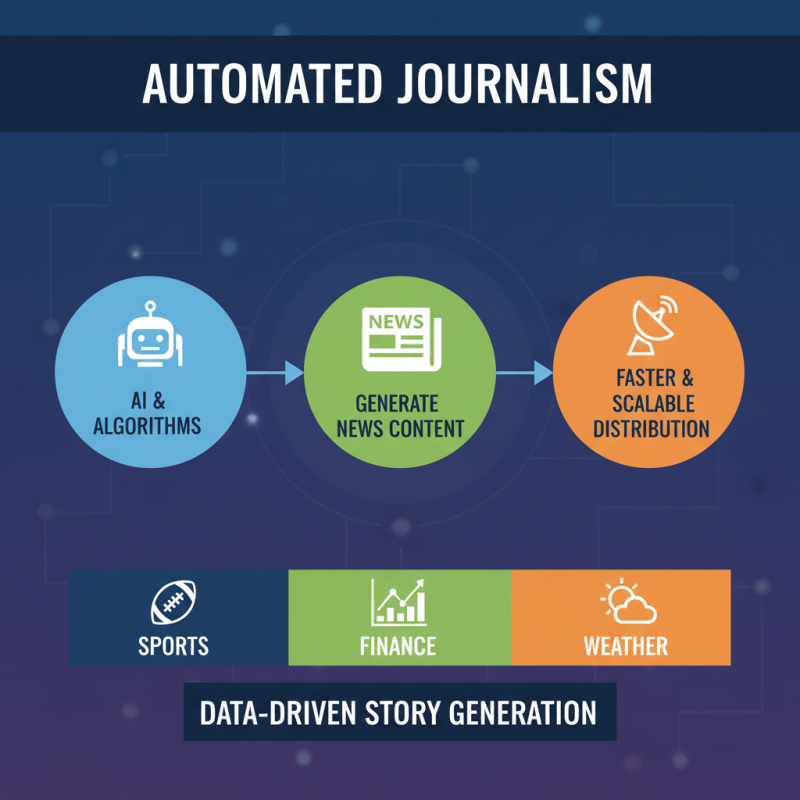
Automated journalism, often referred to as robot news, represents a significant evolution in the field of journalism. It entails the use of algorithms and artificial intelligence to generate news content automatically, thereby transforming the way information is reported and distributed. This technology enables news organizations to produce articles at a speed and scale that human journalists cannot match. By analyzing large datasets, automated systems can identify trends, summarize information, and even create entire reports, particularly for data-driven stories such as sports, finance, and weather updates.

One of the key benefits of robot news is its ability to provide timely updates on events as they unfold, which is essential in today’s fast-paced information environment. Automated journalism can also serve niche audiences by generating specialized reports tailored to specific interests, thus broadening the scope of journalism. However, the rise of this technology raises important questions regarding the future role of human journalists and the ethical implications of relying on algorithms for news dissemination. It challenges traditional journalistic practices, prompting a re-examination of how news is created and the value of human touch in storytelling.

The Technology Behind Robot News: Algorithms and AI Tools

The rise of Robot News is primarily driven by advancements in algorithms and AI tools that enhance content creation and distribution. These technologies allow news organizations to generate articles rapidly based on data feeds and predefined templates. For instance, natural language processing (NLP) algorithms can analyze vast amounts of information, extracting key points and structuring them into readable news articles, thus minimizing the time required for news reporting. This not only increases efficiency but also enables journalists to focus on more complex stories that require human insight and investigative skills.

In addition to content generation, AI tools are revolutionizing the way news is disseminated. Machine learning algorithms can analyze reader preferences and engagement patterns, tailoring news delivery to suit individual user interests. This personalization helps to ensure that relevant stories reach the appropriate audience, making news consumption more engaging and impactful. Furthermore, these algorithms can assist in monitoring social media and trending topics, providing news organizations with real-time data to inform their reporting strategies.

Overall, the synergy between AI technology and journalism is creating a new landscape where information is shared more dynamically, catering to the evolving needs of audiences.

Current Impact of Robot News on Traditional Journalism Practices

The rise of robot news is significantly altering the landscape of traditional journalism, presenting both challenges and opportunities for the industry. Automated journalism, which utilizes algorithms to generate news reports, has been adopted by numerous news organizations, allowing for the rapid production of articles, particularly in areas like sports, finance, and weather. According to a 2022 report by the Pew Research Center, nearly 20% of news organizations have integrated some form of automated reporting, leading to a notable increase in content output. This shift not only enhances speed but also meets the growing demand for real-time news presentation.

However, the impact of robot news on traditional journalism practices raises questions about quality and ethics. Journalists are now more focused on storytelling and in-depth analysis, while robots handle routine reporting tasks. A study by the Tow Center for Digital Journalism indicates that while automation streamlines workflows, it also risks reducing the human element that is essential for investigative work and nuanced reporting. As robot news continues to evolve, journalists are encouraged to embrace these tools as collaborative partners, enhancing their capabilities rather than replacing them.

**Tips:** Journalists looking to adapt to the rise of automated reporting should focus on developing skills in data analysis and interpretation, areas where human insight is irreplaceable. Additionally, understanding the technology behind robot news can empower journalists to better collaborate with automated systems, ensuring a balance between efficiency and in-depth reporting. Engaging audiences through unique narratives and critical analyses can strategically position traditional journalists to thrive alongside advancing automation.

Statistics Show Growth: Automated Content Generation in Media

The rise of automated content generation in media has become an undeniable trend, significantly reshaping the landscape of journalism. Statistics indicate that a substantial proportion of news articles are now produced by algorithms capable of analyzing data and generating reports with remarkable speed and accuracy. In fact, recent studies show that within the next few years, automated systems could account for a significant portion of news coverage, particularly in areas such as finance, sports, and weather, where timely updates are crucial.

This shift not only enhances the efficiency of newsroom operations but also raises questions about the quality and authenticity of the content produced. While automated journalism can deliver swift information, concerns remain regarding the depth of analysis and the ability to convey nuanced stories that resonate with human experiences. As media organizations increasingly adopt these technologies, a delicate balance must be struck between leveraging automation for efficiency and ensuring that the core values of journalism—investigation, accountability, and empathy—are preserved in an era dominated by data-driven reporting. This evolution indicates a future where journalism adapts to the capabilities of artificial intelligence while continuing to prioritize the human element in storytelling.

Automated Content Generation in Media (2019-2023)

This chart illustrates the rapid growth of automated content generation in the media industry from 2019 to 2023. The data shows an exponential increase, highlighting the significant impact that automation is having on journalism.

Future Trends: How Robot News Will Shape Journalism in the Next Decade

What is Robot News and How it is Changing the Future of Journalism

As journalism continues to evolve, the emergence of robot news is set to transform the industry in unprecedented ways over the next decade. With advancements in artificial intelligence and natural language processing, automated news generation will become increasingly sophisticated, allowing for faster reporting on events as they unfold. Multimedia storytelling, where text, video, and interactive elements collide, will be enhanced by algorithmic insights that cater to reader preferences and consumption habits.

Tips: Embrace the integration of technology in your writing. Use AI tools to assist with mundane tasks like data collection and fact-checking, freeing up time for more in-depth analysis and creative storytelling. Journals can prepare for this shift by educating staff on working alongside AI and leveraging its capabilities to enhance human-centric journalism.

Furthermore, as robot news takes hold, the role of journalists will evolve. Instead of simply reporting facts, journalists can focus on investigative work, analysis, and narrative crafting that machines cannot replicate. The future will require a harmonious coexistence between human intuition and machine efficiency, ultimately enriching the journalism landscape with diverse perspectives and innovative formats.

Tips: Stay informed about technological advancements and their potential applications in journalism. Attend workshops or webinars focused on AI in media, and experiment with implementing new methodologies in your projects to remain competitive in the rapidly changing field.

SERVO-ROBOT Inc
Privacy Overview

This website uses cookies so that we can provide you with the best user experience possible. Cookie information is stored in your browser and performs functions such as recognising you when you return to our website and helping our team to understand which sections of the website you find most interesting and useful.