
What Is a Super Intalox Saddle Used For?

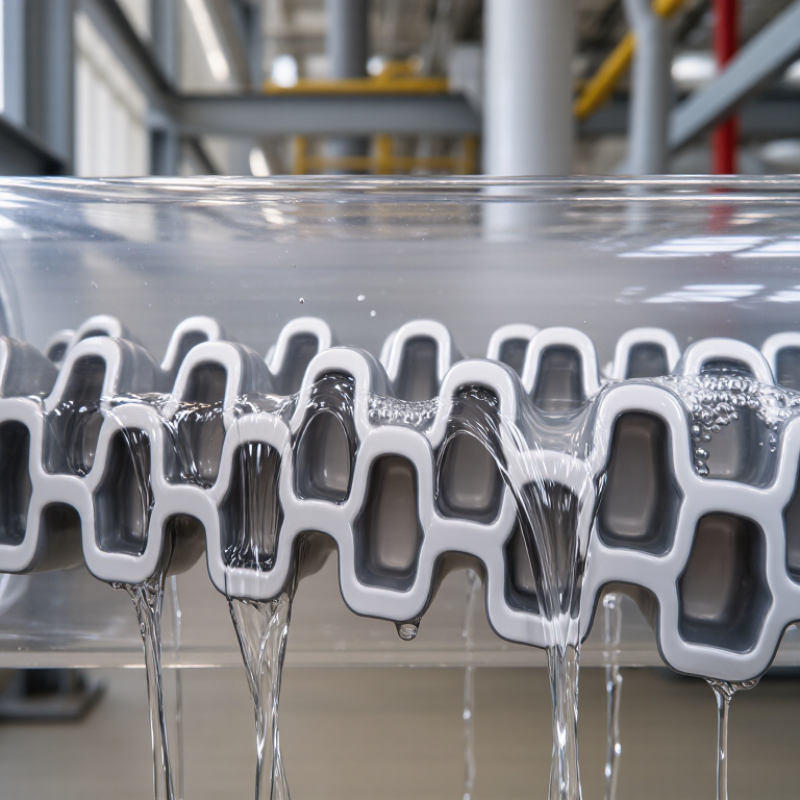
A Super Intalox Saddle is a shaped random packing used inside industrial process columns. Its job is to provide contact area between rising gas and descending liquid. Picture liquid spreading across curved saddle surfaces while gas moves through the open spaces. That contact supports mass transfer, such as absorption or distillation, when the column and packing are properly designed.

Distillation authority Henry Z. Kister’s published engineering work emphasizes matching column internals to the separation duty. A concise, non-verbatim takeaway is: “Choose internals for the service, not the name alone.” This is a summary, not a direct quotation. In practice, engineers compare packing geometry, material, column diameter, fluid properties, and operating limits. They also consider pressure drop, capacity, liquid distribution, and the risk of fouling. One detail matters: a packing’s advertised surface area cannot predict performance by itself.

The design is not magic. Poor liquid distribution can leave parts of the bed underused, even when the packing is suitable. Installation quality matters, too. This article explains where a Super Intalox Saddle is used, what it can offer, and which operating factors deserve attention. It also treats selection claims cautiously. Real performance depends on the complete column design, not one component in isolation. For a specific application, verified supplier data and qualified process-engineering review are essential.
What Is a Super Intalox Saddle Used For?

What Is a Super Intalox Saddle?

A Super Intalox saddle is a piece of random packing used inside a packed tower. Its curved, open shape provides surfaces for liquid to spread while leaving passages for gas to move through. Unlike a simple ring, the saddle’s contours and openings can encourage contact between the two flowing phases. The exact geometry varies by material and design. Small details matter.

In operation, many saddles are poured into a column rather than arranged in fixed rows. Liquid trickles over their surfaces, forming thin films and droplets, while gas passes through the gaps. This contact supports mass transfer in processes such as absorption, stripping, and distillation. A well-chosen packing can offer useful surface area without creating excessive resistance to flow. Yet performance also depends on column diameter, loading, liquid distribution, and installation. A saddle cannot correct a poorly distributed feed by itself. That is easy to overlook. Engineers compare pressure drop, capacity, fouling risk, and material compatibility before selecting packing. A quick visual inspection helps, but it cannot replace operating data.

What are Super Intalox saddles used for? They are random tower packing used in packed columns to provide gas–liquid contact for mass-transfer operations.

The chart lists common packed-tower operations. Bars indicate that the operation is a typical application, not its frequency or market share.

How Does Its Design Support Mass Transfer?

A saddle-shaped random packing is used inside packed columns, where rising gas meets descending liquid. Its curved profile creates many changing paths rather than one clear channel. That matters. The liquid spreads across the saddle’s outer surfaces, while gas moves through open spaces and around its ribs. Their contact allows components to transfer between phases, supporting operations such as absorption and distillation.

The open, irregular geometry balances useful surface area with room for flow. Compared with tightly packed shapes, it can help limit stagnant pockets and reduce resistance to gas movement. Small openings and curved edges also encourage liquid films to break up and renew, bringing fresh liquid into contact with the gas. The details matter: surface wetting, column diameter, and liquid distribution all affect performance. A packing piece cannot fix a poorly placed distributor. Nor is more surface area always better; narrow passages may hold liquid or restrict flow. In practice, engineers select packing alongside operating rates and column conditions, then check for signs of channeling or excessive pressure drop. The design helps mass transfer, but it does not guarantee it.

How Is It Used in Packed Towers?

What Is a Super Intalox Saddle Used For?

How Is It Used in Packed Towers?

In a packed tower, Super Intalox saddles sit in a bed that brings rising gas into contact with descending liquid. Their curved, open shape helps spread liquid across packing surfaces while leaving routes for gas to pass upward. This supports mass transfer in operations such as absorption and stripping. The goal is contact. Liquid enters through a distributor, trickles over the saddles, and meets gas moving up through the bed. The tower’s performance depends on more than the packing: poor liquid distribution can leave dry patches, while excessive flow can cause flooding.

The U.S. Environmental Protection Agency’s Packed-Bed/Packed-Tower Scrubber fact sheet (EPA-452/F-03-015, 2003) reports typical pressure drops of 0.5–1.0 inches of water per foot of packed-bed depth. This is a general scrubber range, not a guarantee for every saddle installation; packing size, liquid rate, and tower design affect results. Operators therefore track pressure drop and inspect distribution during commissioning. Small details matter. A distributor can look level yet still send uneven streams; this is easy to underestimate.

Tips: Check that the bed is evenly loaded and the liquid distributor is clear before startup. Monitor pressure drop as flow changes, and compare readings with the tower’s design basis. If readings drift, inspect for fouling or channeling before changing operating rates.

Which Industrial Processes Use Super Intalox Saddles?

Super Intalox saddles are random packing used inside towers for gas absorption, stripping, and some distillation duties. Their open shape gives rising gas and falling liquid broad contact area. That helps operators remove acid gases, recover solvents, or wash contaminants from process streams. Typical settings include natural-gas treatment, petrochemical plants, fertilizer production, and refinery gas-cleaning units.

Hydrogen production shows why gas treatment matters. The International Energy Agency’s Global Hydrogen Review 2024 estimates that production reached about 97 million tonnes worldwide in 2023, mostly from unabated fossil fuels. Such production routes require gas conditioning, and packed absorbers can support carbon-dioxide removal. Refineries also use packed towers for amine treating and liquid scrubbing.

The U.S. Energy Information Administration reported operable crude-distillation capacity of about 18.4 million barrels per calendar day on January 1, 2024, in its Refinery Capacity Report 2024. That is sector context, not a measure of packing demand.

Water and wastewater facilities may use packed columns to strip volatile compounds or transfer gases, while chemical plants use them in absorption and recovery steps. Not every column does. Saddle selection still depends on liquid distribution, fouling risk, temperature, corrosion, and allowable pressure drop. A packing can look efficient on paper, yet perform poorly when liquid spreads unevenly; plant trials and operating data matter.

What Factors Affect Its Selection and Performance?

Super Intalox saddles provide contact surfaces for gas and liquid inside absorption, stripping, and other mass-transfer towers. Their shape can support good liquid spreading while leaving open space for vapor flow. Selection starts with the process, not the packing catalogue. Check operating temperature, chemical compatibility, liquid properties, and required throughput. A material that suits a mild water stream may not tolerate a hot, corrosive mixture.

Size affects both separation and hydraulics. Smaller saddles offer more surface area, but can raise pressure drop and may be more vulnerable to fouling. Larger sizes often handle higher vapor loads, though they may provide less contact area in a given tower volume. Tower diameter, liquid distribution, and installation quality matter too. Poor distribution can leave dry zones, even with suitable packing. Watch for that.

Performance should be checked against pressure drop, capacity, and mass-transfer requirements under realistic operating conditions. Fouling risk, solids, and cleaning access also deserve attention. A neat design calculation can still miss uneven flow or changing feed conditions. That is an uncomfortable limitation, but it is real. Pilot testing or careful commissioning data can help confirm whether the selected saddle size and material perform as expected.

What Is a Super Intalox Saddle Used For? - What Factors Affect Its Selection and Performance?
Topic Typical Use or Factor Effect on Performance Practical Selection Guidance
Primary purpose Random packing in gas–liquid contact equipment, such as absorption, stripping, and some distillation columns. Provides wetted surface area for mass transfer between rising gas and descending liquid. Consider it when a packed bed is suitable for the process and the column can distribute liquid evenly over the packing.
Typical applications Gas absorption, air pollution control, chemical processing, and other separation duties. Can support gas–liquid contact while allowing vapor and liquid to pass through the bed. Confirm that the packing material and column design are compatible with the process fluid and required separation.
Packing size Element size is selected in relation to column diameter, required transfer performance, and operating capacity. Smaller elements generally provide more available contact area but can increase resistance to flow; larger elements generally offer more open passageways but may provide less area per unit volume. Check the supplier’s hydraulic and mass-transfer data for the specific packing size. Avoid selecting by size alone.
Material of construction Common options for saddle-shaped random packing include ceramic, metal, and plastic. Material affects corrosion resistance, temperature suitability, mechanical strength, weight, and cost. Match the material to the chemicals, temperature, pressure, and cleaning conditions. Verify compatibility for the actual process mixture.
Gas and liquid loads Operating gas and liquid flow rates, including normal and peak conditions. High loads can raise pressure drop and may cause loading or flooding; very low liquid flow can result in incomplete wetting. Evaluate the full operating range using packing-specific hydraulic data, not just the average flow rate.
Pressure drop Pressure loss across the packed bed, influenced by flow rates, packing geometry, liquid properties, and bed condition. Higher pressure drop increases energy demand and can limit column capacity. Set an allowable pressure-drop target and check it at both normal and peak throughput.
Mass-transfer duty Required separation, including the target outlet concentration or product purity. Required transfer performance depends on packing characteristics as well as liquid distribution, bed height, and operating conditions. Use validated design data or process calculations to determine the required packing depth; the packing alone does not establish separation performance.
Liquid distribution Initial and intermediate distribution of liquid across the column cross-section. Poor distribution can create dry zones and channeling, reducing effective contact area and separation performance. Provide a suitable liquid distributor and consider redistribution where the packed bed is tall or the column is wide.
Fouling and solids Process streams that contain suspended solids, polymerizing material, or deposits. Deposits can obstruct flow paths, increase pressure drop, and reduce effective contact. Assess fouling tendency, filtration, cleaning access, and packing geometry before selection.
Column diameter and internals Column dimensions, support plates, hold-down arrangements, and packing installation method. Incorrect installation or inadequate support can cause uneven flow, movement, or damage to the bed. Check element-to-column scale, support capacity, and installation requirements with the column design.
Operating conditions Temperature, pressure, fluid density, viscosity, surface tension, and composition. These properties influence wetting, hydraulics, material durability, and mass transfer. Base the selection on process conditions across the full operating envelope, including start-up and upset cases.
Performance verification Pressure drop, outlet composition, throughput, and evidence of stable operation. Actual performance can differ from design expectations if operating conditions or liquid distribution change. Compare field measurements with design targets and investigate changes in flow, fouling, or distribution when results drift.
Performance depends on packing geometry, material, column design, fluid properties, and operating conditions. Confirm final sizing with process calculations and data for the specific packing.
SERVO-ROBOT Inc
Privacy Overview

This website uses cookies so that we can provide you with the best user experience possible. Cookie information is stored in your browser and performs functions such as recognising you when you return to our website and helping our team to understand which sections of the website you find most interesting and useful.