7 Tips for Choosing Slim Frame Aluminum Sliding Doors
Slim frame aluminum sliding doors are changing how homes connect with terraces, gardens, and bright interior spaces. Their narrow sightlines create a wider visual opening, while aluminum provides structural strength with relatively low maintenance. Yet appearance alone should not guide the purchase. A beautiful door can still perform poorly if its glass, frame, hardware, or installation is unsuitable for the climate.
The U.S. Department of Energy reports that windows can account for 25–30% of residential heating and cooling energy use. That figure makes thermal performance more than a technical detail. It becomes a daily comfort issue beside the sofa, dining table, or bedroom window. ENERGY STAR also states that replacing single-pane windows with certified products can reduce household energy bills by about 7–15%. These figures are useful, but they are not guarantees. Local weather, glass orientation, shading, and installation quality change the result.
Choosing Slim frame aluminum sliding doors therefore requires careful comparison. Look beyond the frame width. Check the whole system. Consider thermal breaks, U-factor, solar heat gain coefficient, air leakage, water resistance, panel weight, track design, and security hardware. The National Fenestration Rating Council explains that certified ratings help consumers compare window and door performance under standardized conditions. That is a strong starting point. Not the entire answer.
A reliable choice should match the building, not just the brochure. In this guide, seven practical tips will help evaluate specifications, suppliers, glass options, and installation details. Some compromises may remain. That is normal. The goal is informed performance, not a perfect-looking mistake.
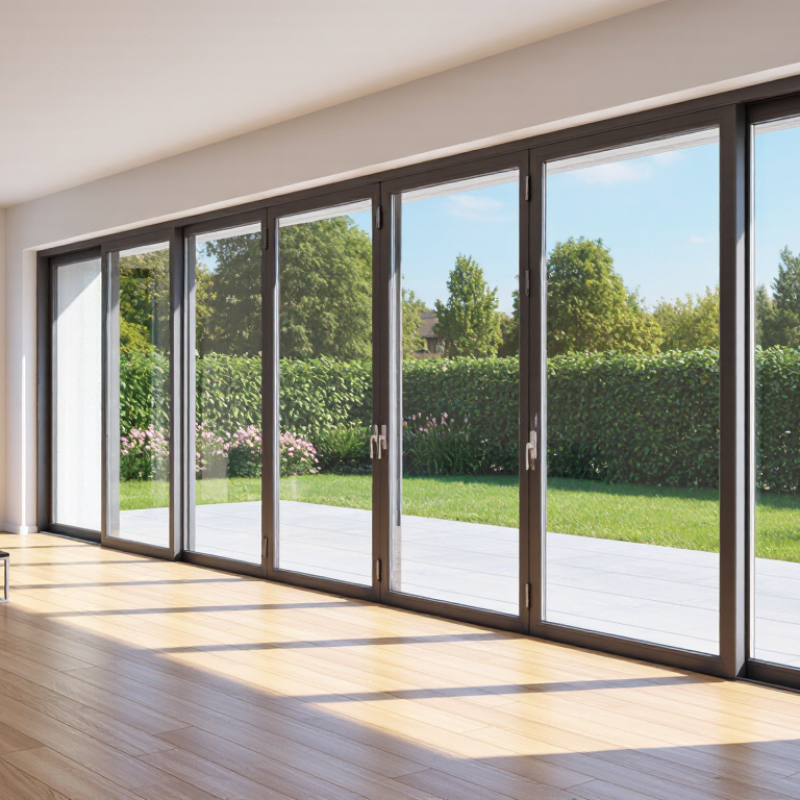
Understanding Slim Frame Aluminum Sliding Door Design
Slim frame aluminum sliding doors are designed around visual balance, not only narrow profiles. Their reduced sightlines allow more daylight and clearer garden views. However, a thinner frame is not automatically a better frame. The structure must still resist wind, carry the glass, and move smoothly over time. In site inspections, I look closely at corner joints, frame alignment, and the strength of the opening.
Tip: Check the profile depth before choosing the slimmest appearance. A strong thermal break can improve indoor comfort, especially beside large glass panels. Ask how the design manages condensation, drainage, and seasonal movement. These details are easy to overlook. They matter every winter.
The sliding system also depends on its track and rollers. A low track can create a cleaner transition between rooms, but it needs effective drainage and careful installation. Multi-point locking may improve security, while laminated or double glazing can support comfort and noise control. Confirm the glass weight matches the hardware capacity. I once saw a beautiful installation become difficult to operate because the track had not been leveled precisely.
Tip: View a full-size sample before ordering. Test the handle, rolling resistance, seals, and meeting stiles with your own hands. Also check the installation tolerance, because even excellent design can perform poorly inside an uneven opening. Slim frames reward precision, but they leave less room for careless fitting.
Checking Hardware Quality, Security, and Ease of Use
Slim-frame aluminum sliding doors look light, but their hardware carries serious daily loads. The U.S. Department of Energy estimates that windows can cause 25–30% of residential heating and cooling energy use. A poorly aligned door may worsen that loss.
Tip 1: Inspect the rollers. They should move smoothly without grinding or sudden resistance. Tip 2: Check the track. It must feel rigid, clean, and accurately fitted. Tip 3: Test the handle repeatedly. It should operate firmly, without looseness. Tip 4: Examine the lock points. Security depends on engagement depth, not appearance alone. Tip 5: Look for anti-lift protection. A strong lock means little if the panel can be lifted from its track. Tip 6: Ask for tested security performance. EN 1627 classification can provide a clearer benchmark than sales language. Tip 7: Confirm replacement support for rollers, seals, and handles. Small parts eventually wear out.
Try the door slowly.
A professional installer should check panel weight, frame alignment, drainage, and closing pressure. The National Fenestration Rating Council explains that tested products provide more reliable performance comparisons than appearance-based claims. Still, ratings do not replace hands-on inspection. I would open and close the sample several times, including with one hand. Children, older users, and anyone carrying groceries may notice resistance first. Some slim frames feel elegant but expose hardware weaknesses. That is easy to miss. Ask whether the locking system remains reliable after repeated cycling, and request maintenance instructions in writing.
Comparing Installation Needs, Maintenance, and Long-Term Value
Choosing slim-frame aluminum sliding doors starts before the order. Measure opening width, height, diagonals, and finished floor level. A few millimeters can affect smooth movement. Check wall structure, drainage paths, and nearby electrical lines. An experienced installer should confirm these details on site. Do not assume a replacement fits the old frame. It often does not. Ask how the frame will be anchored and sealed against wind-driven rain. Installation quality usually matters more than a narrow sightline.
Compare installation needs honestly. Large panels may require several trained people, lifting equipment, and temporary protection. Uneven floors can cause rollers to wear quickly. Thermal movement also needs room for controlled expansion. Request written tolerances, glass specifications, drainage details, and adjustment procedures. This paperwork may feel excessive. It can prevent expensive arguments later. If your renovation schedule is tight, allow time for sealants to cure and final alignment.
Maintenance should be simple, but not ignored. Vacuum the track every few weeks, then wipe it with a damp cloth. Keep drainage slots open. Inspect seals after severe weather and replace damaged brushes promptly. Avoid harsh solvents and heavy grease unless the installer approves them. Long-term value depends on energy performance, repair access, security hardware, and replacement-part availability. A cheaper door may cost more when rollers or seals become difficult to source. Compare warranty terms carefully, especially labor coverage. Slim frames look elegant, yet smaller profiles can leave less room for concealed hardware. That trade-off deserves a practical discussion before installation.