



China Top Solar PV Battery Manufacturers for Global Buyers
China has become a central manufacturing hub for the global Solar Pv Battery market. The International Energy Agency’s Global Supply Chains report notes that China produces more than 80% of solar modules and controls most wafer production. Its Batteries and Secure Energy Transitions report also identifies China as the leading battery manufacturing base, with roughly 80% of global cell output in 2023.
The scale is impressive. Yet scale alone does not prove quality. The IEA estimates that global energy storage capacity must increase sixfold by 2030, reaching 1,500 GW, to support clean-energy targets. BloombergNEF reported that average lithium-ion battery pack prices fell to $115 per kWh in 2024. Lower costs create opportunities for buyers, but they also demand sharper supplier checks.
Performance matters most.
Dr. Haresh Kamath, an energy-storage expert at the Electric Power Research Institute, has stated, “Energy storage is an essential component of a modern, resilient grid.” His view reflects a practical reality: a Solar Pv Battery must manage changing sunlight, heat, charging cycles, and grid conditions.
This guide examines leading Chinese manufacturers through technical, commercial, and service-related criteria. It considers cell chemistry, usable capacity, cycle life, certifications, warranty language, monitoring systems, and after-sales support. Factory scale receives attention, but traceability matters too. A polished brochure can hide weak documentation. A lower quotation can conceal installation risks or replacement costs.
No ranking is perfect. Buyer needs differ by climate, tariff structure, project size, and local regulations. Careful comparison remains essential. This article aims to provide evidence-based guidance for global buyers seeking dependable Solar Pv Battery partners, not simply the cheapest name on a supplier list.
Solar PV Battery Manufacturing in China: An Industry Overview
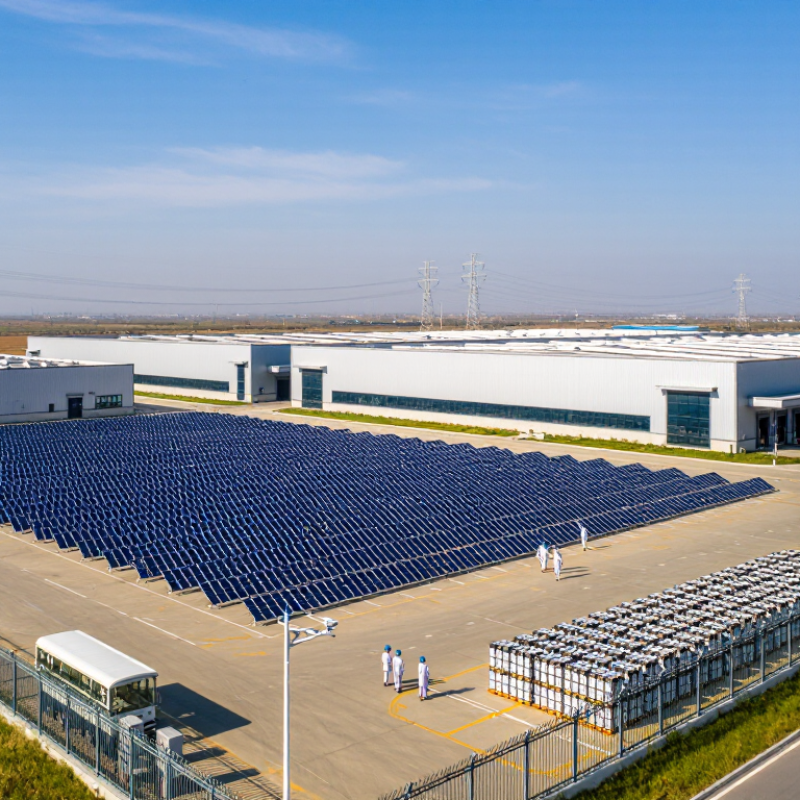
China’s solar PV battery industry has grown from module manufacturing into an integrated energy supply chain. The International Energy Agency reported that China produced over 80% of global solar PV modules, cells, wafers, and polysilicon in 2022. This concentration supports faster procurement and competitive pricing. It also increases exposure to supply-chain disruptions.
Battery production is expanding beside solar manufacturing. The IEA’s Batteries and Secure Energy Transitions report stated that global battery cell capacity exceeded 2.5 terawatt-hours in 2023. China represented roughly three-quarters of that capacity. Lithium iron phosphate chemistry remains widely used for stationary storage because it offers thermal stability and long service potential. Sodium-ion production is also developing, although field experience remains limited.
Factory claims require careful verification. A published cycle-life figure may depend on shallow discharge, controlled temperature, and reduced charging power. Ask for test conditions. Check cell traceability, inverter compatibility, enclosure protection, and degradation guarantees. During a factory audit, buyers should inspect thermal management, welding quality, fire separation, and end-of-line testing. The details are physical: cable glands should seal tightly, labels should remain readable, and battery racks should arrive without bent frames. The cheapest quotation can be misleading. I have seen specifications look strong on paper while installation assumptions stayed unclear. Wood Mackenzie’s energy storage outlook also highlights falling system costs, but project returns still depend on local tariffs, grid rules, and service response times.
China Top Solar PV Battery Manufacturers for Global Buyers - Solar PV Battery Manufacturing in China: An Industry Overview
| Data Dimension | Industry Data or Typical Specification | Relevance for Global Buyers | Buyer Verification Point |
|---|---|---|---|
| Global manufacturing position | China accounts for more than 80% of global solar PV module manufacturing capacity and more than 80% of global battery cell manufacturing capacity, according to recent IEA industry assessments. | Indicates a deep supplier base, mature component ecosystems, and strong production scale. | Check the factory’s current production capacity, utilization rate, and actual manufacturing location. |
| Most widely used chemistry for stationary storage | Lithium iron phosphate (LFP) is widely used because of its thermal stability, long service life, and lower reliance on nickel and cobalt. | Suitable for residential, commercial, utility-scale, and solar-plus-storage applications. | Request the cell chemistry declaration, test reports, and battery-management-system parameters. |
| LFP nominal cell voltage | Approximately 3.2 V per cell; a common 16-series configuration provides approximately 51.2 V nominal system voltage. | 51.2 V systems are commonly matched with low-voltage solar inverters and backup-power equipment. | Confirm inverter compatibility, operating-voltage range, maximum charge voltage, and communication protocol. |
| Typical LFP cycle-life range | Approximately 4,000–8,000 cycles under defined laboratory conditions, commonly measured at controlled temperature and a specified depth of discharge. | A longer cycle life can reduce the levelized cost of stored energy. | Require the test temperature, charge/discharge rate, depth of discharge, end-of-life capacity, and warranty conditions. |
| Typical LFP gravimetric energy density | Approximately 90–160 Wh/kg at cell level, depending on cell format, design, and production generation. | Higher energy density can reduce cabinet footprint and transportation weight. | Compare cell-level figures with complete-pack figures, including enclosure, cooling, wiring, and BMS. |
| Common battery formats | Prismatic cells are common in stationary storage; cylindrical and pouch formats are also available for specific designs. | Prismatic formats can simplify pack assembly and service access in fixed installations. | Confirm cell dimensions, terminal design, compression requirements, replaceability, and spare-cell availability. |
| Common residential storage capacity | Approximately 5–20 kWh per battery unit is common in residential solar-storage projects, with multiple units often connected in parallel. | Supports evening energy shifting, backup power, and increased self-consumption of rooftop PV. | Check usable capacity, continuous power rating, surge rating, parallel-unit limit, and backup switching time. |
| Common commercial and industrial capacity | Systems commonly range from tens of kilowatt-hours to several megawatt-hours, assembled from modular battery cabinets or containers. | Suitable for peak shaving, demand management, solar smoothing, and microgrid applications. | Evaluate thermal management, fire protection, emergency shutdown, site integration, and commissioning support. |
| Typical continuous charge and discharge rate | Approximately 0.5C–1C for many stationary LFP products; the exact value depends on cell design, cooling, and warranty limits. | Determines how quickly the battery can absorb solar energy or supply loads. | Verify rated power at the complete-system level rather than relying only on cell specifications. |
| Operating temperature | Many systems specify approximately 0–45°C for charging and –20–55°C for discharging, subject to the product design. | Temperature limits affect installation location, heating, cooling, and available capacity. | Confirm derating curves, heating functions, cooling method, and the climate requirements of the destination market. |
| Enclosure protection | Indoor products commonly use IP20 or higher protection; outdoor cabinets frequently specify IP54, IP55, or IP65 depending on design. | A higher ingress-protection rating can improve suitability for outdoor and dusty environments. | Verify the rating for the complete enclosure, cable glands, doors, ventilation openings, and installation orientation. |
| Core safety functions | A complete system generally includes over-voltage, under-voltage, over-current, short-circuit, over-temperature, insulation, and state-of-charge protection. | Integrated protection reduces operational risk and supports safer system integration. | Request BMS alarm logic, event records, emergency-stop design, fire-response strategy, and independent test documentation. |
| Common international compliance references | Depending on the destination market, buyers may require IEC 62619, IEC 63056, UN 38.3, UL 1973, UL 9540, or UL 9540A documentation. | Compliance evidence supports customs clearance, insurance, installation approval, and market access. | Match each certificate and test report to the exact cell, battery model, firmware version, and configuration being purchased. |
| Export and logistics considerations | Lithium batteries are regulated dangerous goods for transport and generally require UN 38.3 testing, approved packaging, correct labeling, and appropriate shipping documentation. | Correct documentation helps reduce customs delays, rejected shipments, and additional freight costs. | Confirm HS classification, packing instructions, battery test summary, insurance terms, Incoterms, and destination-country requirements. |
| Warranty structure | Commercial warranties commonly specify a calendar period, throughput limit, cycle limit, or retained-capacity threshold; terms vary by product and operating profile. | A clear warranty provides a basis for evaluating long-term financial performance. | Check capacity-retention guarantees, exclusions, operating restrictions, claim procedures, and local service responsibilities. |
| Communication and integration | CAN, RS485, Ethernet, Modbus TCP, and Modbus RTU are commonly used for battery, inverter, and energy-management-system communication. | Standard communication interfaces simplify monitoring and integration with third-party equipment. | Request the communication map, register list, protocol version, remote-monitoring policy, and cybersecurity controls. |
Note: Technical ranges are typical industry values and can vary by cell generation, system configuration, testing conditions, and destination-market regulations. Market-share references are based on International Energy Agency assessments of global PV and battery manufacturing.