
China Top 10 PP Non Woven Fabric Manufacturers

China’s Pp Non Woven Fabric industry supports hygiene, medical, packaging, agriculture, and filtration applications worldwide. Polypropylene remains popular because it is lightweight, moisture-resistant, and suitable for high-speed spunbond production. Grand View Research estimated the global nonwoven fabrics market at approximately USD 53.5 billion in 2022. Its report also projected strong growth through 2030. However, that market includes several fiber types, not polypropylene alone.

This article introduces ten notable Chinese manufacturers serving international buyers. The selection considers production capacity, product consistency, export experience, technical equipment, and quality management. Typical products include spunbond rolls, meltblown media, SMS composites, laminated fabrics, and customized bags. Key purchasing details matter. These include basis weight, roll width, tensile strength, elongation, color tolerance, and packing condition. A 25-gram fabric may suit disposable covers, while heavier grades fit shopping bags or agricultural applications.

Factory evidence matters more than polished websites. Smithers’ The Future of Global Nonwovens to 2028 highlights continued demand from hygiene, healthcare, and filtration markets. EDANA’s industry information also emphasizes application performance and responsible production practices. Still, no ranking is perfect. Public data differs between companies, and capacity figures may be self-reported. That limitation deserves attention. Buyers should verify audit records, test reports, sample approval, and delivery history before signing contracts. An impressive showroom cannot replace stable GSM results from production rolls. The following manufacturers are therefore presented as practical candidates, not unquestionable winners.
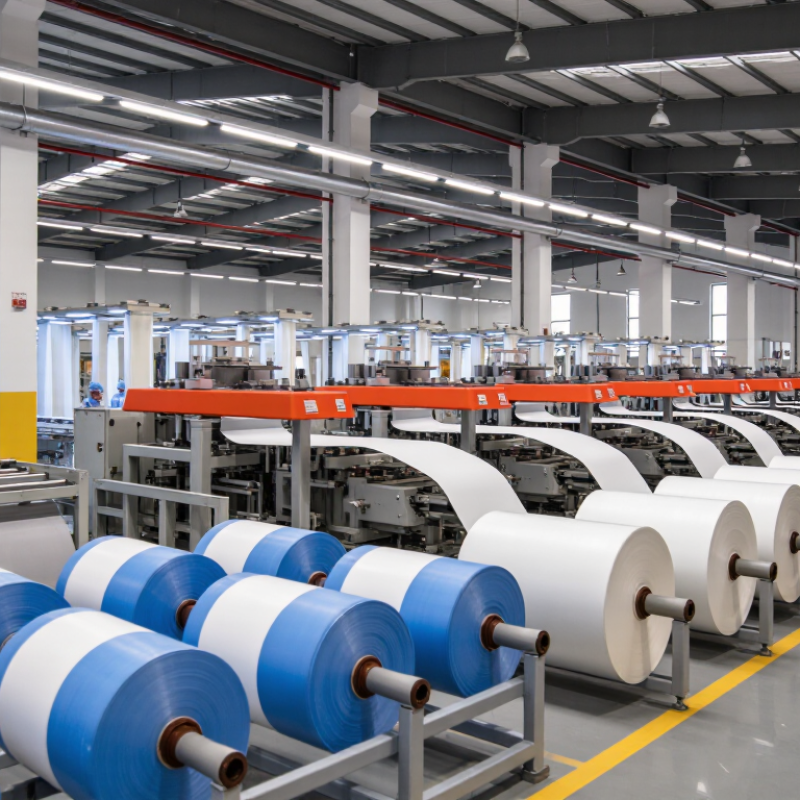
China Top 10 PP Non Woven Fabric Manufacturers

What Is PP Nonwoven Fabric? Types, Standards, and Key Applications

PP nonwoven fabric is a web of polypropylene fibers bonded without traditional weaving. It is lightweight, moisture resistant, and economical for high-volume production. Smithers’ 2024 industry analysis estimated global nonwoven demand at more than 14 million tonnes in 2023, with hygiene, medical, construction, and filtration sectors driving growth.

The main types include spunbond, meltblown, and SMS structures. Spunbond forms strong continuous filaments for bags, agricultural covers, and disposable gowns. Meltblown uses very fine fibers, creating dense filtration layers. SMS combines both structures. Practical quality checks should examine basis weight, tensile strength, air permeability, hydrostatic pressure, and pore structure. A thicker sheet is not automatically better.

Standards help convert claims into measurable performance. ISO 9073 provides common test methods for nonwoven properties, while ASTM F2100 defines performance levels for medical face-mask materials. EN 14683 also evaluates bacterial filtration, breathability, and splash resistance for medical masks. These standards support purchasing decisions, but they do not replace product-specific validation. A 2023 report from Grand View Research valued the global nonwoven fabric market at approximately 53 billion US dollars, showing the sector’s scale. Yet market figures vary by definition, region, and product scope. That limitation deserves attention.

China’s PP Nonwoven Industry: Capacity, Output, and 2024 Market Trends

China’s PP nonwoven industry entered 2024 with substantial production capacity and a more competitive supply structure. Public industry data and factory disclosures suggest that nominal capacity continued expanding, especially in spunbond and spunmelt lines. Actual output, however, depended on orders, resin prices, energy costs, and machine utilization. Capacity is not the same as sales.

Medical demand cooled after the pandemic peak. Hygiene products, packaging, agriculture, furniture, and automotive interiors supported steadier consumption. Export orders also remained important, although freight rates and regional demand changed quickly. In supplier audits, production records often reveal more than advertised machine counts. A reliable manufacturer should show consistent roll weight, tensile strength, elongation, and defect-control data. Small variations matter.

The 2024 market favored efficient plants with broad product ranges and disciplined quality systems. Automation improved labor efficiency, while recycled-content discussions encouraged manufacturers to examine material traceability and process stability. Yet the market was not perfectly balanced. Excess capacity may pressure prices, and low quotations can hide thinner margins or weaker inspection routines. For a top-ten manufacturer comparison, buyers should examine annual output, utilization rates, export experience, testing capability, and delivery performance. A large factory is not automatically the safest choice. Resin sourcing, humidity control, winding accuracy, and after-sales response can decide whether a shipment performs well on the production floor.

How the Top 10 Chinese PP Nonwoven Manufacturers Are Ranked

China’s top 10 PP nonwoven fabric manufacturers should be ranked through evidence, not popularity alone. A reliable assessment examines production capacity, material consistency, delivery records, and quality controls. Factory experience also matters, especially for medical, hygiene, packaging, and filtration applications. We review operating history, equipment maintenance, laboratory testing, and customer feedback. Certifications can support credibility, but they should not replace independent verification.

The ranking also considers fabric weight accuracy, tensile strength, softness, breathability, and roll uniformity. A supplier with modern spunbond or meltblown lines may offer stronger technical performance. However, larger capacity does not always mean better service. Communication speed, sample accuracy, minimum order flexibility, and response to defects deserve equal attention. This part is less obvious. Some public information is incomplete, so rankings should remain open to revision after factory audits and new production data.

Tips: Request recent test reports, production samples, and clear tolerance ranges. Compare samples under identical conditions. Ask how rejected rolls are recorded and replaced. Check whether the quoted capacity reflects actual output or maximum machine potential. Visit the facility when possible. A careful buyer should also review packaging, moisture protection, and shipment consistency before approving long-term orders. Mistakes happen, even in experienced factories. The best manufacturers document them and improve the process.

Profiles of China’s Top 10 PP Nonwoven Fabric Manufacturers

China’s Top 10 PP Nonwoven Fabric Manufacturers represent a broad manufacturing ecosystem, not one identical supplier model. The leading profiles usually include spunbond specialists, medical-grade producers, hygiene-material factories, agriculture-fabric makers, laminating experts, and export-focused converters. Several operate multi-beam lines for stable width and weight control. Others compete through recycled-content development, rapid sampling, or smaller minimum orders.

Grand View Research estimates the global nonwoven fabric market reached about USD 53.8 billion in 2023. Its report also forecasts continued growth through 2030, supported by hygiene, healthcare, filtration, and construction demand. These figures explain China’s strong position in PP nonwoven production. However, capacity alone proves little. A reliable profile should show GSM tolerance, tensile data, hydrostatic performance, batch traceability, and independent test records. ISO 9001 systems help, but certificates do not replace factory-level evidence. That point is often overlooked.

Tips: Ask each shortlisted manufacturer for recent test reports, production videos, and a sample from normal production. Compare edge quality, softness, odor, roll hardness, and measured weight. Confirm whether recycled PP affects strength or color consistency. Also check delivery history, not only quoted prices. Some suppliers appear highly competitive until rework, delays, or unstable specifications enter the calculation. My practical view is imperfect but useful: a top-ten list should be treated as a screening tool, not a final purchasing decision. On-site audits and third-party verification remain valuable.

Product Comparison: GSM, Width, Strength, Certifications, and Export Reach

China’s leading PP non woven fabric manufacturers differ sharply in GSM, width, and tensile strength. Common product ranges run from 10 to 250 GSM. Lightweight grades suit shopping bags and hygiene layers. Heavier grades support agricultural covers, furniture lining, and construction use. Smithers’ Future of Nonwovens report identifies hygiene, medical, and filtration as major demand areas through 2028. That demand rewards stable basis weight, not only low prices.

Width, winding accuracy, and strength testing Width is equally practical. Many production lines offer rolls from about 1.6 to 3.2 meters, while custom widths reduce cutting waste. Buyers should compare actual roll width, winding accuracy, and length tolerance. Tensile strength varies with GSM, fiber orientation, additives, and bonding temperature. A 50 GSM fabric may feel strong but fail during stitching. Ask for MD and CD test results under ISO 9073-3 conditions. Numbers matter. Color and touch can mislead.

Certifications and supplier consistency
Certifications also separate serious suppliers from attractive brochures. ISO 9001 supports process control, while OEKO-TEX or equivalent testing can address restricted substances. Medical and food-contact applications require more specific compliance evidence. Export reach should be checked through shipment history, destination coverage, and documentation quality. UN Comtrade data shows China remains a major textile and nonwoven exporter, but national scale does not guarantee every factory performs consistently. This is where comparison becomes difficult. Some suppliers provide excellent samples, then vary production batches. Independent pre-shipment testing remains sensible, even when the factory holds several certificates.

SERVO-ROBOT Inc
Privacy Overview

This website uses cookies so that we can provide you with the best user experience possible. Cookie information is stored in your browser and performs functions such as recognising you when you return to our website and helping our team to understand which sections of the website you find most interesting and useful.