China has become the world’s largest market for industrial robots, making the search for the best robot software increasingly important. The International Federation of Robotics reported 276,288 industrial robot installations in China in 2023, representing 51% of global installations (World Robotics 2024). That scale matters. Yet installation figures measure adoption, not software quality. A busy factory floor still needs dependable tools for programming, simulation, motion control, and production-line integration.
There is no single best platform for every Chinese manufacturer. A small electronics workshop may prioritize quick setup and flexible programming. An automotive plant may need coordinated robot cells, detailed simulation, and reliable links to existing systems. This guide compares robot software through practical criteria, including supported hardware, ease of deployment, integration options, training needs, and vendor support. It also considers whether published claims are backed by product documentation or credible customer evidence. Details can change between software versions, and public comparisons are not always complete. That limitation deserves attention. The aim is not to declare one universal winner, but to help readers identify a suitable option for their tasks, teams, and operating conditions.
What Is the Best Robot Software in China?
Robot software is the layer that turns sensors, motors, and task instructions into coordinated action. It can include operating systems, motion planning, machine vision, simulation, fleet management, and tools for connecting robots to production systems. A camera spots a tray; perception software locates its edge; planning software calculates a path; controllers send precise motor commands. This cycle repeats as new sensor data arrives.
The scale is substantial. The International Federation of Robotics reported 276,288 industrial robot installations in China in 2023, about 51% of global installations that year (World Robotics 2024). That figure does not prove one software package is best. A useful system must fit the task, hardware, worker skills, and maintenance capacity. It should also support testing in simulation, clear fault logs, and safe stops when sensors detect a problem. Integration can be the difficult part. It often takes longer than expected.
Tips: Test with a real workpiece, not only a clean simulation. Check recovery steps after a failed pick, and ask how updates are validated. The awkward detail: software may work well in a demo yet struggle with dust, glare, or changing part positions. Look for measured results from the actual workcell, not promises alone.
Choosing robot software in China—or anywhere—means looking beyond motion control. Modern systems combine path planning, perception, task scheduling, and communication with sensors and production equipment. A practical platform should let engineers adjust a route, test it in simulation, and compare the result with real movement on the factory floor.
The interface matters. A technician standing beside a robot needs clear fault messages, not a wall of code. That matters. Reliable software also records useful data, such as cycle time, motor temperature, and missed detections. These details help teams find recurring problems instead of guessing. Connectivity is valuable, but access controls and recoverable backups deserve equal attention.
Not always. A feature-rich system may still be difficult to maintain. Teams should test how it handles an interrupted task, a changed workpiece, or a sensor that returns noisy readings. In Chinese factories, deployment may also depend on local language support and compatibility with existing equipment. A measured trial is more informative than a polished demonstration. Even experienced engineers can overlook awkward workflows; that is worth admitting before scaling.
China’s robot software landscape is shaped by factories that need precise motion, machine vision, and reliable production-line coordination. The International Federation of Robotics reported 276,288 industrial robot installations in China in 2023, about 51% of global installations. That scale creates demand for software that connects robot arms with sensors, conveyors, and factory control systems. The numbers measure installations, not software quality. Important distinction.
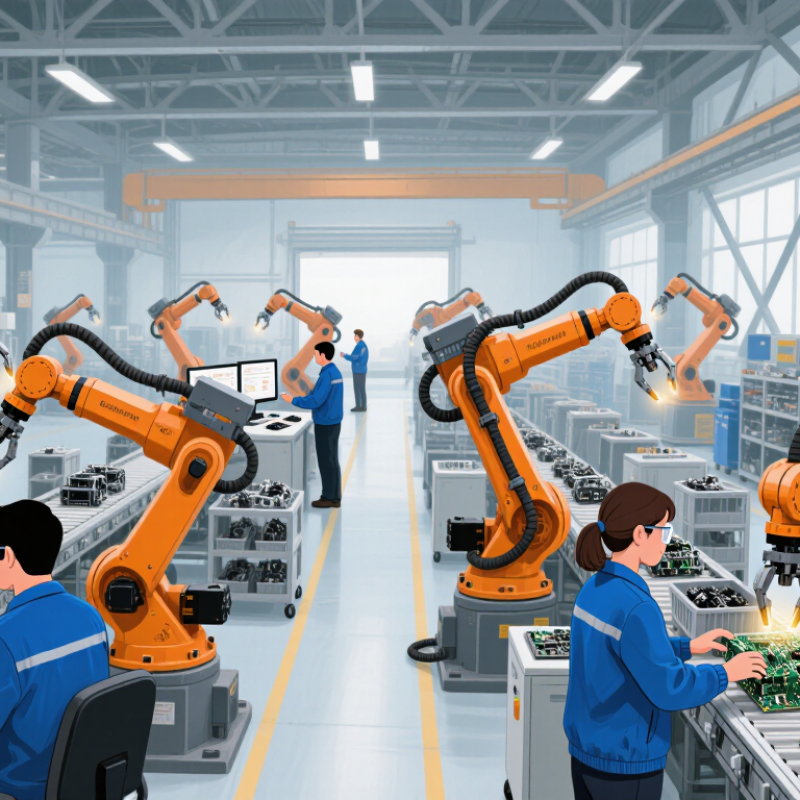
Applications vary by setting. In electronics plants, vision software can guide small components into position; in automotive facilities, motion planning supports welding and machine tending. Warehouses use fleet-management tools to route mobile robots around people, shelves, and changing traffic. China’s Ministry of Industry and Information Technology outlined priority robot applications across 10 key areas in its 2023 “Robot+” action plan. Yet deployment is rarely plug-and-play. Lighting changes can weaken camera performance, and a poorly mapped aisle can disrupt a whole shift. Integration still takes patient testing. Teams should assess safety functions, compatibility, update support, and how quickly operators can diagnose faults before choosing software.
What Is the Best Robot Software in China?
Criteria for Comparing Robot Software Platforms
Choosing robot software is less about a feature list than a real production test. Start with integration: can the platform connect to existing controllers, cameras, sensors, and factory systems without extensive custom code? During a pilot, measure setup time and record how many manual workarounds operators need. Small frictions add up. Check whether tasks can be updated without stopping an entire cell. That matters on a busy line.
Reliability should be tested across shifts, not just during a polished demonstration. Track task completion, recovery time after faults, and performance when network signals weaken. Ask how the platform logs errors and whether technicians can diagnose them without specialist help. Safety configuration, permissions, data access, and update procedures also deserve clear documentation. Review support arrangements carefully, especially response times and training for local teams. A low purchase price can hide ongoing integration and maintenance costs.
Compare platforms using the same robot, route, payload, and workload. Keep the test conditions visible. No scorecard is perfect; ours may overweight uptime and miss operator frustration. Ask floor staff what feels awkward after several weeks. Their feedback can change the ranking. A platform should fit the actual workflow, not merely look capable in a short demo.
Choosing robot software starts with the task, not the feature list. A welding cell needs steady path control and reliable recovery after a pause. A packaging line may care more about cycle time and quick changeovers. Define the payload, reach, accuracy, cycle time, and connected equipment before comparing software. Small details matter, like whether an operator can reset a fault without calling an engineer.
China’s scale makes project fit especially important. The International Federation of Robotics reported 276,288 industrial robot installations in China in 2023, or 51% of global installations. Its World Robotics 2024 report also put China’s robot density at 470 units per 10,000 manufacturing employees. Those figures show a mature, fast-moving market, but they do not prove that one software platform suits every factory. Test the actual workflow.
Run a pilot with the real robot, controller, and production data. Measure cycle time, recovery time, and programming effort—not just a polished demonstration. Check whether the software supports offline simulation, clear fault logs, and interfaces with existing equipment. Ask who can maintain the system after handover. That question is often missed. A technically capable tool may still be a poor choice if only one specialist can update a routine. I would also leave room for uncertainty: simulation results can differ from shop-floor behavior, especially around fixtures and cable movement. Test before scaling.