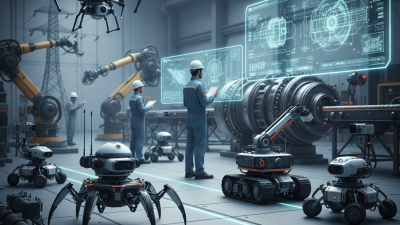
Choosing the right inspection robot in 2026 requires more than comparing cameras, prices, and advertised battery life. Global buyers face different assets, climates, workplace rules, and service expectations. A crawler built for narrow pipelines may fail on wet floors. A magnetic robot may perform well on steel tanks but remain unsuitable for concrete or coated surfaces.
This guide examines major inspection robot types for industrial facilities, infrastructure, energy sites, warehouses, and difficult access areas. It considers visual quality, mobility, sensor compatibility, operating time, payload capacity, remote control, data protection, and maintenance requirements. Practical details matter. A clear image is useless if vibration blurs every frame. A long-range system loses value when replacement parts require months to arrive. Local training also affects real performance.
Reliable purchasing decisions should combine manufacturer documentation, field demonstrations, independent testing, and feedback from experienced operators. Buyers should verify applicable safety requirements, environmental ratings, software support, and service coverage before signing contracts. Specifications can look impressive. Site conditions often disagree.
No platform is perfect. Some robots need careful setup, frequent cleaning, or a trained pilot. Others collect excellent data but struggle with stairs, glare, dust, or unstable surfaces. That weakness deserves attention, not marketing language. The following overview compares common robot categories and explains where each type creates practical value. It also highlights limitations that suppliers may understate, helping global buyers choose a safer, more dependable, and more measurable inspection solution.
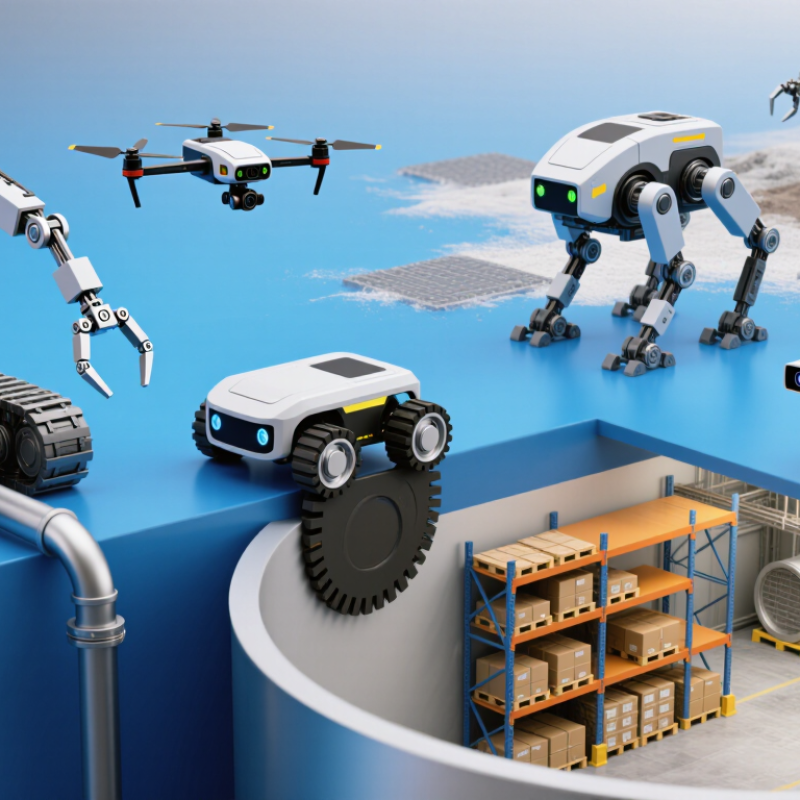
Inspection robots are mobile machines built to collect visual, thermal, acoustic, or environmental data. They enter areas that may be high, narrow, hot, dark, or difficult for people to access safely. Common types include tracked robots, wheeled platforms, aerial systems, quadruped robots, and underwater vehicles.
In modern industrial operations, a tracked robot can examine pipelines, storage tanks, and concrete floors while carrying lights, cameras, and ultrasonic sensors. An aerial robot can check roofs, towers, and overhead equipment without requiring extensive scaffolding.
In water, remotely operated vehicles can inspect submerged structures and record corrosion, cracks, or marine growth. The operator should receive clear images, location data, and time-stamped reports. Useful data matters more than impressive movement.
Not perfect.
Wet metal may reduce traction. Dust can cover a camera lens. Battery limits can interrupt a long inspection, and software may produce false alarms. Experienced teams therefore compare robotic findings with maintenance records and targeted human checks. Sensor calibration, route planning, and operator training strongly affect reliability. A robot should support engineering judgment, not replace it. Buyers also need to examine service access, spare parts, data security, weather resistance, and compatibility with existing safety procedures. In practice, a modest robot with stable communication may outperform a more advanced system that is difficult to maintain. That trade-off is easy to underestimate.
2026 Best Inspection Robot Types for Global Buyers
Main Inspection Robot Types and the Environments They Serve
Inspection robots differ mainly by movement, sensor capacity, and working environment. Wheeled robots suit warehouses, tunnels, factories, and paved utility corridors. They move quickly across flat floors and can carry thermal cameras, microphones, and gas sensors. Their limits appear on stairs, loose gravel, and wet surfaces.
Tracked robots provide stronger traction on mud, snow, uneven ground, and construction areas. They are useful for pipelines, storage yards, and industrial sites with damaged flooring. However, tracks may mark delicate surfaces and consume more energy. Buyers should check turning space, battery duration, payload weight, and remote-control range.
Legged robots handle stairs, narrow passages, and mixed indoor terrain. They can inspect mechanical rooms, elevated platforms, and older buildings where wheels struggle. Aerial inspection robots work best in towers, bridges, roofs, and large halls. They reach high structures without scaffolding, but wind, dust, and limited flight time remain practical concerns.
Underwater robots serve reservoirs, ports, ship structures, and submerged infrastructure. They use lights, sonar, and cameras when visibility is poor. Small crawler robots can enter ducts, tanks, and confined pipes. They reduce human exposure, yet their cables, communication links, and sensor quality need careful planning.
Field experience shows that no single platform fits every site. Dust can confuse cameras. Wet surfaces can defeat traction. This matters. Reliable deployment also depends on trained operators, clear inspection procedures, secure data handling, and regular maintenance. A capable robot still needs human judgment when findings are incomplete or unexpected.
| Inspection Robot Type | Primary Operating Environment | Typical Inspection Targets | Mobility and Access | Common Sensor Payloads | Main Advantages | Key Limitations | Best-Fit Buyer Applications |
|---|---|---|---|---|---|---|---|
|
Wheeled UGV Unmanned Ground Vehicle |
Indoor industrial floors, warehouses, tunnels, roads, and relatively smooth outdoor terrain | Production lines, storage areas, utility corridors, substations, and infrastructure surfaces | Fast and energy-efficient on firm, level surfaces; can navigate planned routes and narrow corridors | RGB cameras, thermal cameras, LiDAR, gas sensors, microphones, and ultrasonic modules | Efficient long-duration patrols, accurate mapping, repeatable route coverage, and relatively simple maintenance | Performance decreases on stairs, loose gravel, deep mud, high curbs, and heavily obstructed terrain | Factories, logistics facilities, commercial buildings, power plants, and security-oriented inspection programs |
|
Tracked UGV Crawler Inspection Robot |
Rough industrial sites, construction areas, mines, tunnels, debris zones, and uneven ground | Structural surfaces, hazardous areas, process equipment, vehicles, and post-incident locations | High traction and stability on uneven surfaces; can cross small obstacles and operate on moderate slopes | High-definition cameras, thermal imaging, LiDAR, radiation detectors, gas sensors, and acoustic sensors | Strong mobility in difficult terrain, stable imaging, and suitability for remote operation in hazardous areas | Usually slower and less energy-efficient than wheeled platforms; tracks can mark delicate floors | Mining, emergency response, petrochemical facilities, civil infrastructure, and defense-related site inspection |
|
Quadruped Robot Legged Inspection Robot |
Stairs, grating, mixed indoor and outdoor terrain, construction sites, and complex industrial facilities | Pipe racks, machinery rooms, utility plants, substations, stairways, and areas with elevation changes | Four-legged locomotion supports stairs, gaps, uneven floors, and changing terrain; some systems can self-right | 3D LiDAR, visual cameras, thermal cameras, acoustic sensors, gas detectors, and radiation sensors | Excellent terrain adaptability, elevated sensor viewpoint, and access to locations unsuitable for wheeled robots | Higher purchase and maintenance complexity, shorter endurance under heavy payloads, and potential stability limits | Oil and gas plants, electrical substations, chemical facilities, construction projects, and high-value asset surveys |
|
Magnetic Crawler Wall-Climbing Robot |
Ferromagnetic steel surfaces, including storage tanks, ship hulls, bridges, and steel structures | Welds, coatings, corrosion, pitting, plate deformation, and surface contamination | Magnetic wheels or tracks maintain contact on vertical and sometimes overhead steel surfaces | Visual cameras, ultrasonic thickness measurement, eddy-current probes, laser scanners, and corrosion sensors | Reduces scaffolding, rope-access work, and manual exposure during steel-surface inspection | Not suitable for non-ferromagnetic materials, heavily damaged surfaces, large gaps, or complex geometry | Storage tanks, bridges, shipbuilding, offshore structures, pressure vessels, and steel fabrication facilities |
|
Pipe Inspection Robot In-Pipe Crawler |
Interior of pipelines, process pipes, sewers, drains, and conduits | Internal corrosion, cracks, deposits, blockages, weld defects, leaks, and dimensional changes | Modular wheels, tracks, or self-centering mechanisms; designed for specific pipe diameters and bends | CCTV cameras, laser profiling, ultrasonic sensors, magnetic flux leakage, and odometry systems | Provides direct internal visibility while reducing excavation, shutdown time, and manual entry | Requires suitable pipe diameter, access points, cleanliness, and control of flow or operating conditions | Water utilities, wastewater networks, chemical processing, oil and gas pipelines, and district heating systems |
|
Sewer Inspection Robot Drainage Survey Platform |
Underground sewers, stormwater drains, culverts, and wastewater conduits | Cracks, infiltration, root intrusion, sediment, displaced joints, pipe deformation, and blockages | Tethered wheeled or tracked platforms operate in wet, dark, confined conduits; some systems tolerate shallow flow | Pan-and-tilt cameras, high-intensity lighting, laser measurement, inclinometers, and sonar for submerged sections | Produces visual records and condition data without requiring personnel to enter confined spaces | Cable management, water flow, debris, poor visibility, and limited access can restrict operating distance | Municipal drainage departments, wastewater contractors, utilities, and infrastructure maintenance providers |
|
ROV Remotely Operated Underwater Vehicle |
Rivers, reservoirs, ports, ship tanks, offshore assets, and underwater structures | Dams, bridge foundations, vessel hulls, intake structures, pipelines, and submerged equipment | Propeller-driven and tethered; suitable for underwater operation where direct human access is difficult or unsafe | Underwater cameras, imaging sonar, depth sensors, USBL positioning, multibeam sonar, and thickness gauges | Operates without a diver in cold, deep, polluted, low-visibility, or hazardous water | Tether handling, currents, limited visibility, and dependence on surface support equipment can affect productivity | Ports, dams, hydropower facilities, offshore infrastructure, aquaculture, and marine engineering |
|
Aerial Inspection Drone Unmanned Aerial Vehicle |
Open-air industrial sites, roofs, towers, bridges, solar farms, wind farms, and large infrastructure areas | Facades, roofs, transmission lines, flare stacks, wind turbine blades, solar panels, and construction progress | Vertical takeoff and landing enables rapid deployment; operates above ground without scaffolding | RGB cameras, thermal cameras, multispectral cameras, LiDAR, zoom cameras, and gas detection payloads | Rapid coverage of large or elevated assets, lower work-at-height exposure, and efficient data collection | Affected by wind, rain, temperature, battery endurance, obstacles, and local aviation regulations | Renewable energy, utilities, construction, telecommunications, roofing, mining, and infrastructure inspection |
|
Robotic Arm Fixed or Mobile Manipulator |
Controlled industrial workcells, laboratories, manufacturing lines, and hazardous processing areas | Parts, welds, surfaces, assemblies, containers, and repetitive quality-control checkpoints | Fixed-base or mobile articulated arm; provides precise positioning and repeatable sensor movement | Machine vision, structured light, laser scanners, force-torque sensors, ultrasonic probes, and tactile sensors | High repeatability, precise measurement, consistent inspection angles, and easy integration with production systems | Limited working envelope, installation requirements, and lower flexibility outside prepared work areas | Automotive, electronics, metal fabrication, aerospace manufacturing, packaging, and laboratory inspection |
|
Micro Inspection Robot Small-Diameter or Confined-Space Platform |
Narrow cavities, machinery interiors, ducts, heat exchangers, tanks, aircraft structures, and restricted spaces | Internal surfaces, hidden voids, welds, tubes, seals, and areas inaccessible to standard inspection equipment | Small wheeled, tracked, articulated, or tethered platforms designed for compact access routes | Miniature cameras, LED lighting, ultrasonic probes, infrared sensors, and compact laser measurement systems | Reaches confined locations while reducing disassembly and the need for human entry | Limited battery capacity, payload size, communication range, and mobility over large obstacles | Aerospace maintenance, industrial machinery, chemical processing, building services, and confined-space inspection |
Inspection robots are becoming more capable, but performance still depends on engineering choices. Wheeled robots suit flat factory floors, while tracked platforms handle gravel, oil residue, and uneven industrial sites. Aerial robots inspect roofs, towers, and storage structures quickly. Legged systems can cross stairs, narrow walkways, and damaged surfaces, though they require more complex control.
Sensor quality determines what a robot can detect. High-resolution cameras reveal cracks, corrosion, loose bolts, and surface distortion. Thermal sensors can identify overheated bearings, electrical faults, and insulation gaps. LiDAR creates accurate three-dimensional maps in dark or dusty areas. Combining these sensors usually improves reliability. However, sensor fusion can produce confusing results when calibration drifts.
Edge computing allows robots to process images near the inspection point. This reduces communication delays and protects sensitive operational data. Artificial intelligence can classify defects, but training data must represent different materials, lighting conditions, and weather. Otherwise, the system may miss faint cracks or report harmless stains as failures. That happens.
Navigation technology also matters. Stable localization helps a robot return to the same inspection position. Obstacle detection should respond to cables, puddles, workers, and unexpected objects. Reliable batteries, sealed housings, and emergency stopping systems support practical field use.
Yet no robot is perfect. Dust can blur cameras, heat can shorten battery life, and autonomous decisions still need qualified human review. Clear reports, time-stamped images, and traceable calibration records make inspection results easier to verify.
Comparing inspection robots in 2026 requires more than checking camera megapixels. The 2024 World Robotics report recorded 541,302 industrial robot installations in 2023. This scale shows why reliable inspection data matters across factories, warehouses, and infrastructure sites.
Start with the inspection task. Compare sensor resolution, thermal range, lighting tolerance, and defect-detection accuracy under real conditions. A four-wheel robot may suit smooth floors, while tracked designs handle dust, steps, and uneven surfaces better. Check payload, turning radius, reach, and IP protection. Small details matter. Battery runtime should be measured during active scanning, not idle movement. Ask for repeatability data, sample images, and failure rates.
Connectivity also deserves careful review. Confirm whether the robot exports standard data formats, supports local processing, and integrates with existing maintenance software. The NIST Engineering Laboratory emphasizes measurable performance and traceable evaluation in automated systems. Use that principle during supplier comparisons. Request a supervised pilot with identical routes, lighting, and defect samples. One uncomfortable lesson: advertised accuracy can fall sharply in reflective or crowded environments. Specifications look precise. Reality is less tidy. Buyers should record setup time, operator training hours, recovery behavior, and false alarms. These practical results may reveal more than a polished brochure.
How global buyers can compare inspection robot specifications: the chart shows representative continuous operating-time benchmarks for common inspection robot categories. Actual performance varies with payload, terrain, sensors, weather, and mission conditions.
Buying insight: Crawler and wheeled robots generally provide longer operating time for industrial facilities and infrastructure. Legged robots offer better mobility across uneven surfaces, while aerial robots provide rapid access to difficult-to-reach areas but usually have shorter flight endurance.
2026 Best Inspection Robot Types for Global Buyers
Selection Criteria for Industry, Budget, Safety, and Compliance Needs
Choosing an inspection robot starts with the worksite, not the camera specification. Wheeled robots suit smooth floors, long corridors, and routine thermal checks. Tracked robots handle gravel, steps, and uneven plant areas better. Aerial systems reach roofs, tanks, and tall structures, but require controlled flight zones. Crawling robots fit narrow pipes or vessels, though deployment can take longer. Consider temperature, dust, moisture, lighting, and communication range before comparing models.
Tips: Define the inspection task in one sentence. Then record access width, surface type, travel distance, and inspection frequency. Set a realistic budget for training, batteries, software, repairs, and transport. A low purchase price can hide expensive downtime. Request sample reports and test the robot under actual site conditions. Short trials reveal more than polished demonstrations.
Safety and compliance need documented evidence. Check payload limits, emergency stops, obstacle detection, battery protection, and safe remote operation. Hazardous locations may require specific certified equipment; ordinary devices are not automatically suitable. Confirm local radio, electrical, data protection, and workplace requirements before import or deployment. Ask for manuals, conformity documents, maintenance intervals, and operator training records. Specifications can be unclear. Challenge them. A robot that passes a factory test may struggle with wet floors, weak signals, or poor lighting. That gap deserves attention before approval.