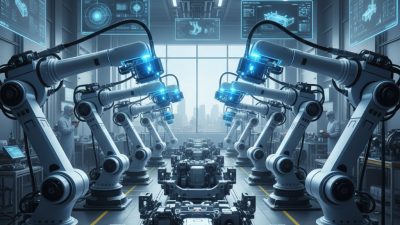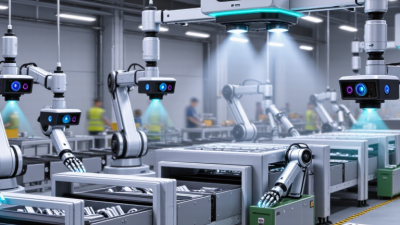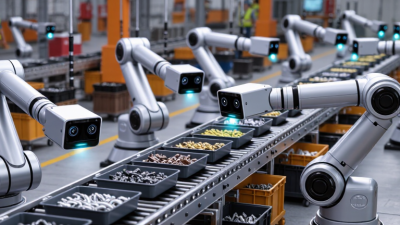
Robot vision is becoming a practical part of manufacturing across China, from inspecting phone components to guiding robots as they pick small parts from moving conveyor belts. A capable system combines cameras, lenses, lighting, image-processing software, and reliable integration. Each element matters. A sharp camera cannot compensate for glare, blurred motion, or poorly chosen lighting. In a factory, those small details can mean the difference between catching a surface flaw and sending it downstream.
So, what are the best robot vision systems in China? The answer depends on the task, the production environment, and the level of support a buyer needs. This guide looks at system capabilities rather than treating a brand name as proof of quality. It considers image resolution, processing speed, calibration, compatibility with robot arms, and performance under real operating conditions. Demonstrations are useful, but they do not replace trials using representative parts and factory lighting. Ask for measurable results. Check them carefully.
There is no universal winner. A system suited to high-speed packaging may struggle with reflective metal or transparent materials. That is easy to overlook. Buyers should also assess integration work, operator training, maintenance access, and the supplier’s ability to provide clear technical documentation. Independent testing and site-specific trials offer stronger evidence than broad performance claims. The following sections compare common options and practical selection criteria, helping readers identify a robot vision system that fits their actual production needs—not just an impressive specification sheet.
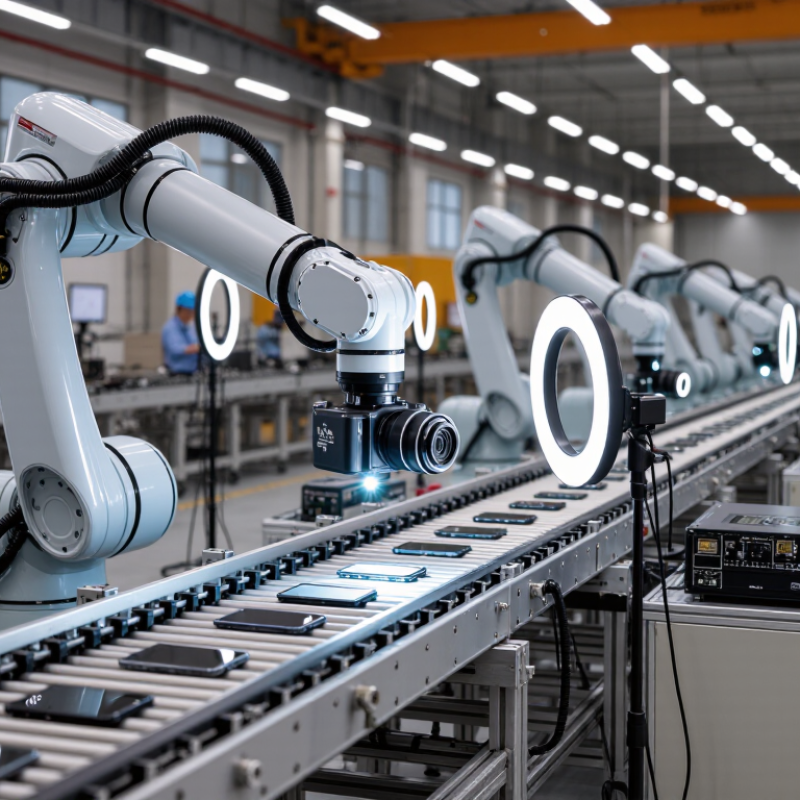
A robot vision system gives a machine a way to locate, inspect, and measure objects. A camera captures an image, while lenses and controlled lighting help reveal edges, surfaces, or printed marks. Image-processing software then identifies useful features, such as a part’s position or orientation. The robot controller uses those coordinates to guide a gripper or tool. In a sorting cell, this may mean finding a metal part on a moving belt and adjusting the pickup point in real time. Small details matter.
The International Federation of Robotics reported 276,288 industrial robot installations in China in 2023, about 51% of global installations. This figure comes from its World Robotics 2024 report. It does not measure vision-system use directly, but it shows the scale of automation where machine vision can support picking, inspection, and assembly. A reliable setup needs more than a camera: calibration links image coordinates to the robot’s working space, and processing speed must match the production line. Delays can cause missed picks.
Lighting changes, glare, dust, and overlapping parts can all confuse image processing. A system that works well with one product may struggle after a small packaging change. That is easy to underestimate. Testing with real parts, varied angles, and imperfect conditions helps expose weak points before deployment. Even then, vision is not infallible; operators should be able to spot errors and adjust the process.
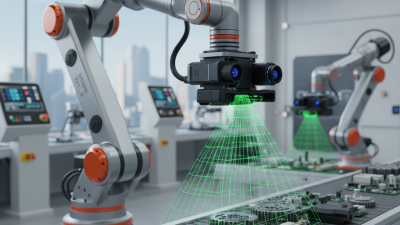
How robot vision systems work: they capture visual data, estimate useful information such as depth, and provide it to a robot for decision-making.
How to read the chart: RGB pixels contain three color channels, depth maps store one distance value per pixel, stereo vision uses two image views, and point-cloud points are commonly represented by three spatial coordinates (X, Y, Z). These are data representations, not a performance ranking of systems.
A robot vision system begins with a camera, but image quality depends on more than resolution. The lens sets the field of view and working distance. A wide lens may capture a whole conveyor, yet make small defects harder to inspect. Lighting matters just as much. Diffused light can soften glare on metal parts, while a narrow beam may reveal surface scratches. Small changes in angle can alter the image.
The image sensor converts light into data, and a processing unit analyzes that data. Software locates edges, measures gaps, or identifies parts by shape. For reliable results, the system needs clear thresholds and representative test images. A model that works under bright factory lights may struggle when shadows shift. It happens. Calibration also connects camera coordinates with the robot’s movement. Without it, a detected part can appear correctly located on screen but still be missed by the gripper.
Communication hardware sends position data to the robot controller, often under tight timing limits. Cables, connectors, and network settings can affect stability, so they deserve attention during installation. A practical test should include different part positions, surface finishes, and lighting conditions. One weakness in many setups is assuming that a successful demonstration proves long-term reliability. It does not. Regular checks can reveal a loose mount or gradual lens contamination before errors become routine.
Evaluating robot vision systems in China requires more than comparing camera resolution. Match the system to the task: locating a small connector, checking a weld, or guiding a pick-and-place arm. A higher pixel count may reveal fine defects, but it can also increase processing time. Measure accuracy, repeatability, and latency under the robot’s actual speed and working distance. Small details matter.
Test the full setup on the factory floor. Changing light, reflective metal, dust, vibration, and shifts in part position can affect image quality. Ask for trials using representative parts, including scratched or slightly misaligned samples. Record false detections and missed defects, not just successful picks. Test again after changing the lens or lighting. Results may differ.
Check integration with the robot controller, production software, and existing network. Clear setup tools and local technical support can reduce downtime, especially when operators need help in Chinese. Review how images and inspection records are stored, and whether access controls fit the site’s needs. Compare total operating costs, including calibration, maintenance, and training. No scorecard is perfect; a short demo can hide problems that appear after weeks of production.
Two-dimensional cameras read labels, check surface defects, and locate parts on a conveyor. They work well when lighting and object orientation stay consistent. A scratched metal surface can still confuse them.
Three-dimensional vision systems measure depth as well as width and height. Structured-light cameras project patterns onto parts, while time-of-flight sensors estimate distance from reflected light. These systems can guide a robot to pick irregular components from a bin. They need careful calibration, and shiny or transparent materials may produce unreliable readings. Not magic.
Line-scan vision captures moving materials one narrow strip at a time. It is useful for inspecting film, textiles, or long panels without stopping the line. Smart cameras process images inside the device, which can simplify installation where space is limited.
Stereo vision uses two viewpoints to estimate depth, but matching features on plain surfaces can be difficult. A practical selection starts with the object, lighting, speed, and required accuracy—not the camera alone. Even a capable system may need better fixtures or softer lighting before it performs consistently.
What Are the Best Robot Vision Systems in China?
Industrial Applications Across Chinese Manufacturing
In Chinese factories, robot vision is judged by what it can do on a busy production line. Cameras help robots locate parts on moving conveyors, guide welding, and inspect small defects in automotive, electronics, and metalworking production. The right setup depends on the task: 2D vision can check labels and flat surfaces, while 3D sensing helps estimate a part’s position and orientation. Performance still depends on lighting, camera placement, and clean image data.
The scale of adoption is significant. The International Federation of Robotics’ World Robotics 2024 report records 276,288 industrial robot installations in China in 2023, around 51% of global installations. That figure describes robots, not vision systems, but it shows the manufacturing environment where vision-guided automation is expanding. On the factory floor, reflective metal, dust, and slight part changes can disrupt detection. A system that works in a demo may need careful adjustment during real shifts. Not magic.
Tips: Test with actual parts under production lighting. Track missed detections and false alarms, then adjust camera angles and exposure. Keep a manual inspection fallback; it can reveal weaknesses the initial trial missed.
| What Are the Best Robot Vision Systems in China? - Industrial Applications Across Chinese Manufacturing | |||||
|---|---|---|---|---|---|
| Vision System Type | How It Works | Suitable Manufacturing Applications | Main Strengths | Key Limitations | Best Fit |
| 2D Area-Scan Vision | Captures two-dimensional images using a camera and lens; lighting and image processing are used to locate features or inspect surfaces. | Electronic component inspection, printed code reading, label verification, presence checks, and flat-part pick-and-place. | Well suited to high-speed inspection of visible surface features; comparatively straightforward to integrate when parts are presented consistently. | Does not directly measure height or depth; results can be affected by glare, shadows, and changing part orientation. | Flat or nearly flat parts and tasks where position, shape, or surface appearance is sufficient. |
| 3D Structured-Light Vision | Projects a known light pattern onto an object and calculates depth from pattern distortion captured by one or more cameras. | Bin picking, depalletizing, part loading, dimensional checks, and locating components with varying orientations. | Provides depth information that helps robots handle objects in three dimensions; useful for irregular or stacked parts. | Highly reflective, transparent, very dark, or occluded surfaces can be difficult to measure; performance depends on setup and scene conditions. | Robot guidance where object height, pose, or surface geometry matters. |
| Laser Triangulation Vision | Projects a laser line onto a surface and derives a cross-sectional height profile from the observed line position. | Weld-bead inspection, seam tracking, profile measurement, gap checks, and surface-height inspection. | Measures profile and height along a scan line; effective for defined inspection paths and geometric features. | Usually requires relative motion or multiple scans to cover a larger area; reflective surfaces and line-of-sight obstruction can affect measurements. | Inline profile measurement and robot-guided inspection of seams, edges, or contours. |
| Stereo 3D Vision | Uses images from two or more viewpoints to estimate depth from the difference in corresponding image features. | Object localization, bin picking, pallet handling, and guidance for parts with visible texture or edges. | Can capture depth over a broad field of view and does not require projecting a pattern onto the part. | Depth estimation can be less reliable on textureless, repetitive, reflective, or poorly illuminated surfaces. | Scenes with adequate visual texture and applications requiring a relatively broad 3D view. |
| Line-Scan Vision | Builds an image one line at a time as the product or camera moves past the sensor. | Continuous web inspection, sheet materials, film, textiles, metal strip, and cylindrical parts rotated during inspection. | Can inspect long or wide moving surfaces at high image detail when motion and illumination are controlled. | Requires synchronized motion; unsuitable for stationary scenes unless the camera or object is moved in a controlled way. | Continuous production lines and products whose surfaces can be scanned consistently. |
| Multispectral or Hyperspectral Vision | Measures reflected light in multiple wavelength bands to reveal material or surface differences beyond standard color imaging. | Material sorting, contamination detection, coating checks, and selected food, polymer, or electronic-material inspections. | Can distinguish some materials or conditions that appear similar in ordinary visible-light images. | Often requires specialized lighting, calibration, data processing, and validation for the specific material and inspection task. | Applications where spectral signatures provide useful information that conventional imaging cannot reliably supply. |
| Selection note: The most suitable system depends on the part, required accuracy, cycle time, lighting, robot motion, and factory environment. Validate performance with representative parts and production conditions before deployment. | |||||