What Is a Robot Vision System and How Does It Work?

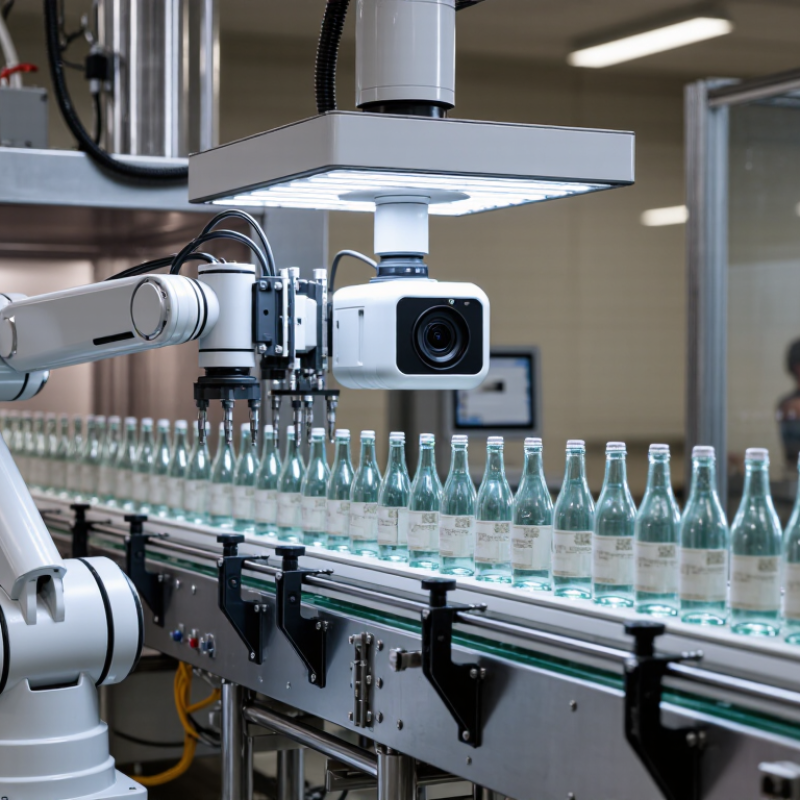
A robot vision system enables a machine to interpret images and respond to physical surroundings. It combines cameras, lenses, lighting, processors, and software. On a factory line, a camera may capture a moving bottle every few milliseconds. The system then checks its shape, label, position, or surface defects. A robot uses that result to pick, sort, inspect, or place the item accurately.

The process usually begins with image capture. Controlled lighting helps reveal edges, colors, textures, and small scratches. Vision software processes the image and compares visible features with trained rules or models. A controller then sends instructions to the robot, often within a fraction of a second. Calibration connects the camera’s image coordinates with the robot’s physical movements. Even a small measurement error can make a gripper miss its target.

Real-world experience shows that reliable performance depends on more than advanced algorithms. Dust, glare, vibration, changing products, and poor lighting can reduce accuracy. The system needs suitable hardware, representative test images, regular maintenance, and documented validation. Safety checks also matter when robots operate near people. A well-designed setup should report uncertainty instead of pretending every decision is correct.

It is not human vision.

Understanding how a robot vision system works requires practical testing and careful engineering. Performance claims should come from measured results, not impressive demonstrations alone. Some systems still struggle with unusual shapes or damaged labels. That limitation deserves attention. This article explains the main components, workflow, applications, and design choices behind dependable robotic vision.
What Is a Robot Vision System and How Does It Work?

What Is a Robot Vision System?

A robot vision system gives a robot the ability to observe and interpret its surroundings. It combines cameras, lenses, lighting, software, and control hardware. The camera captures images, while algorithms identify shapes, positions, colors, surfaces, or defects. According to the International Federation of Robotics’ World Robotics 2024 report, 541,302 industrial robots were installed worldwide in 2023. Many of these robots depend on visual information for flexible handling and inspection tasks.

The process usually begins with image capture. Controlled lighting reduces shadows and glare. Software then filters the image and compares it with trained patterns or measured dimensions. A controller converts those findings into movement instructions. For example, a robot may locate a metal component on a moving conveyor, calculate its angle, and pick it accurately. The timing must be precise. Even a small delay can cause a missed grasp.

Vision is useful, but it is not perfect. Dust, reflective materials, weak lighting, and unusual product positions can confuse the system. A 2023 NIST report on manufacturing measurement challenges highlights the importance of calibration, repeatable testing, and uncertainty analysis. In practice, teams should record false detections, missed parts, and recovery time. Better cameras alone will not solve poor lighting or unclear data. This part is often underestimated. Human review may still be necessary when products vary beyond the training examples.

What Are the Main Components of Robot Vision?

A robot vision system combines sensing, processing, and movement. Its main components are a camera, lens, lighting unit, computer, software, and robot controller. The camera captures images of parts, surfaces, or workspaces. The lens controls field of view and image detail. Lighting makes edges, defects, and shapes easier to separate.

The Association for Advancing Automation reported that North American machine vision sales reached about 3.15 billion dollars in 2023. That figure reflects strong demand for cameras, sensors, and inspection software. However, hardware alone cannot create reliable vision. A processor converts pixels into measurements, such as position, angle, size, or surface contrast. Vision software then compares those measurements with programmed criteria. The controller sends movement instructions to the robot. Small delays matter. A moving conveyor can shift a part several millimeters during processing.

Lighting deserves more attention than it usually receives. Diffused light can reduce glare on metal surfaces. Backlighting can reveal a clean silhouette. Three-dimensional sensors add depth, but they may struggle with reflective or transparent objects. The International Federation of Robotics recorded 541,302 industrial robot installations worldwide in 2023. As installations grow, vision systems must handle more variation, not merely faster inspection. Calibration remains a weak link. A slightly tilted camera can create repeated positioning errors. Dust, vibration, and changing daylight can also reduce accuracy. In practice, engineers should test unusual parts, damaged surfaces, and poor lighting. Perfect training images are not enough. Real factories are messier.

How Does a Robot Vision System Capture and Process Images?

A robot vision system captures images through cameras, lenses, and controlled lighting mounted near the robot. The camera records light reflected from an object. Exposure, focus, and shutter speed affect every pixel. Poor lighting can hide scratches, soften edges, or create misleading shadows. Calibration connects the camera’s image coordinates with the robot’s physical workspace. This step is essential for accurate movement and inspection.

The captured image then passes to an industrial computer or embedded processor. Software reduces noise, adjusts contrast, and separates the object from its background. It may detect edges, measure dimensions, read patterns, or locate a gripping point. Machine learning models can classify complex surfaces, but they still need reliable training images. I have found that clean samples often produce impressive results, while dusty or reflective parts expose weaknesses quickly. Small errors matter.

The system converts image findings into practical data. It might send a position, angle, size, or pass-fail decision to the robot controller. The controller then plans a movement or triggers another action. Communication delays can affect precision, especially when objects move on a conveyor. A well-designed system checks uncertain images instead of forcing every result into a confident answer. That safeguard is not perfect. It needs regular testing, recalibration, and human review when conditions change.

What Is a Robot Vision System and How Does It Work?

How Does a Robot Vision System Capture and Process Images?

A robot vision system captures light through a camera sensor, converts it into digital pixels, and sends the image to an image-processing unit. The chart compares common image resolutions by pixel count and uncompressed 8-bit grayscale data size for one captured frame. Higher resolutions provide more visual detail but require more memory, bandwidth, and processing time.

How Do Robots Use Visual Data to Make Decisions?

A robot vision system turns light into usable evidence. Cameras capture images, while depth sensors estimate distance and shape. Software then filters noise, adjusts brightness, and identifies meaningful features. A red item near the center may become an object, not just a collection of pixels.

Robots use this visual data to choose actions. The system compares an object’s size, position, and texture with trained patterns. It may decide to grasp a package, avoid a person, or slow down near an uncertain surface. A confidence score guides the response. High confidence can trigger movement; low confidence may request another scan. Sometimes, the safest decision is to pause.

In practical work, lighting causes many failures. Clear plastic can disappear, and metal surfaces can create false edges. A shadow may look like a gap. This is where careful testing matters. Engineers collect images from different angles, distances, and weather conditions. They also check whether the robot repeats the same decision reliably. Vision is helpful, but it is not certainty. A system can misread an unfamiliar object, especially when training data is limited. Human review, regular calibration, and physical safety limits remain important when visual evidence is incomplete.

What Are the Applications and Limitations of Robot Vision?

A robot vision system combines cameras, lenses, lighting, and software to interpret a workspace. It captures images, detects objects, and estimates their positions. The robot then adjusts its movement based on those measurements. In packaging lines, vision systems locate products inside moving trays. They inspect labels, check missing parts, and guide robotic arms during picking. In warehouses, cameras help identify parcels and read printed codes. Agriculture uses vision to spot ripe fruit, damaged leaves, or uneven growth. Medical and laboratory automation also benefit from precise visual sorting. These applications reduce repetitive handling and create consistent inspection records. Still, speed alone does not prove reliability.

Vision performance depends heavily on lighting, camera position, object appearance, and training data. Glare on a metal surface can hide a small defect. Dust on a lens may create false alarms. A camera can confuse overlapping parts or unfamiliar packaging. Dark, transparent, reflective, and rapidly moving objects remain difficult. Software may also fail when real conditions differ from test images. That weakness deserves attention. Engineers should validate systems across shifts, temperatures, materials, and intentional faults. Human review remains valuable when errors could affect safety or product quality. Privacy, data security, and clear maintenance procedures also matter. A practical system needs fallback actions, not just impressive detection scores. Some installations may be over-engineered; simpler sensors can sometimes solve the task more reliably.

What Is a Robot Vision System and How Does It Work? — Applications and Limitations

Dimension System Element or Stage Description Practical Considerations
How a Robot Vision System Works
1. Image capture Industrial camera and lens The camera records images of objects, work areas, or robot surroundings. Monochrome, color, 3D, and infrared cameras may be used depending on the inspection task. Lens selection, focus, exposure, and field of view must match the object size and working distance.
2. Illumination Controlled lighting Lighting increases contrast and makes edges, surface defects, labels, or object shapes easier to detect. Glare, shadows, reflections, and changing ambient light can reduce inspection reliability.
3. Image processing Vision software The system filters images, separates objects from the background, detects edges, measures features, and identifies patterns or defects. Processing speed and accuracy depend on image quality, algorithms, computing resources, and task complexity.
4. Perception and measurement 2D or 3D analysis A 2D system evaluates image coordinates and appearance, while a 3D system estimates depth, height, distance, or object orientation. 3D sensing is useful for irregular shapes and bin picking but generally requires more calibration and processing.
5. Decision-making Rules or trained models The system determines whether an item meets a criterion, identifies an object, estimates its pose, or selects an action. Machine-learning models require representative training data and validation against real production conditions.
6. Robot communication Controller and industrial network The vision system sends coordinates, classifications, pass/fail results, or correction values to the robot or automation controller. Coordinate calibration is essential so that camera measurements align with the robot's working coordinate system.
Common Applications
Quality inspection Defect detection and verification Checks dimensions, surface defects, missing components, assembly errors, print quality, and product presence. Best results are achieved when defects have sufficient contrast and consistent visual characteristics.
Guided picking Object location and pose estimation Locates parts on conveyors, trays, or in bins and provides the robot with position and orientation data for grasping. Overlapping, reflective, transparent, or heavily occluded objects are more difficult to detect.
Assembly verification Part presence and alignment Confirms that components are installed, aligned, oriented, or fastened correctly before the next process step. Inspection criteria should be defined with measurable tolerances and controlled viewpoints.
Sorting and classification Feature-based separation Classifies items by shape, size, color, barcode, text, condition, or other visible attributes and directs them to different locations. Classification performance can decline when product variants look very similar or appear under different lighting conditions.
Guidance and navigation Environmental perception Cameras can help robots locate workpieces, track moving targets, read visual markers, or detect obstacles within a defined workspace. Vision should be combined with appropriate safety-rated sensing where human protection is required.
Advantages and Limitations
Key advantages Flexibility and repeatability Robot vision can support high-speed inspection, consistent measurements, non-contact evaluation, traceability, and automatic responses to changing part positions. The system still requires initial integration, calibration, testing, and periodic maintenance.
Lighting sensitivity Environmental variation Changes in illumination, reflections, shadows, dust, vibration, or lens contamination can affect image quality and system decisions. Enclosures, fixed lighting, cleaning schedules, and image-quality monitoring can reduce these effects.
Object complexity Occlusion and appearance variation Vision performance may decrease when objects overlap, deform, have transparent surfaces, or vary substantially in color, texture, or orientation. Multiple camera views, 3D sensing, improved fixturing, or additional training data may be required.
Calibration requirements Camera-to-robot accuracy The camera, robot, workpiece, and coordinate systems must be accurately related for reliable positioning and measurement. Mechanical movement, impacts, temperature changes, or camera repositioning can require recalibration.
Safety and reliability Limits of visual perception A vision system may misclassify an object or fail to detect a condition, especially outside the data and operating conditions used during development. Critical applications need fault handling, validation, monitoring, physical safeguards, and safety systems independent of ordinary image recognition.

Note: Performance depends on the camera, lens, lighting, sensing method, software, robot motion, object properties, and operating environment.

SERVO-ROBOT Inc
Privacy Overview

This website uses cookies so that we can provide you with the best user experience possible. Cookie information is stored in your browser and performs functions such as recognising you when you return to our website and helping our team to understand which sections of the website you find most interesting and useful.