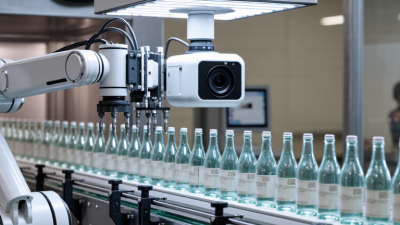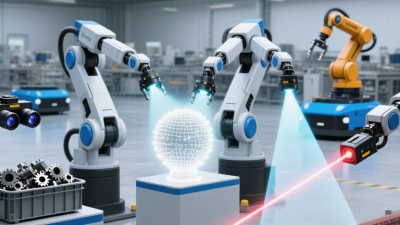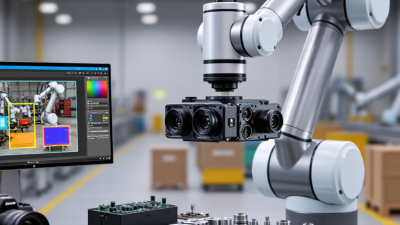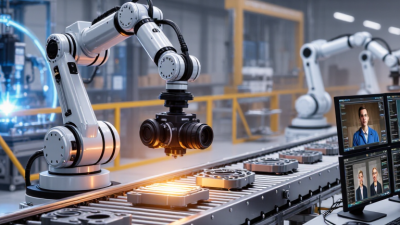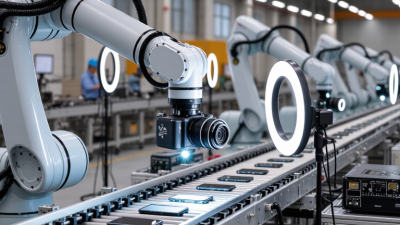
China’s robot vision industry serves factories that need machines to inspect, locate, measure, and sort products with consistent accuracy. Its manufacturers offer more than cameras: many combine imaging hardware, lenses, lighting, software, and system integration. A camera may look impressive on a specification sheet. Yet glare on a metal part, a fast conveyor, or a small change in product position can expose practical limits. Details matter.
This overview looks at leading Chinese manufacturers and the capabilities that distinguish them, including 2D and 3D imaging, defect detection, measurement, and robotic guidance. “Top” is not a universal label. A supplier suited to electronics inspection may not fit a food-packaging line or a warehouse robot. Buyers should compare documented performance, supported applications, integration requirements, service availability, and the conditions behind any published accuracy claims. Where possible, they should test representative parts under real lighting and production speeds. That is more useful than relying on a brand ranking alone.
Company profiles can help readers build a shortlist, but they cannot replace application-specific validation. Product ranges and capabilities also change, so current technical documents and direct supplier confirmation are worth checking. A tidy comparison may still miss an awkward detail, such as setup time or operator training. This guide aims to make those trade-offs easier to spot, not to claim one manufacturer is best for every factory.
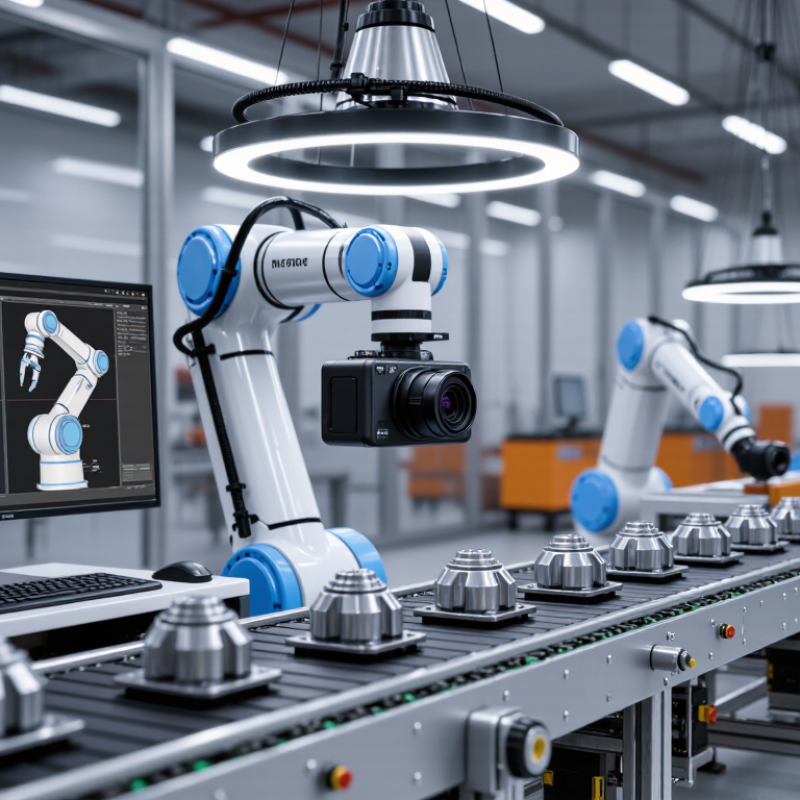
Robot vision gives a machine the ability to capture and interpret visual information. A camera records images, while software identifies features such as edges, shapes, colors, or printed marks. The robot can then use that information to guide a movement or make an inspection decision. It is not magic. Results depend on clear images, suitable lighting, and careful setup.
In factories, robot vision helps locate parts on a moving belt, check whether components are positioned correctly, and spot surface defects like scratches or missing holes. In warehouses, it can support parcel sorting and object picking. Some systems use depth cameras to estimate distance, while simpler tasks may need only a standard camera. Vision can reduce repetitive checks, but it does not remove the need for human review, especially when products vary or images are unclear.
Tips: Keep lighting steady and test with real parts, not just sample images. Clean the camera lens and verify its position after maintenance. A small shift can change results. Also record difficult cases, such as glare or overlapping parts. Reviewing them helps reveal where the system is unreliable; this step is easy to overlook.
Robot vision uses cameras and image-processing software to help robots interpret their surroundings. This chart compares the spatial coordinates represented by 2D and 3D vision: two image-plane coordinates (x, y) versus three spatial coordinates (x, y, z). These systems are used for tasks such as inspection, object picking, and robot localization.
China’s robot vision industry grew alongside factory automation, not in isolation. Early deployments often relied on imported cameras and fixed-rule inspection. As local suppliers developed imaging, lighting, optics, and software capabilities, integrators could adapt systems to production lines more quickly. A camera above a conveyor might check alignment, surface defects, or missing components in milliseconds. The shift was practical.
Demand from electronics, automotive, logistics, and battery manufacturing accelerated this development. More complex products required inspection beyond simple pass-or-fail rules. Deep-learning methods improved recognition of varied textures, while 3D vision helped robots locate parts with changing orientations. Edge computing also reduced delays by processing images near the machine. Yet results still depend on careful lighting, clean lenses, stable calibration, and representative training images. Software alone cannot fix a poorly designed station.
The industry remains uneven. Some plants operate advanced vision-guided cells; others still rely on basic cameras and manual checks. Smaller factories may face high integration costs or struggle to update systems when products change. Progress is real, but not automatic. Reliable deployment takes repeated trials on actual parts and technicians who understand both optics and production. Dust, vibration, and routine maintenance can expose weaknesses that a laboratory test misses.
| Dimension | Data or Industry Fact | What It Indicates |
|---|---|---|
| Manufacturer landscape | China’s robot-vision supply base includes manufacturers and solution providers in industrial cameras, lenses, lighting, 2D and 3D vision sensors, image-processing software, and integrated vision systems. | There is no single product category that defines a leading supplier. Capabilities vary by application, such as inspection, positioning, measurement, identification, and bin picking. This overview intentionally does not name or rank companies. |
| How to assess leading suppliers | Relevant comparison criteria include imaging accuracy, supported interfaces and protocols, software compatibility, environmental durability, application experience, service coverage, and total system cost. | A meaningful ranking depends on the use case and independently comparable performance data. Market prominence alone does not establish that a system is best for a particular production line. |
| 2015: industrial policy context | “Made in China 2025,” released in 2015, identified robotics and high-end manufacturing equipment among areas for industrial upgrading. | The policy context supported automation investment and broader demand for sensing and inspection technologies used in manufacturing. |
| 2016–2020: robotics industry planning | China’s Robotics Industry Development Plan for 2016–2020 set out goals for developing the robotics industry and strengthening key technologies and components. | As robot deployment expanded, machine vision became increasingly relevant for tasks that require robots to locate, inspect, or handle objects. |
| 2021–2025: continued automation goals | China’s 14th Five-Year Plan for Robot Industry Development called for the country’s manufacturing robot density to double by 2025 compared with 2020. | The target reflects a policy emphasis on wider robot adoption. Robot density is a measure of robot use, not a direct measure of robot-vision market size. |
| 2023: robot installations | China installed 276,288 industrial robots in 2023, accounting for 51% of global installations, according to the International Federation of Robotics’ World Robotics 2024. | This scale of robot deployment provides a large potential application base for vision-guided automation, although not every installed robot uses a vision system. |
| 2023: manufacturing robot density | China’s manufacturing robot density reached 470 industrial robots per 10,000 employees in 2023, as reported by the International Federation of Robotics. | The figure provides context for the depth of factory automation. It does not measure the number of vision-equipped robots. |
| Technology development | Industrial vision systems combine image acquisition, optics and lighting, image processing, and interfaces to robot controllers or factory systems. 3D vision can provide depth information in addition to 2D image data. | System performance depends on the complete setup—including the camera, lighting, software, calibration, robot, and production environment—not on the camera alone. |
| Application development | Common factory applications include presence and defect inspection, code reading, dimensional measurement, part positioning, and vision-guided picking. | Adoption typically follows practical production needs such as product variation, inspection requirements, labor availability, and the need to automate repetitive or precision tasks. |
| Market-data limitation | The installation and robot-density figures above describe industrial robots; they are not robot-vision revenue, shipment, or market-share figures. | A reliable manufacturer ranking would require a clearly defined product scope, time period, and comparable vision-specific sales or shipment data. Publicly available robot deployment statistics alone cannot establish such a ranking. |
China’s leading robot vision manufacturers are best assessed by capability, not by a simple sales ranking. Public data rarely separates vision-system revenue from broader automation sales, so exact league tables can mislead. A useful benchmark is deployment scale: the International Federation of Robotics reported 276,288 industrial robots installed in China in 2023, about 51% of global installations. That figure measures robot installations, not vision-system purchases, but it shows why local suppliers face demanding production environments.
Strong manufacturers typically combine industrial cameras, lenses, lighting, image-processing software, and integration support. Look for reliable inspection on moving lines, stable performance under changing factory light, and clear compatibility with robot controllers. Ask for measured results on your own parts, including detection rate, false rejects, and cycle time. Small details matter. A reflective metal edge can defeat a setup that looked flawless in a showroom. Suppliers serving electronics, automotive, and logistics applications may offer different strengths; application fit matters more than a broad “AI vision” claim. I would treat any ranking cautiously, and verify service coverage, sample testing, and upgrade support before choosing.
Chinese robot vision manufacturers typically offer area-scan and line-scan cameras, industrial lenses, lighting, and image-processing software. Area-scan cameras capture full images of stationary or moving objects. Line-scan systems inspect continuous materials, such as film or metal sheets. For depth measurement, suppliers may offer stereo cameras, structured-light sensors, or time-of-flight devices. Each suits different working distances, surface finishes, and cycle times.
Products often include inspection stations for checking dimensions, detecting surface defects, reading codes, or guiding robotic arms. A typical setup combines a camera, lens, controlled lighting, and software that sends position data to a robot. Ask for sample images from parts like yours, not only clean demonstration pieces. Reflective metal, dark plastic, and changing ambient light can expose weaknesses. Catalog specifications help, but they do not replace trials on a production line.
Tips: Confirm resolution, field of view, trigger timing, and interface compatibility before purchase. Test real parts under factory lighting. Small details matter. Results may vary with setup, and that deserves an honest review.
Buyers comparing robot vision manufacturers in China should test performance on their own parts, not rely on catalog resolution alone. The International Federation of Robotics’ World Robotics 2024 report recorded 276,288 industrial robot installations in China during 2023, about 51% of global installations. That scale creates a broad supplier landscape, but it does not prove vision reliability. Ask for repeatability data across reflective metal, dark surfaces, and changing ambient light. Run the same pick-and-place task across multiple shifts. Track missed detections, false picks, cycle-time variation, and recovery after a camera shift. Small details matter.
Compare the complete system, including camera, optics, lighting, calibration software, and robot interface. Request test conditions: working distance, field of view, exposure, object speed, and sample size. Accuracy figures without these details are hard to interpret. Check for failure logs, remote diagnostics, spare-part lead times, and operator training. Set agreed pass limits for a site acceptance test before purchase. Then verify performance on the production line, where oil, vibration, and part variation appear. I would not treat one successful demo as proof; even a careful test can miss a difficult production week.